
Cardinal Flying Into Window: Why It Happens and How to Stop It
A cardinal attacking a window is fighting its own reflection, usually in spring. Why it targets cardinals specifically, and the fix that actually works.
 By
On this page
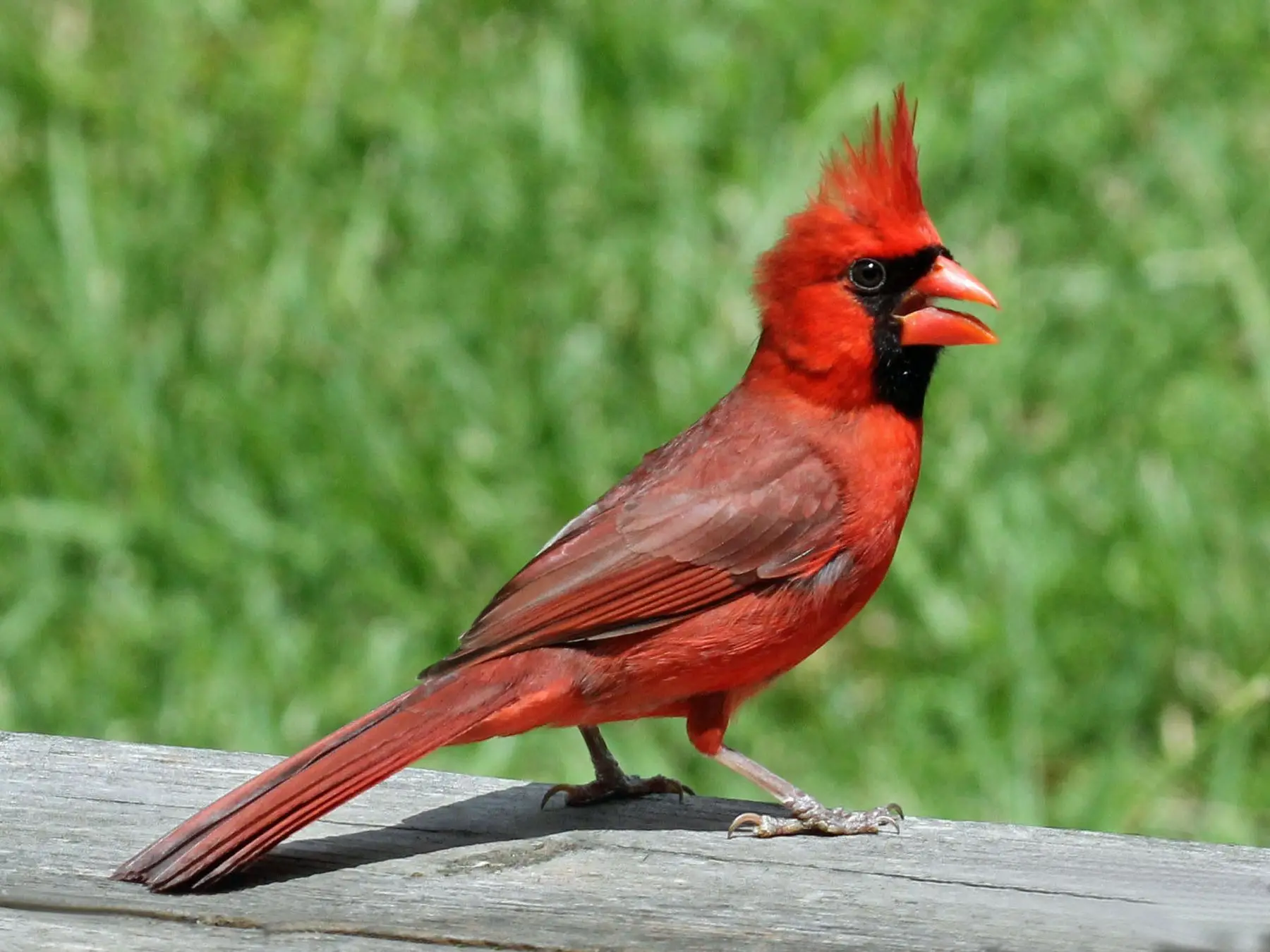
A cardinal throwing itself at the same pane every morning is fighting its own reflection. It believes a rival male has walked into its territory and refuses to back down — and since the reflection never backs down either, the fight can run for weeks.
Why cardinals in particular
They are not the only offenders — robins, mockingbirds, bluebirds and towhees all do it — but cardinals are the species people end up searching for, for three reasons.
- Strongly territorial males in the breeding season, defending a patch aggressively against any other male cardinal.
- Persistence. A cardinal will work at this for weeks, and will move around a house trying several windows in turn.
- Unmistakable. A bright red bird hammering the kitchen window at 6am is not something you overlook.
It also happens to car mirrors
Side mirrors, chrome hubcaps, gazing balls and polished garden ornaments all produce the same effect. If a bird is attacking your wing mirror, a plastic bag or a sock over the mirror while the car is parked ends it the same day.
Two different problems, often confused
| Territorial attack | Collision | |
|---|---|---|
| Pattern | Repeated, same spot, days or weeks | One hard strike, usually once |
| Speed | Flutters, hovers, pecks, claws | Full flight speed |
| Timing | Dawn, and through the breeding season | Any time; migration peaks |
| Cause | Sees a rival in the reflection | Sees sky or foliage and flies at it |
| Bird’s condition | Exhausted, worn face feathers | Often killed or concussed outright |
| Fix | Break up the reflection at that pane | Markers across the whole window, ≤2 in apart |
Collisions are the far bigger conservation problem — hundreds of millions of birds a year in North America — but they are not what a persistent cardinal is doing.
Fixing it
The single thing to understand: the reflection forms on the outside surface of the glass. Blinds, curtains, stickers stuck on the inside and objects placed indoors do essentially nothing.
Work on the outside:
- Soap or a whiteboard marker streaked across the outer pane. Ugly, free, and it works immediately.
- Paper, newspaper or cling film taped to the outside for a couple of weeks.
- External insect screen or fine netting, mounted a few inches off the glass. This is the best permanent answer — it kills the reflection and cushions any strike.
- Exterior shutters or awnings closed for the duration.
- Patterned window film, applied outside.
- Hanging strips — cord, ribbon or tape hung vertically a few inches apart across the outside.
Two to three weeks is usually enough. Once the bird stops finding a rival there, it stops checking.
Also reduce what draws it to that window
Moving a feeder or a favourite perch away from the problem pane helps, since the bird is less likely to be defending that exact spot. Note the opposite is true for collisions — feeders are safest either very close to the glass, under about 3 feet, or well away from it, over about 30 feet.
What does not work
- Plastic owls and hawk silhouettes. Birds habituate within days, and a single silhouette leaves most of the pane reflective anyway.
- A single decal in the middle of the window. Birds simply attack — or fly through — the clear glass around it.
- Anything on the inside of the glass. The most common wasted effort in the whole exercise.
- Ultrasonic devices. Birds do not hear in that range, and there is no evidence they work.
- Waiting it out. It does end with the season, but that can be the entire spring, and the bird spends it exhausting itself instead of feeding chicks.
If the bird is injured
A stunned bird needs dark and quiet, not help
Place it in a ventilated cardboard box with a soft cloth, somewhere dark, quiet and out of reach of pets, and leave it closed for one to two hours. No food, no water — a concussed bird can aspirate. Then take the box outside and open it. If it cannot fly after a couple of hours, or has an obvious wing or leg injury, call a licensed wildlife rehabilitator. Handle it as little as possible, and wash your hands afterwards.
And the folklore
The belief that a cardinal at a window is a visit from someone who has died is a common one, particularly across the eastern United States, and people often arrive at this question through it rather than through ornithology. It is worth saying plainly: the behaviour is breeding-season territoriality, it has a complete explanation, and it stops when the reflection does. What the bird means to you is a separate question from what it is doing — and either way, covering the outside of the glass is a kindness to a bird that is otherwise going to spend its spring fighting itself.
Common questions
Why does a cardinal keep flying into my window?
Is a cardinal hitting the window a bad omen?
How do I stop a bird attacking my window?
Will the bird hurt itself?
How is this different from a bird crashing into a window once?
How long will it keep going?
Backyard Weekly
Know what to plant, week by week
Join the weekly email for seasonal jobs, fixes for what is going wrong, and gear worth buying.
Not ready to subscribe? The planting calendar is free and needs no email.
By subscribing you agree to our privacy policy. Grow In Backyard will never sell your address.
Keep reading

Do Wind Chimes Scare Birds Away? Briefly, Then No
Wind chimes startle birds at first and stop working within days as they habituate. What actually deters birds, and what it costs you at the feeder.
How to Catch a Bird Safely (Indoors, Injured, or Escaped)
Catching a wild bird is usually the wrong first move — and often illegal. When it is justified, the towel method, and how to hold one without harm.
Bird House Hole Size: The Number That Picks the Tenant
Entrance diameter decides which species can use a box and which predators cannot. A size chart, the dimensions that go with each, and why perches are harmful.
Common Birds in Kentucky: What Is at Your Feeder
The birds you will actually see in a Kentucky backyard, which stay all year, which arrive in summer, and how to tell the confusing pairs apart.