
Can Squirrels Eat Corn? Yes, and Why Not to Feed It
Corn is safe but close to junk food for a squirrel, and a bag left damp grows a mould that kills. What it does and does not provide.
 By
On this page
Safe, and they will pick it over almost anything else — which is exactly the problem. Corn is close to junk food for a squirrel, and a cob left out in the rain is worse than that.
What corn actually provides
| Dried corn | Nuts in the shell | |
|---|---|---|
| Starch | Very high | Low |
| Protein | Low | Moderate |
| Fat | Low | High — what they store for winter |
| Calcium | Very low | Low, but better balanced |
| Phosphorus | High | Moderate |
| Work to eat | None | Gnawing, which wears the teeth |
That last row matters more than it looks. Rodent incisors grow continuously and are worn down by gnawing. Food that takes no effort does not do that job.
The calcium problem
Corn’s calcium to phosphorus ratio is badly wrong for a squirrel. A diet heavy in it causes metabolic bone disease, which in practice looks like weakness, reluctance to climb, fractures from ordinary falls, and in advanced cases seizures.
Wildlife rehabilitators see it regularly, and the usual history is an animal that was hand-raised or heavily fed on corn, peanuts or seed.
It is the most common diet-related condition in squirrels, and it is entirely avoidable.
Damp corn is the real danger
Corn is the grain most prone to Aspergillus moulds, which produce aflatoxins. These are lethal to squirrels and birds at low doses, and they are not visible — corn can look fine and be dangerous.
A cob left on a feeder through a wet week is exactly the condition that produces them. If you put corn out at all, put out a little, and clear what is not eaten before it gets rained on twice.
The dried cob feeders
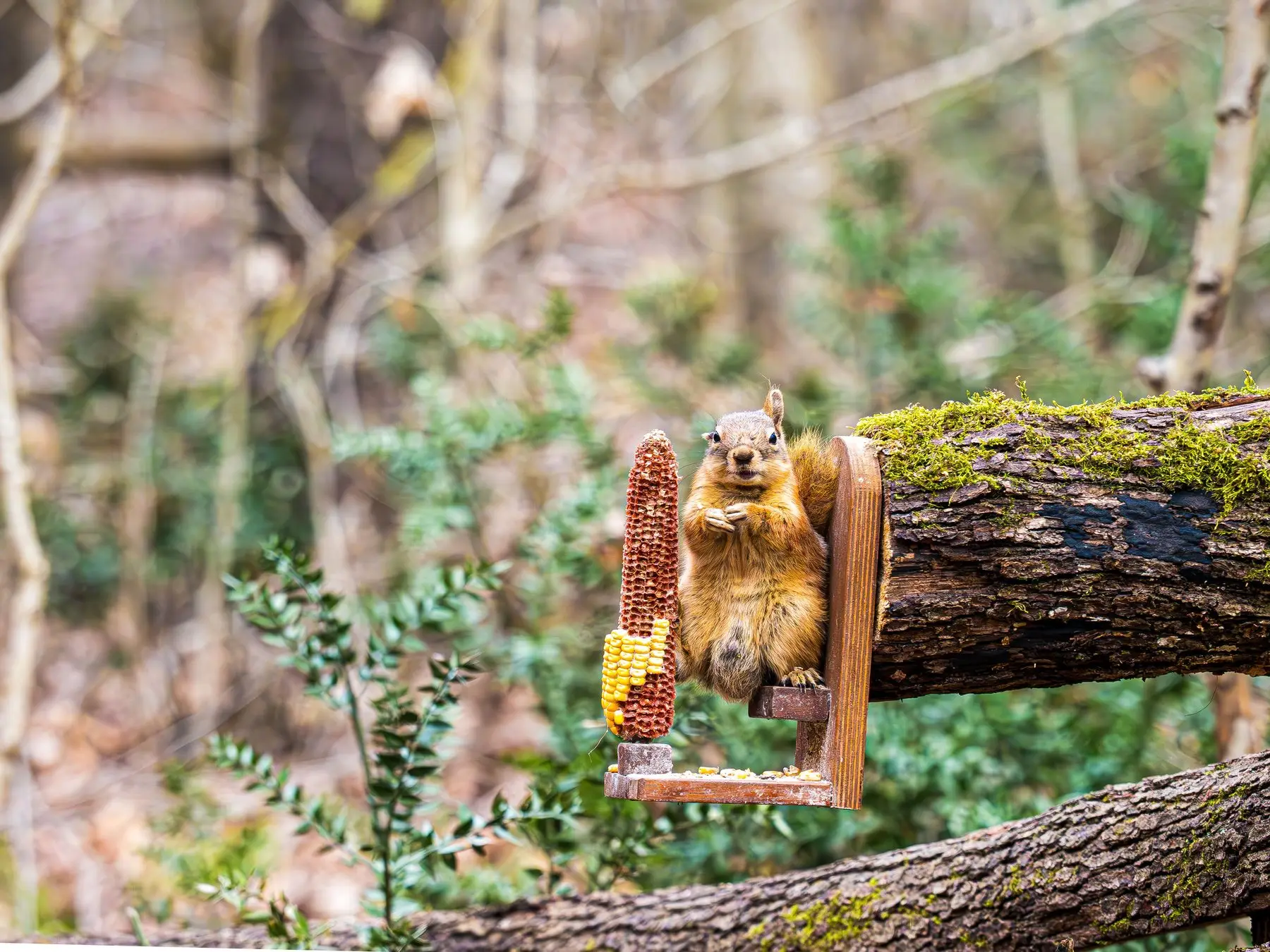
Sold everywhere, and they encourage all the wrong things:
- A whole cob is a meal, not a snack, so the squirrel fills up on starch
- It sits outdoors for days, through rain, which is when aflatoxin risk climbs
- It habituates squirrels to a fixed feeding station, and a squirrel with no wariness eventually bites a hand
- It draws rats, which find spilled corn faster than anything else
If the point is watching squirrels, a small scatter of nuts in the shell does the job better and disappears before it can spoil.
What to offer instead
- Walnuts, hazelnuts, hickory nuts, acorns — in the shell, unsalted
- Pecans, almonds in moderation
- Sunflower seeds in small amounts
- A little fresh fruit or vegetable
- Nothing salted, roasted or flavoured. Squirrels handle salt poorly
And not much of any of it. A garden squirrel does not need feeding, and the healthiest ones are those foraging across a varied range rather than commuting to a feeder.
Sweetcorn in the garden
Different question, and the answer is usually about the crop rather than the squirrel.
Fresh sweetcorn is less lopsided than dried feed corn and carries no aflatoxin risk, but it is still starch. A ripening patch is one of the more reliable ways to attract squirrels, and hardware cloth cages over the cobs as they ripen is the only protection that reliably works — netting gets chewed, and repellents wash off.
The short answer
Yes, and sparingly. Corn is safe, squirrels love it, it feeds them badly, and it becomes genuinely dangerous when it gets wet. Nuts in the shell are better food, better for their teeth, and gone before they can spoil.
Common questions
Can squirrels eat corn?
Is corn bad for squirrels?
What is wrong with dried corn cobs for squirrel feeders?
What should squirrels eat instead?
Can squirrels eat sweetcorn from the garden?
Do squirrels eat popcorn?
Backyard Weekly
Know what to plant, week by week
Join the weekly email for seasonal jobs, fixes for what is going wrong, and gear worth buying.
Not ready to subscribe? The planting calendar is free and needs no email.
By subscribing you agree to our privacy policy. Grow In Backyard will never sell your address.
Keep reading
Best Bird Seed for Cardinals — 5 Picks, Safflower First
The best bird seed for cardinals is safflower, which squirrels leave alone. 5 seeds compared on pull, cost and mess. See which suits your feeder.
What Not to Feed Squirrels (And Whether to Feed Them at All)
Peanuts, bread, chocolate and salted nuts all cause real harm. The safe list, why corn is worse than it looks, and the case against feeding squirrels.
How to Attract Squirrels to Your Yard (And Whether To)
Nut trees, water and cover bring squirrels in far more durably than a feeder. What works, what to put out, and the costs worth weighing first.
Do Squirrels Eat Meat? Insects, Eggs and Occasionally Mice
Squirrels are opportunistic omnivores, not strict vegetarians. What they actually take besides nuts, when they do it, and why spring is the peak.