
Can I Have a Goat in My Backyard? Check Three Rules First
Zoning, minimum lot size and pet limits decide it before anything else — and goats are herd animals, so the answer is never one goat.
 By
On this page
Three rules decide it before space does: how your land is zoned, whether there is a minimum lot size for livestock, and whether goats hit a pet limit or are banned as farm animals. And one biology fact overrides all of them — you cannot keep one goat.
The three rules, in order
| Rule | What to check |
|---|---|
| Zoning | Whether livestock is permitted on residential land |
| Minimum lot size | Many codes set an acreage floor for any livestock |
| Pet limits / farm-animal bans | Goats may count against a limit, or be excluded outright |
| HOA rules | Separate from, and often stricter than, the municipal code |
Miniature breeds are frequently treated differently. It is common for a code to prohibit goats generally and permit dwarf breeds under a weight threshold, so read for that specifically.
You cannot keep one
A solitary goat is a distressed goat — and a loud one
Goats are herd animals. A lone goat cries persistently, which is usually what generates the neighbour complaint that ends the whole arrangement, and it may stop eating properly.
Two is the minimum. That doubles the space, feed, fencing and manure — plan for two from the start, not after buying one.
Space and shelter
| Requirement | |
|---|---|
| Outdoor space | 200–250 sq ft |
| Dry shelter | 15–20 sq ft |
| Standard breeds | Considerably more of both |
That is space to live in, not space to graze. A backyard herd will not feed itself from what is growing there — expecting it to is how a yard goes to bare soil in weeks.
Which breeds
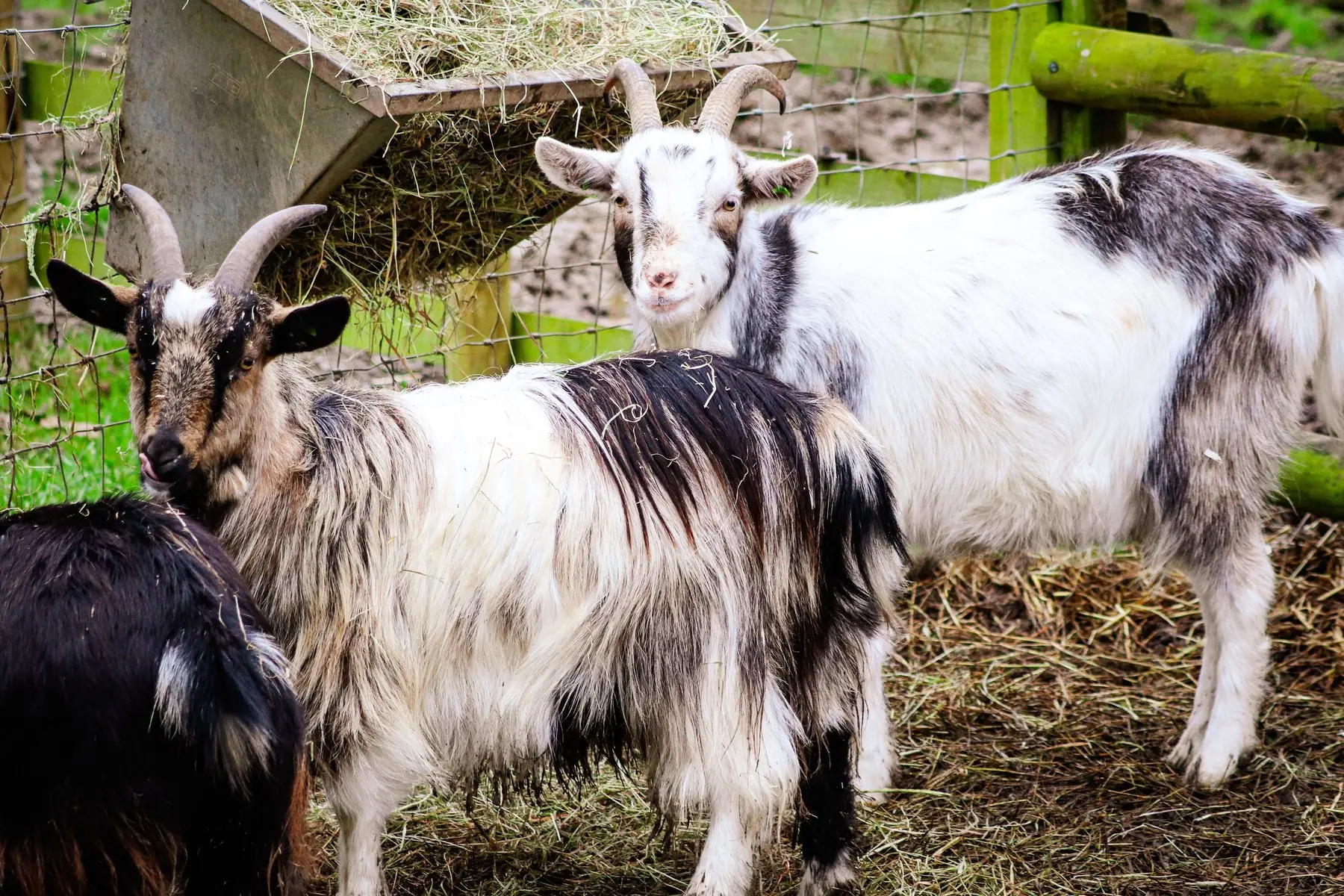
- Nigerian Dwarf — the usual suburban choice. Useful milk for their size, manageable temperament
- Pygmy — stockier, kept more as pets
Both stay under about 75 pounds and around two feet at the shoulder, which is also what makes them more likely to be permitted.
They will eat the garden
Goats are browsers, not grazers — they prefer shrubs, saplings, bark and anything at head height over grass.
- They strip ornamental shrubs and ring-bark young trees
- They eat things that are toxic to them
- Fence the goats in, rather than fencing plants out. A goat leans on, climbs and tests every barrier until it finds the weak point
What neighbours actually complain about
Noise first, smell second:
- A lonely or hungry goat is loud and carries. The strongest practical argument for two goats and a feeding schedule
- Intact males are the smell problem. Bucks develop a powerful musky odour in the breeding season that genuinely reaches neighbouring properties — keep wethers or does only
- Manure is fine if composted rather than piled
Common questions
Can I have a goat in my backyard?
Can you keep just one goat?
How much space does a goat need?
Which goats suit a small property?
Will goats destroy the garden?
What do neighbours actually complain about?
Backyard Weekly
Know what to plant, week by week
Join the weekly email for seasonal jobs, fixes for what is going wrong, and gear worth buying.
Not ready to subscribe? The planting calendar is free and needs no email.
By subscribing you agree to our privacy policy. Grow In Backyard will never sell your address.
Keep reading
Keeping Ducks in Residential Areas: Rules, Mess and Neighbours
Ducks are quieter than roosters but far messier than hens. The zoning questions to ask first, and what a suburban duck setup actually has to handle.
Can Rats Climb Walls? Brick and Pipes, Yes. Glass, No.
Rats climb rough vertical surfaces easily, jump three feet up and squeeze through a 20mm gap. What that means for sealing a house, and what actually stops them.
Can a Chipmunk Be a Pet? The Legal and Practical Answer
Taking a wild chipmunk is illegal in most states and a poor idea everywhere. What the law says, what captive Siberian chipmunks need, and the honest verdict.
Can Mice Climb Trees? Yes — Some Species Live in Them
House mice and deer mice climb well, and deer mice nest in trees by preference. What that means for bird boxes, sheds and fruit trees.