
Are Squirrels Diurnal? Tree Squirrels Yes, Flying No
Grey, red and fox squirrels are strictly daytime animals with dawn and dusk peaks. What night-time scratching in your roof actually is.
 By
On this page
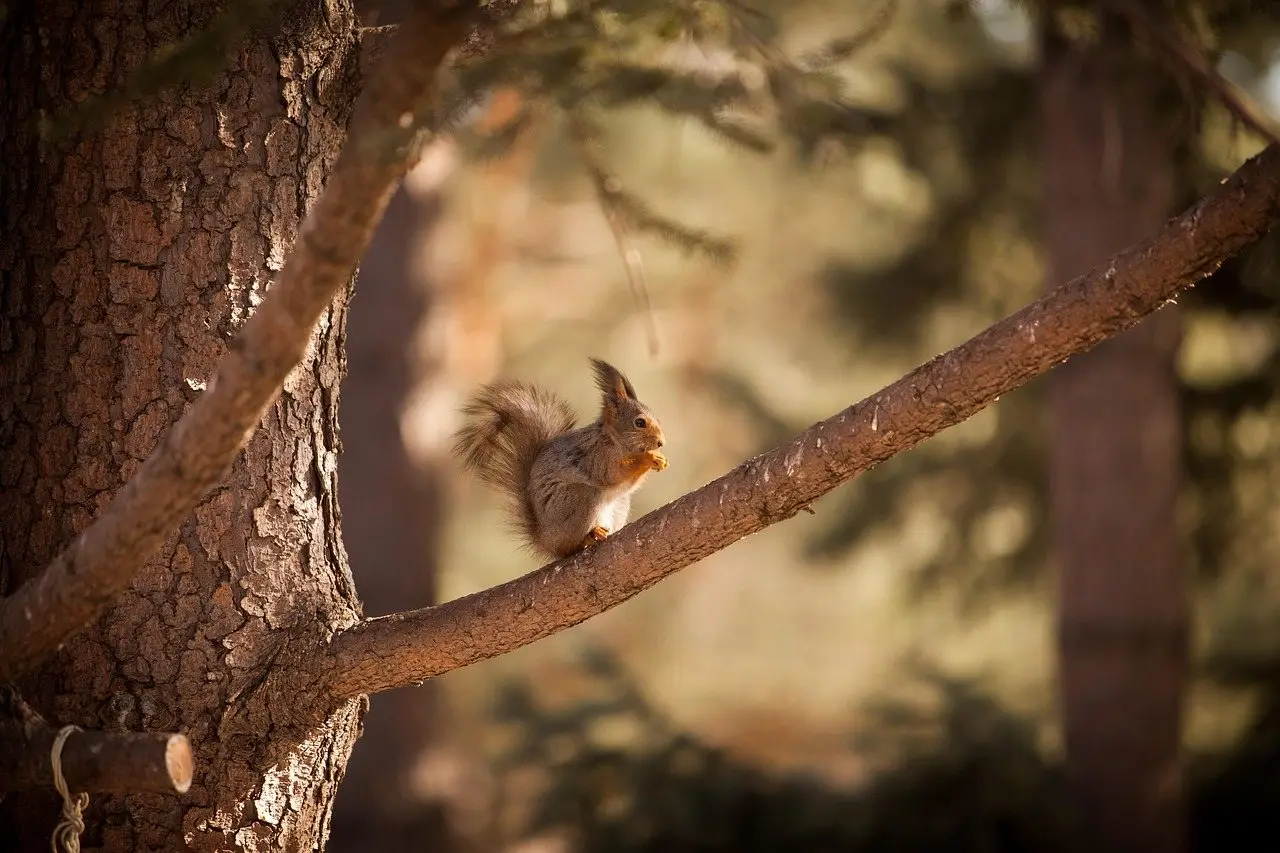
Tree squirrels are strictly diurnal. Out at first light, busiest at dawn and dusk, back in the drey before dark. Flying squirrels are the exception and are strictly nocturnal.
The daily pattern
| time | activity |
|---|---|
| Before dawn | in the drey |
| First 2 hours after sunrise | peak — foraging, caching |
| Midday | reduced, sharply so in heat |
| Last 2 hours before sunset | peak |
| After dusk | in the drey |
The two peaks are a predator trade-off. Low light at dawn and dusk gives some cover from hawks, which hunt by sight, while full darkness belongs to owls and the squirrel’s own eyesight is poor in it.
Seasonal shift: in high summer the midday gap widens and the peaks move further apart. In winter the pattern compresses into one middle-of-the-day session, because the days are short and the cost of being out in the cold is high.
Flying squirrels are the exception
| tree squirrels | flying squirrels | |
|---|---|---|
| Active | day | night |
| Eyes | moderate | very large, dark |
| Seen by people | constantly | almost never |
| Sound | chatter, bark, scrabbling | high chirps, a thin whistle |
| Gap they fit through | golf-ball size | much smaller |
Southern and northern flying squirrels are common across much of their range and almost entirely unseen, because they are out between dusk and dawn. People living with them for years often have no idea.
Night noise in the roof is a different animal
If the scratching is after dark, it is not a grey squirrel. Work through: flying squirrels (light, fast, high chirps), rats (gnawing, running along joists), mice (lighter, scratchier), raccoons (heavy, chittering, usually in spring), or a bird. Each needs a different gap sealed.
Why it matters for exclusion
Knowing greys are diurnal makes two practical jobs easier:
Finding the entry point. Sit where you can see the whole roofline at dawn and watch them leave. Twenty minutes at first light finds in one go what hours of ladder work often miss.
Timing the work. Fit a one-way exclusion door during the day, while the animals are out foraging. Sealing a roof at night with greys inside is how an animal gets walled in — and if it is February to April or August to October, it may be a nursing female with kits.
Winter, and what is not hibernation
Tree squirrels stay active all year. They have:
- Cached food — the autumn burying is the entire winter plan
- A denser winter coat, including the pale ear fringing
- A modest fat layer
- Shared dreys — two or three animals huddling for warmth
In genuinely severe weather they may stay in the nest for a day or two. That is waiting it out, not hibernation, and they come out as soon as it breaks.
Ground squirrels, marmots and chipmunks are different animals in this respect: chipmunks enter long torpor with periodic waking, and ground squirrels and marmots truly hibernate. That is part of why chipmunk activity in a garden stops abruptly in autumn while squirrel activity does not.
A squirrel out at night
Usually means something happened:
- Disturbed from the drey by a cat, raccoon, owl, or building work
- Displaced after a tree came down
- Unwell — including head injury or rodenticide poisoning, both of which produce slow, disoriented animals that are unafraid
Do not approach one. If it is staggering, circling or unresponsive, call a licensed wildlife rehabilitator and keep pets away from it.
Common questions
Are squirrels diurnal or nocturnal?
Why do I hear scratching in my attic at night then?
What time of day are squirrels most active?
Do squirrels come out at night at all?
Do squirrels hibernate?
How does this help with squirrels in a roof?
Backyard Weekly
Know what to plant, week by week
Join the weekly email for seasonal jobs, fixes for what is going wrong, and gear worth buying.
Not ready to subscribe? The planting calendar is free and needs no email.
By subscribing you agree to our privacy policy. Grow In Backyard will never sell your address.
Keep reading
Do Squirrels Come Out at Night? Which Ones, and What You Heard
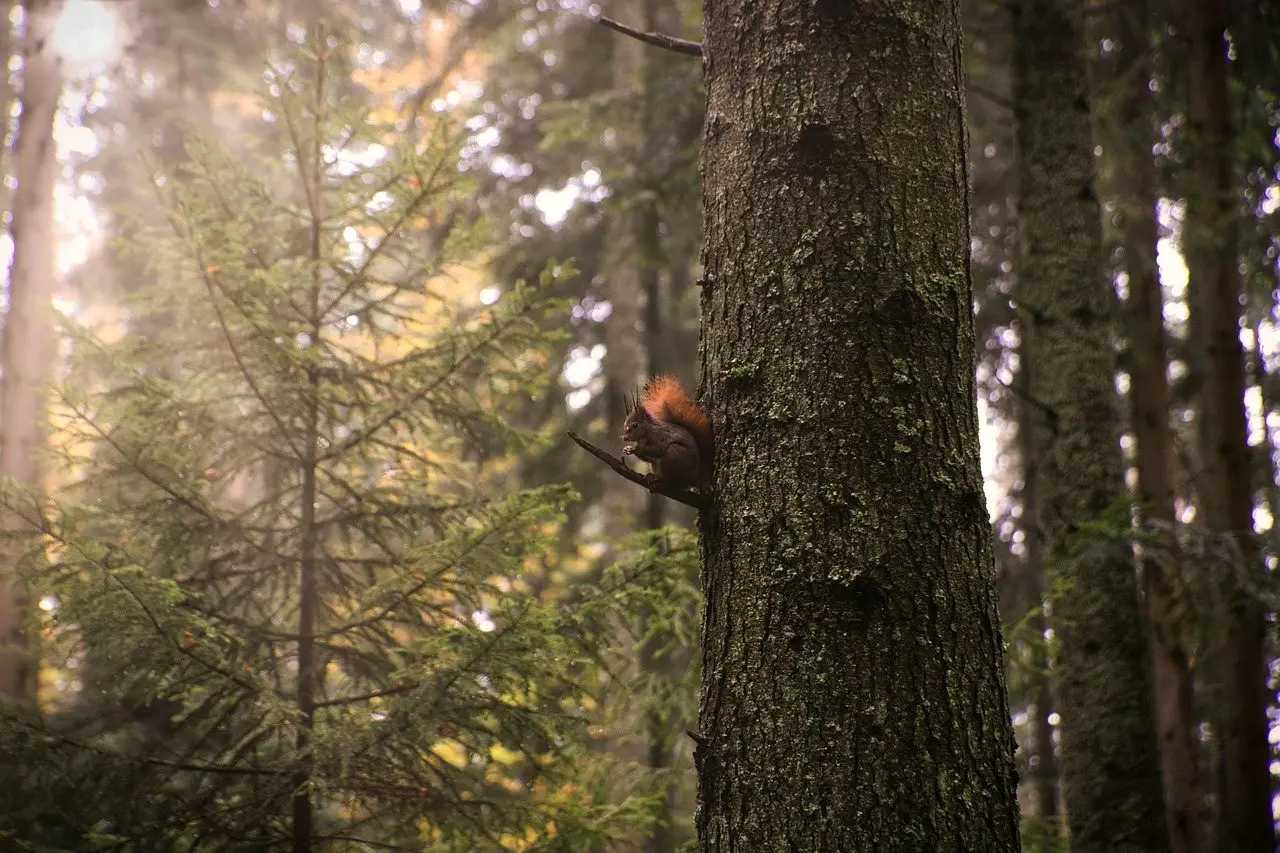
Grey and fox squirrels are strictly daytime animals. If something is moving in the roof after dark, it is almost certainly not one of them.
Where Do Flying Squirrels Live? Range, Nests and Your Attic
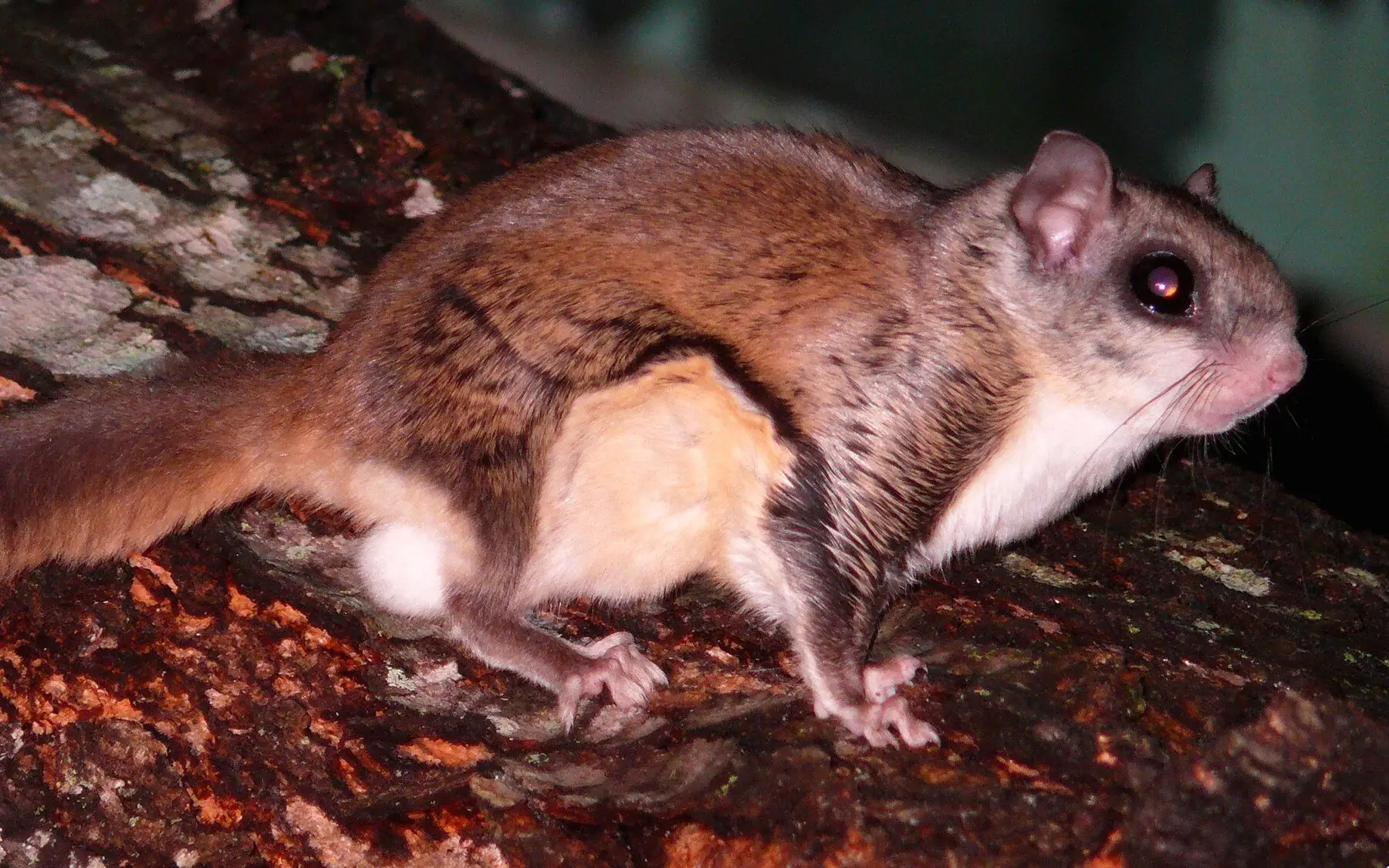
Flying squirrels are common across most of North America and almost never seen, because they are strictly nocturnal. Habitat, nest sites and attic signs.
When Are Chipmunks Most Active? Daily and Seasonal Patterns
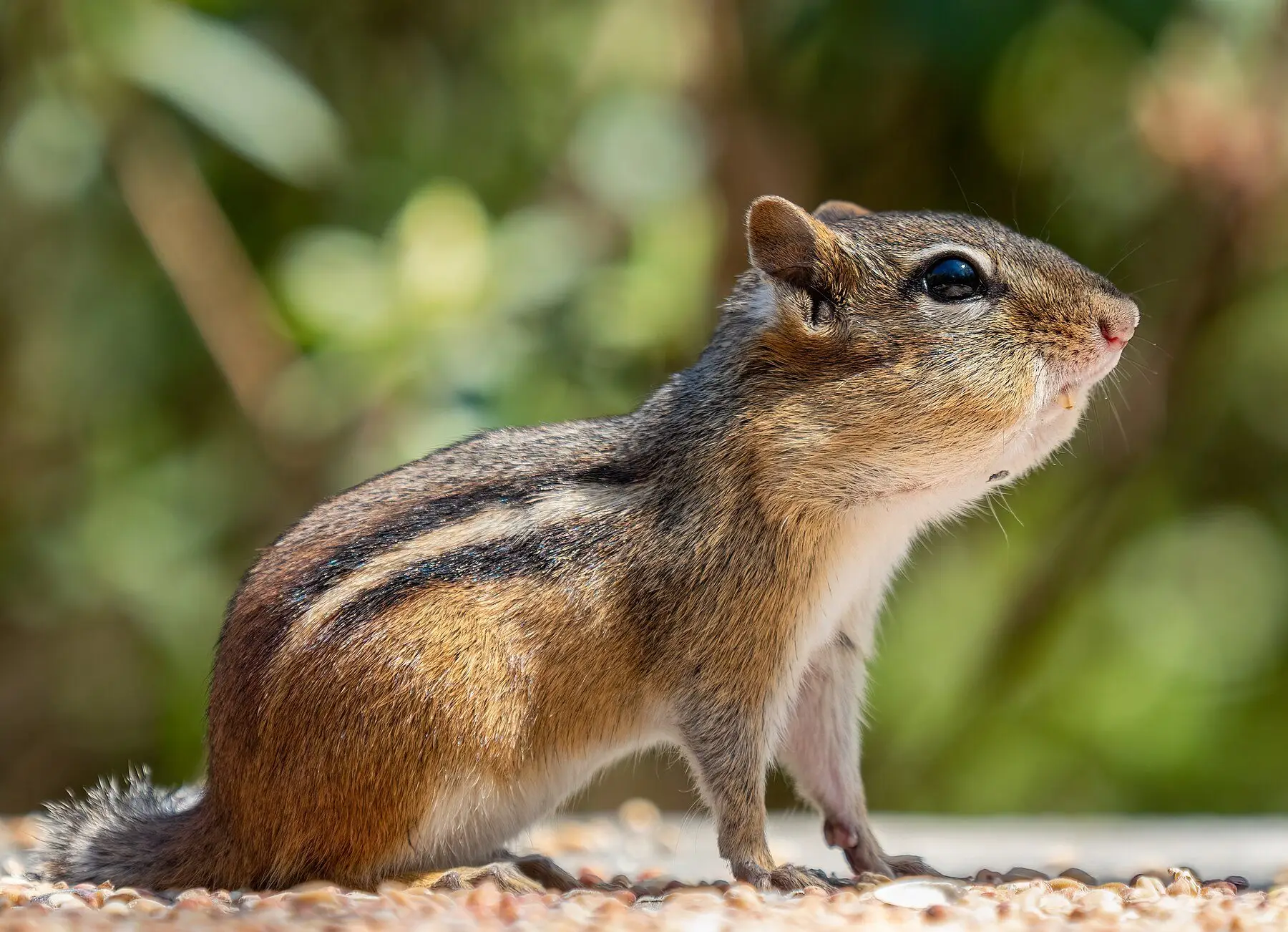
Chipmunks are strictly daytime animals with morning and late-afternoon peaks. Why they vanish in midsummer, and why a January sighting is normal.
Are Squirrels From the Rat Family? Same Order, Not Family
Both are rodents and the resemblance stops there. Squirrels are Sciuridae, rats are Muridae — and the differences are practical, not academic.