
What Plants Repel Ticks? The Honest Answer Is Almost None
A handful of plants contain compounds that deter ticks in a lab, but planted in a garden they do nothing. What works is habitat, not planting.
 By
On this page
Almost none, as planted. Lavender, rosemary, catnip and the rest do contain tick-deterrent compounds — as extracted oil, at concentration. A living plant releases a trace of it, and ticks do not navigate by smell through air. They sit and wait to be touched.
Why the planting idea fails
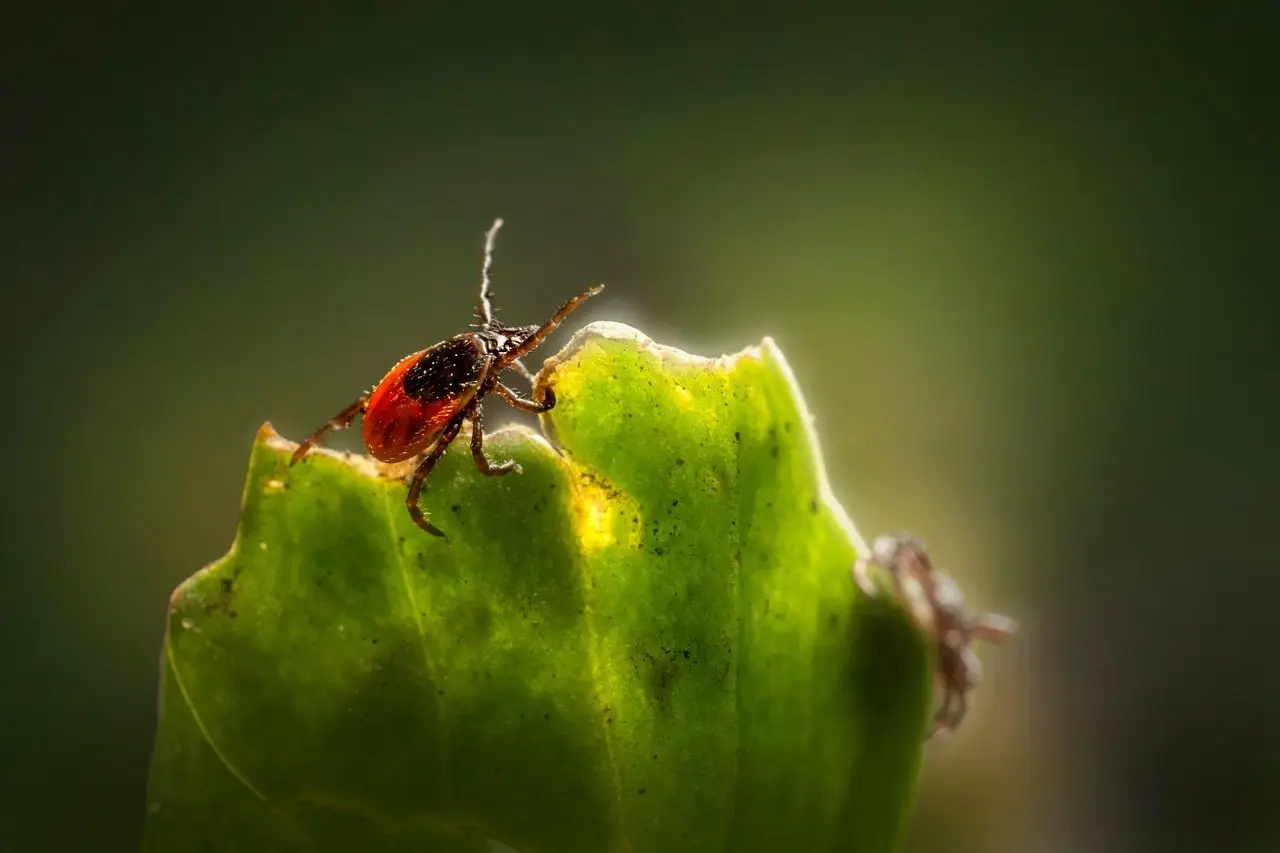
A mosquito flies toward you and can in principle be confused en route. A tick does not hunt. It climbs a grass stem or a leaf, extends its front legs, and waits — sometimes for weeks — for warmth and carbon dioxide to pass within reach. Nothing about that behaviour is interrupted by a shrub three metres away.
Where the claim comes from
Lab studies of essential oils — lavender, rose geranium, pennyroyal, wormwood — show genuine repellency and in some cases mortality. Those results are real. They describe the oil on a surface a tick touches, not a plant in a border.
What actually reduces them
| Measure | Effect | Effort |
|---|---|---|
| Keep grass short | Large — kills the humidity they need | Ongoing |
| Clear leaf litter and brush | Large | Seasonal |
| Mulch or gravel strip at the wood edge | Large — ticks will not cross dry ground | One-off |
| Remove ivy and pachysandra near paths | Moderate | One-off |
| Tick tubes, spring and late summer | Good evidence | Low |
| Perimeter spray, late spring | Large on nymphs | One visit |
| Discourage deer; control rodents | Large, slow | Ongoing |
| Planting “repellent” species | None | — |
The habitat rules in one paragraph
Ticks desiccate. They need shade and humidity at ground level, which is why they live in leaf litter, long grass, dense ground cover and woodland edges and not in the middle of a mown, sunny lawn. Every effective measure is a version of the same move: make the ground drier, brighter and shorter, and put a strip of something they will not cross between the wild edge and where people walk.
Pennyroyal is the one to leave out
Pennyroyal appears on every repellent-plant list and its oil is genuinely toxic — to cats and dogs, and to people in small quantities. It is not worth planting for a benefit it does not deliver.
Where the oils do belong
On you, not in the border. A properly formulated repellent — DEET, picaridin, or permethrin on clothing and boots, which is the most effective option for ticks specifically — puts the compound exactly where the tick makes contact. That is the version of “lavender repels ticks” that is true.
Common questions
What plants repel ticks?
Does lavender keep ticks away?
What actually reduces ticks in a yard?
Is there any plant worth growing for ticks?
Do tick tubes work?
Can I spray my yard for ticks?
Backyard Weekly
Know what to plant, week by week
Join the weekly email for seasonal jobs, fixes for what is going wrong, and gear worth buying.
Not ready to subscribe? The planting calendar is free and needs no email.
By subscribing you agree to our privacy policy. Grow In Backyard will never sell your address.
Keep reading
Plants That Repel Mosquitoes — 4 Fixes That Beat Them
Plants that repel mosquitoes barely work unless you crush the leaves. 4 measures compared, starting with standing water. See which suits your yard.

What Do Marigolds Repel? Root Nematodes, and Little Else
Marigolds have one well-evidenced effect: French marigolds suppress root-knot nematodes. The mosquito and rabbit claims do not hold up.

How Many Lavender Plants to Repel Mosquitoes? None Work
A planted lavender bush releases almost no oil into the air. Crushing leaves on skin has some effect; a border of plants does not, at any number.
What Smell Do Flies Hate the Most? Scent Is the Weak Part
Basil, mint, lavender and clove genuinely repel flies — briefly, and at close range. Why removing the attractant beats any scent, and what works outdoors.