
Dieffenbachia Leaves Turning Yellow: Which Leaves Tell You
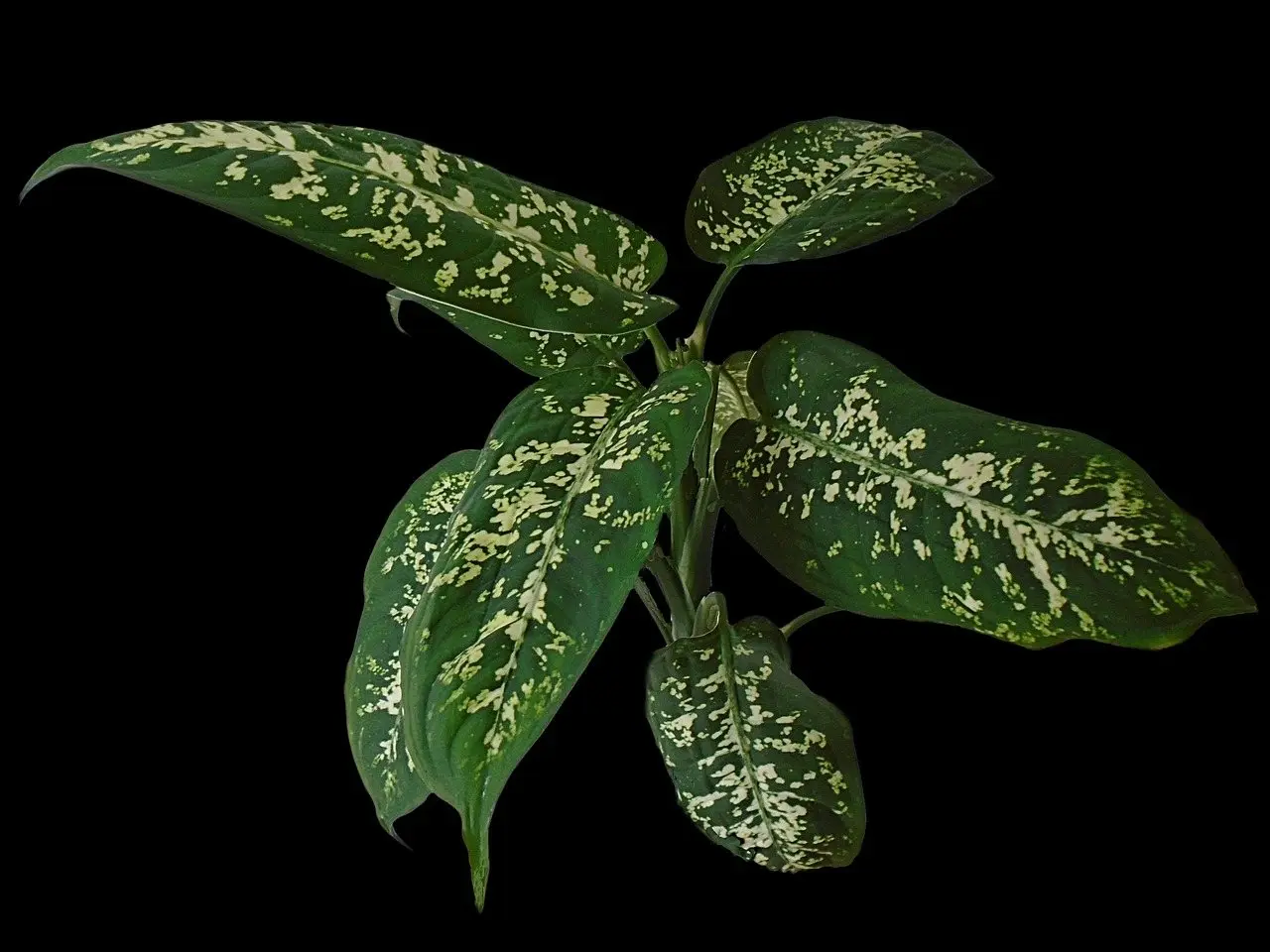
Dieffenbachia leaves turning yellow has 5 causes, and which leaves go first identifies it. Bottom leaves mean one thing, new growth another, patchy a third.
 By
On this page
Yellow leaves on a dieffenbachia are a symptom with five common causes, and you can usually identify which by asking one question: which leaves went first?
Read the pattern
| Pattern | Soil | Likely cause | First action |
|---|---|---|---|
| Lower leaves, even yellow | Stays wet | Overwatering / root rot | Check roots now |
| Lower leaves, even yellow | Dries in 2–3 days | Underwatering or rootbound | Water deeply; check roots |
| New growth pale, veins green | Normal | Nutrient deficiency | Feed at half strength |
| Patchy yellow stippling | Normal | Spider mite | Look under leaves |
| Sudden, with brown edges | Normal | Cold draught or shock | Move it |
| One or two, over months | Normal | Ageing — nothing wrong | Remove the leaf |
The overwatering case, because it is most of them
Dieffenbachia is a thick-stemmed tropical that stores water in its cane. It tolerates a dry fortnight far better than a wet one, and almost every “my dieffenbachia is dying” case is a plant sitting in compost that has not dried out.
Check the roots rather than guessing. Tip the plant out and look:
- Healthy — firm, pale, holding the mix together
- Rotting — brown, soft, falling away, sour smell
If some are rotted, cut the damaged roots off with a clean blade, repot into fresh free-draining mix in a pot barely larger than the rootball, and leave it dry for several days. A big pot is the thing that caused the problem; replacing it with another big pot repeats it.
If more than roughly half the root system has gone, the faster route is a cane cutting. Dieffenbachia roots readily from a section of stem, and you will get a healthy plant quicker than nursing this one.
Watch out
Wear gloves. Dieffenbachia sap contains calcium oxalate crystals — the reason it is called dumb cane — and causes burning and swelling in the mouth and throat if chewed, plus skin and eye irritation. Wash hands after cutting, and keep the plant away from pets and children that chew foliage.
The other four, briefly
Underwatering or rootbound. Same lower-leaf yellowing, opposite soil. If water runs straight through and out in seconds, the rootball has filled the pot and there is nothing left to hold moisture. Repot one size up.
Nutrient deficiency. New leaves emerge pale with darker veins still showing. Common in plants that have been in the same compost for two years or more. Feed at half strength monthly through spring and summer only — not in winter, when the plant is not growing and unused fertiliser salts build up.
Spider mite. Fine pale stippling rather than solid yellow, sometimes with faint webbing in leaf axils. Look at the undersides against the light. Dry heated air in winter is when they appear.
Cold or draught. Sudden yellowing with brown edges after a move, or on the side facing a door or a cold window. Dieffenbachia sulks below about 60°F and shows it within days.
What is simply normal
A dieffenbachia grows from its crown and sheds its oldest leaves as it goes. That is why mature plants develop a bare lower cane with a tuft of foliage on top.
One or two lower leaves yellowing slowly over the course of months is the plant doing what it does. Worry when several go at once, when it moves up the plant, or when new growth is affected.
Common questions
Should I cut off yellow dieffenbachia leaves?
Is yellowing always overwatering?
Why are only the bottom leaves yellow?
Can a dieffenbachia recover from overwatering?
Is dieffenbachia sap dangerous?
Backyard Weekly
Know what to plant, week by week
Join the weekly email for seasonal jobs, fixes for what is going wrong, and gear worth buying.
Not ready to subscribe? The planting calendar is free and needs no email.
By subscribing you agree to our privacy policy. Grow In Backyard will never sell your address.
Keep reading
How to Propagate Dieffenbachia From Stem Cuttings
Dieffenbachia roots from cane sections laid on compost, not just from tips. Wear gloves — the sap causes the swelling that gives it its common name.
Types of Worms in Potted Plants — 6 and Which Harm Roots
Types of worms in potted plants are mostly harmless decomposers, but 2 of the 6 eat living roots. How to tell them apart before you repot anything.

Best Time to Repot Indoor Plants: Early Spring
Repot as growth resumes, not on a schedule. Most houseplants need it every two to three years — and several are better off left pot-bound.
How to Get Rid of a Stump Without Grinding: Four Methods
Digging works in a weekend, chemicals take a year, fire is often illegal and rotting takes three. Here is what each one actually involves.