
What Colour Landscape Rock Should I Use? Match the House
Take the cue from your house walls and roof, not from the garden centre display. Pale rock bounces heat and shows dirt; dark absorbs it and hides stains.
 By
On this page
Take the cue from the house, not the display pallet. Stone that picks up a tone already in your walls or roof reads as deliberate. Beyond looks, the real trade is pale reflects heat and shows dirt; dark absorbs heat and hides it.
The trade-off by colour
| Pale (white, cream, buff) | Mid (grey, slate) | Dark (black, plum) | |
|---|---|---|---|
| Heat | Reflects — stays cooler | Moderate | Absorbs — hot in sun |
| Shows dirt | Badly | Moderately | Hides it |
| Algae in shade | Very visible | Visible | Barely visible |
| Brightens a dark corner | Yes | Somewhat | No — deadens it |
| Light onto plants | Reflects upward | — | — |
| Maintenance | Highest | Moderate | Lowest |
White stone does not stay white
Soil splash, leaf stain, algae and dust all show, and in a damp shaded spot it greens over within a season or two. It can be washed — which is a real chore over any area. Pale stone belongs in open sunny positions with airflow, away from overhanging planting.
Choosing from the house
- Look at the fixed elements — wall colour, roof, existing paving, window frames.
- Pick a tone that is already there, a shade or two away rather than an exact match. An exact match reads flat; an unrelated colour reads bolted on.
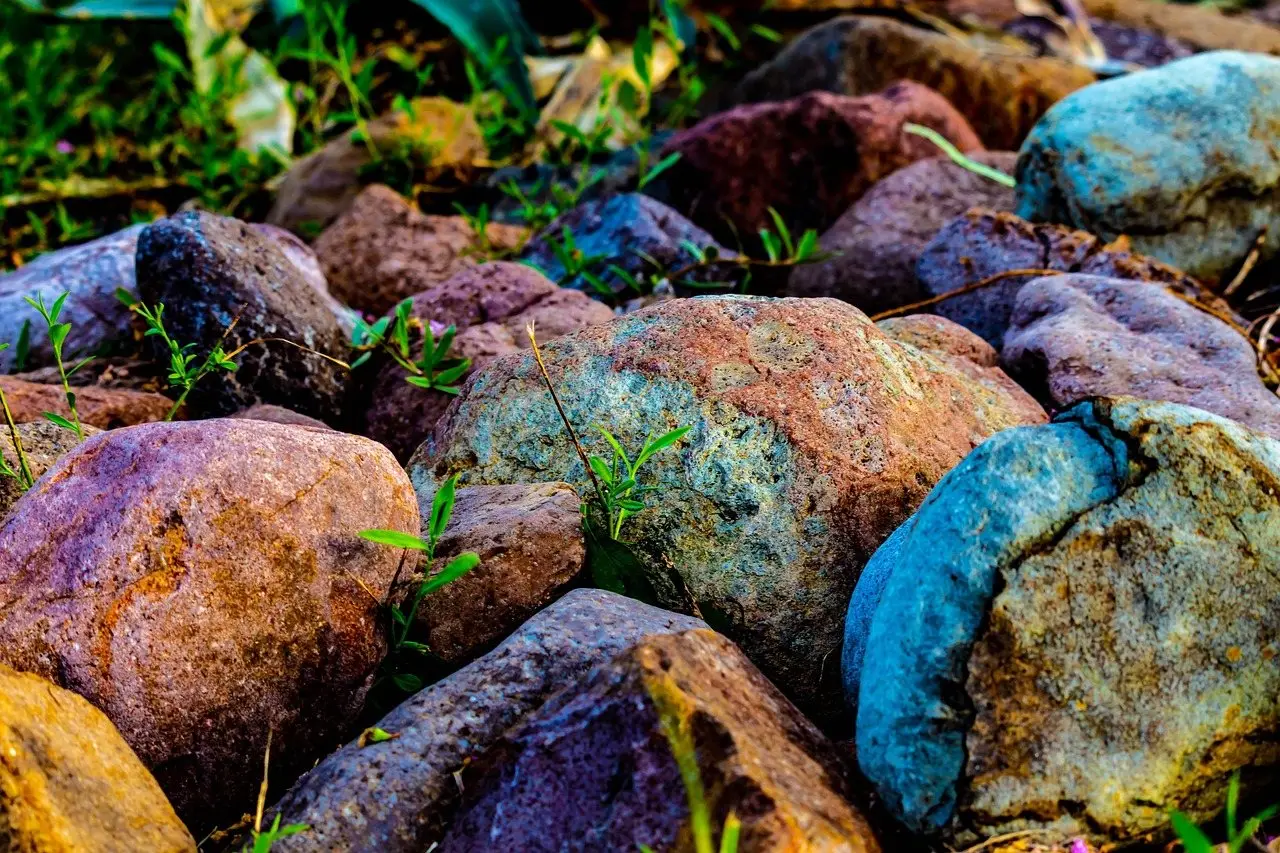
- Look at a sample wet as well as dry. Most stone darkens considerably when wet, and that is how it will look for much of the year in a temperate climate.
- Look at it in place, in your light, before buying a bulk bag.
Heat, and where it matters
Dark stone in full sun becomes genuinely hot underfoot and radiates heat into the air and planting around it. That is a drawback beside a seating area or a path used barefoot, and a real stress on shallow-rooted plants in hot climates.
In cool climates the same property is occasionally an advantage, warming a bed earlier in spring.
Two things that catch people out
Dyed stone fades; natural stone does not
Natural stone’s colour is the mineral, so it dulls with dust and rinses back. Coated or dyed decorative stone fades under UV, sometimes unevenly. If long-term consistency matters, buy the colour rather than the coating.
Limestone chippings raise soil pH slowly as they weather. Fine around most planting; not around rhododendrons, camellias, blueberries or anything else that needs acid soil.
Common questions
What colour landscape rock should you use?
Does white landscape rock stay white?
Does dark landscape rock get hot?
Does landscape rock fade over time?
Should landscape rock match or contrast with the house?
Does rock colour affect plants?
Backyard Weekly
Know what to plant, week by week
Join the weekly email for seasonal jobs, fixes for what is going wrong, and gear worth buying.
Not ready to subscribe? The planting calendar is free and needs no email.
By subscribing you agree to our privacy policy. Grow In Backyard will never sell your address.
Keep reading
Rock Garden Ideas That Look Like They Belong There
The difference between a rockery and a pile of stones is drainage and burial. How to set rock so it reads as outcrop, and what actually survives in it.
What to Put Under Decorative Stones: Fabric, Not Plastic
Woven landscape fabric lets water through and holds stones clear of soil. Plastic sheeting traps water and kills the ground beneath it.
Garden Decor Ideas That Don't Look Cluttered in a Year
Most backyard decor gets added piece by piece until the yard looks like a garden center. A short list of what earns its place, and what to skip.
What Do Professional Landscapers Use for Edging? Steel
Steel edging is the trade default because it is thin, bends to curves and stays put for decades. Plastic is the budget option and the one that lifts.