
What Are Flood Lights Used For? Wide, Even Coverage
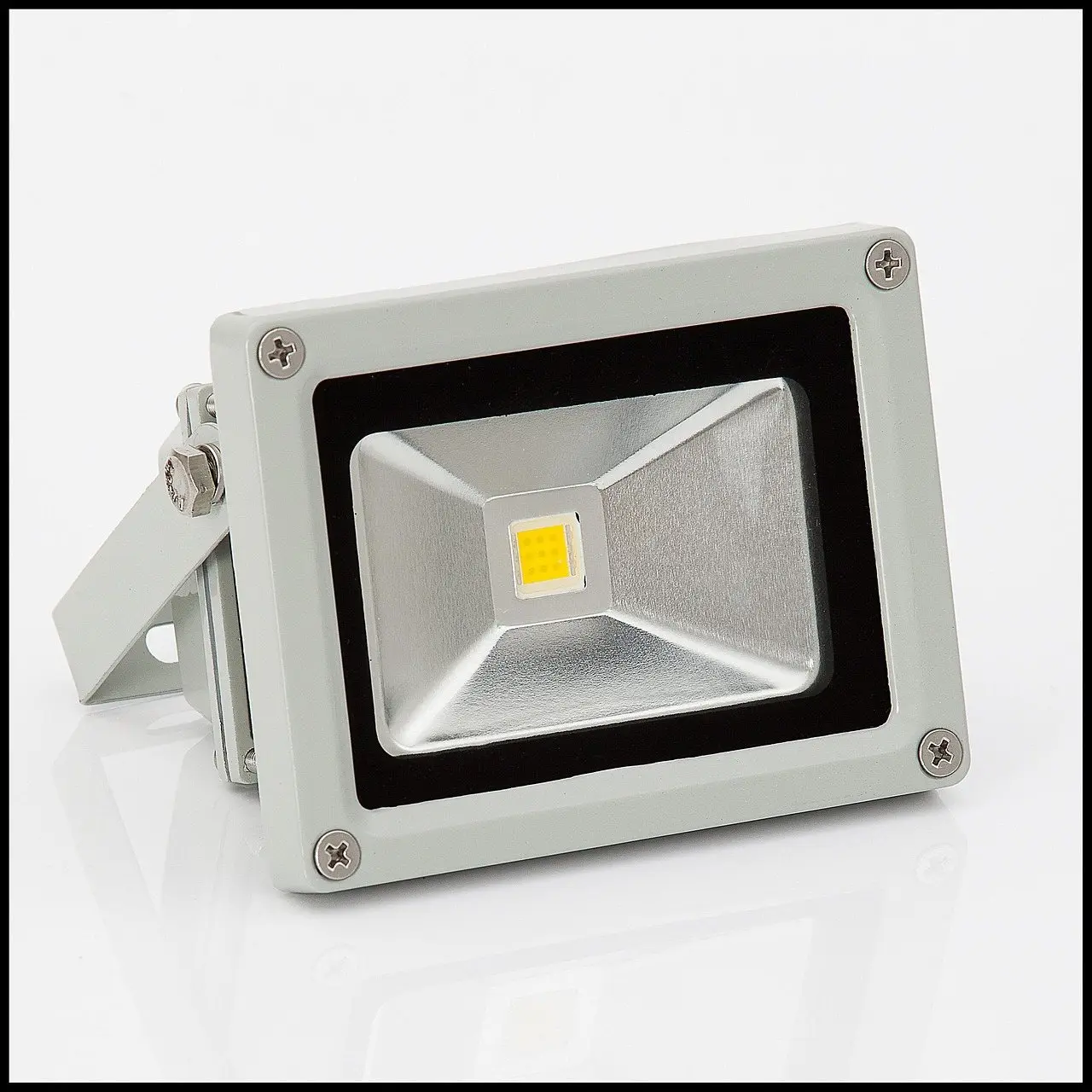
A flood light spreads a wide beam over an area rather than picking out a point. That beam angle is what separates it from a spot light, not brightness.
 By
On this page
Lighting an area evenly, rather than picking out a point. The defining feature is beam angle, not brightness — a flood spreads light wide; a spot concentrates it into a narrow cone.
Flood or spot?
| Flood light | Spot light | |
|---|---|---|
| Beam angle | Wide — often 45°+ | Narrow cone |
| Job | Cover an area | Pick out an object |
| Reach | Shorter | Further |
| Typical use | Driveway, yard, frontage | Tree, statue, sign, feature |
| At the same wattage | Even, lower intensity | Bright at the target, dark around it |
What they are actually used for
- Driveways and parking areas — the most common domestic use
- Security lighting, usually on a motion sensor
- Working light over a patio, garage apron or workshop door
- Building frontages and large wall washes
- Sports pitches and events, which is where the name comes from
Sizing it, in lumens
Lumens measure light; watts only measure consumption
With LEDs the two have decoupled completely. Buy on lumens. A 20 W LED and a 500 W halogen can produce similar output.
| Area | Sensible output |
|---|---|
| Small patio or doorway | 700–1,300 lm |
| Domestic driveway or back garden | 1,000–2,500 lm |
| Large area, genuine security | 3,000 lm+ |
Over-bright makes seeing worse, not better
A very bright flood creates glare and deep shadow beside it. Your eyes adapt to the bright patch and everything outside it goes black — which is the opposite of what security lighting is for.
Running cost
LED floods are cheap to run: roughly 20 watts for around 2,000 lumens, so a few hours a night is a minor cost.
Older halogen floods are why security lighting had a reputation for expense — a 500 W halogen uses around twenty-five times the power for comparable output. A motion sensor or timer cuts either further.
Mounting and aim
- 2.5–3 m high, typically
- Angled downward, not outward — this is the single most important adjustment
- Light the approach to a door or driveway, not the boundary
- Reachable from a ladder — sensors and lenses need cleaning
- Fit a shield or hood where a neighbour is in the line of sight
Aim, lumen choice and a hood resolve nearly every outdoor lighting complaint, which in many places can otherwise be acted on under light nuisance rules.
Common questions
What are flood lights used for?
What is the difference between a flood light and a spot light?
How many lumens do you need for an outdoor flood light?
Do flood lights use a lot of electricity?
Where should you mount a security flood light?
Do flood lights annoy neighbours?
Backyard Weekly
Know what to plant, week by week
Join the weekly email for seasonal jobs, fixes for what is going wrong, and gear worth buying.
Not ready to subscribe? The planting calendar is free and needs no email.
By subscribing you agree to our privacy policy. Grow In Backyard will never sell your address.
Keep reading
Outdoor Garden Lighting Ideas That Get Used Past Month Two
Most outdoor lighting gets hung once and never turned on again. The five kinds worth the effort, and the color temperature that makes or breaks all of them.
Can String Lights Cause a Fire? Rarely, With LEDs
LED string lights run cool and are a low risk. The hazards that remain are daisy-chaining, damaged cable and indoor-rated sets left out in the weather.
Garden Decor Ideas That Don't Look Cluttered in a Year
Most backyard decor gets added piece by piece until the yard looks like a garden center. A short list of what earns its place, and what to skip.
What Is Rustic Decor? Raw Materials, Visible Wear, No Polish
Rustic decor keeps materials in their natural state — unfinished wood, iron, stone — and treats age and imperfection as the point rather than a flaw.