
Succulent Garden Ideas for Small Spaces and Containers
Succulents fail from wet feet, not from neglect. The grit mix, the containers that work, and which species survive a winter outdoors.
 By
On this page
Succulents are sold as the plant you cannot kill, and then they die. Almost always from being wet, and almost always in winter rather than summer.
The mix
This is the whole job. Get it right and the rest is easy.
- About 50/50 potting compost and coarse mineral grit
- Horticultural grit, pumice or perlite — not sand. Fine sand plus compost makes something closer to concrete
- Cut bagged cactus compost further with grit. On its own it is formulated for indoor pots and holds too much water outdoors
- Test it: wet the mix, and it should drain within a few seconds rather than staying glossy
- Top-dress with grit or fine gravel so the plant’s neck sits on something dry. This single detail prevents a lot of crown rot
No drainage hole, no succulent
Decorative bowls without a hole are sold with succulents planted in them constantly. They are a sealed reservoir under a plant that cannot tolerate one.
Drill it, or plant something else. Gravel in the base does not substitute — it raises the saturated layer into the roots rather than draining it.
Small-space formats that work
Shallow bowls and pans
Succulent roots are shallow and wide. A 3 to 4 inch deep pan suits them better than a deep pot and dries faster between waterings. Terracotta is ideal because it breathes.
An old sink or trough
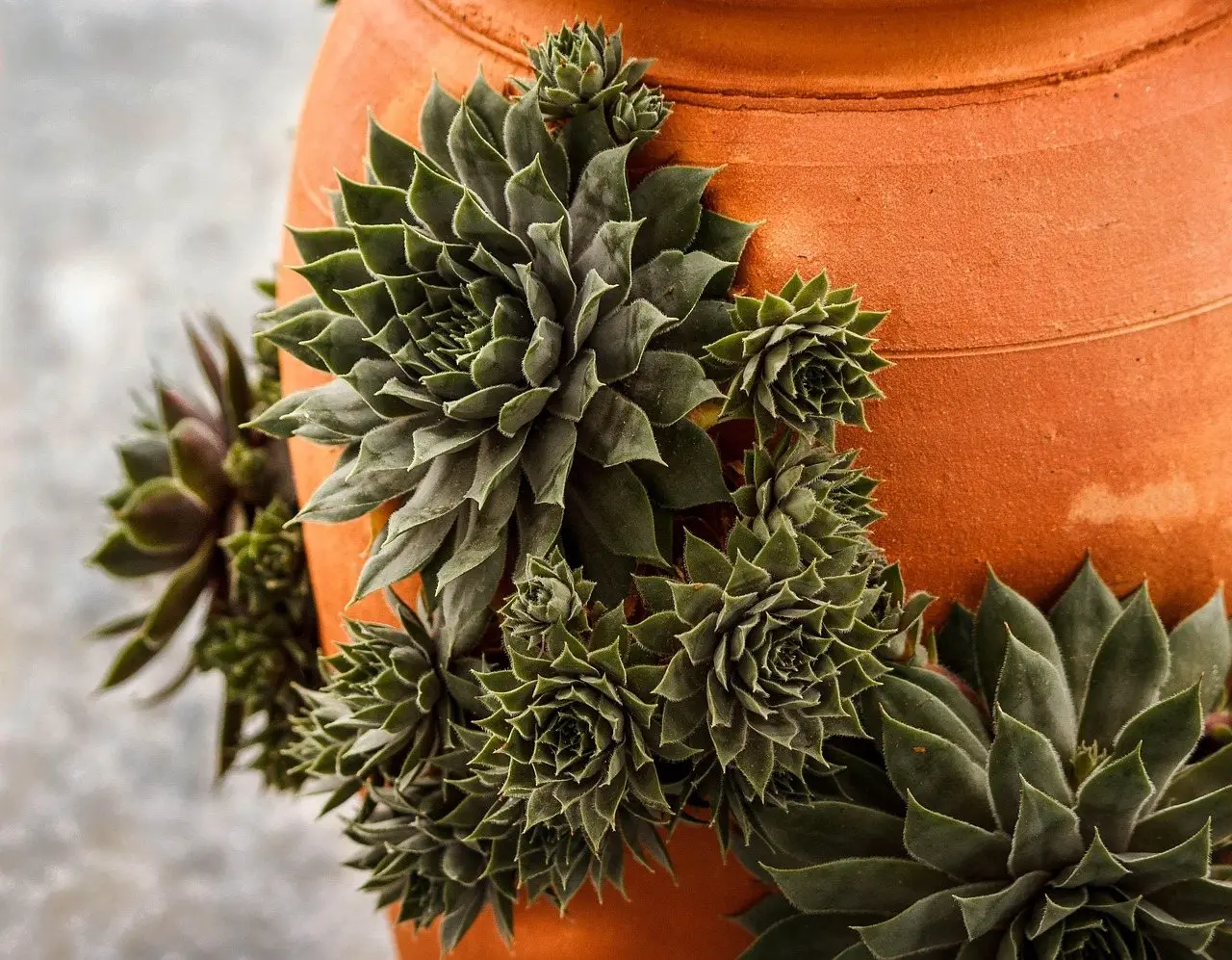
The classic alpine container. Crock the plughole so it drains but does not wash the mix out, fill with the gritty mix, and plant a mixed sempervivum collection. Sits happily outside all year in most temperate climates.
A dry stone wall or gaps in paving
Sempervivum will colonise a wall crevice with a pocket of gritty mix pushed in behind it, and sedum seeds itself into paving joints. No watering, no maintenance, and it looks established within two seasons.
Vertical panel
- Build a shallow box, two to three inches deep, with a mesh or slatted face
- Fill with gritty mix, plant through the gaps
- Leave it flat for four to six weeks until the roots knit
- Water it flat, then hang it
- Expect to fill gaps in the first year
Sempervivum and small sedums are the right plants for this. Rosette echeverias look best and will not survive a frost outdoors.
A drilled colander, a toolbox, a hollow log
Anything shallow with drainage. This is the one plant group where the container can be almost anything without the plant minding.
Which plants, by whether they stay out
| Plant | Outdoors through frost | Notes |
|---|---|---|
| Sempervivum (houseleek) | Yes, very hardy | The backbone. Offsets freely |
| Hardy sedum | Yes | Sedum spurium, acre, album |
| Delosperma | Yes, with sharp drainage | Long flowering |
| Hardy opuntia | Yes, in dry cold | Needs very dry winter |
| Echeveria | No | Bring in, or treat as annual |
| Aeonium | No | Frost-tender |
| Crassula, jade | No | Indoors over winter |
| Aloe (most) | No | A few species excepted |
Watering, and the winter rule
- Summer, in containers: soak thoroughly, then leave until the mix is dry through. Often one to three weeks
- Summer, in the ground: usually nothing after the first season in a temperate climate
- Winter: stop. A cold wet pot is how most outdoor succulents die
- Where winters are wet, move containers under an eave or a cold frame, or tip them on their side so rain runs out
- Never water on a schedule. Check the mix
Propagate rather than buy
Sempervivum makes offsets around the parent — twist one off with a bit of stem and press it into gritty mix and it roots in weeks.
Most sedums root from a fallen leaf or a snapped stem laid on the surface. A full trough can be filled from two or three bought plants in a season, which is how the expensive-looking collections are actually made.
Mistakes
- A sealed decorative bowl. The most common one
- Ordinary potting compost, uncut with grit
- Deep pots holding a reservoir under shallow roots
- Winter watering
- Mixing tender and hardy in one planting that stays outside, so half of it dies in November
- Full shade, where they stretch, go green and flop
- Glass terrariums outdoors, which cook and hold water at the same time
Common questions
What is the best soil for outdoor succulents?
Which succulents survive winter outdoors?
Do succulents need full sun?
What containers work for succulents?
How do I make a vertical succulent planter?
How often should outdoor succulents be watered?
Backyard Weekly
Know what to plant, week by week
Join the weekly email for seasonal jobs, fixes for what is going wrong, and gear worth buying.
Not ready to subscribe? The planting calendar is free and needs no email.
By subscribing you agree to our privacy policy. Grow In Backyard will never sell your address.
Keep reading
Low Maintenance Flower Bed Ideas for the Front of a House
Front beds fail from the same four mistakes. The planting plan, spacing and edge detail that keep a bed looking deliberate with an hour of work a month.
Cheap Planter Boxes: What Lasts and What Rots in Two Years
Budget planters split into things that last a decade and things that fail fast. The materials, the drainage rule, and what the soil actually costs.
What to Put Under Decorative Stones: Fabric, Not Plastic
Woven landscape fabric lets water through and holds stones clear of soil. Plastic sheeting traps water and kills the ground beneath it.
What Animals Dig Under Fences? Read the Hole First
Foxes, badgers, rabbits, rats, groundhogs and dogs all tunnel under boundaries. Hole size, shape and spoil tell you which before you spend on fencing.