
Should You Disconnect a Propane Tank From the Grill for Winter?
Disconnecting is the safer habit and costs two minutes. The tank then has to be stored outdoors, upright and shaded — never in a garage or shed.
 By
On this page
Yes — disconnect it. The connection is the part that leaks, and a slow leak nobody notices over a winter is the risk. Then store the tank outdoors, upright and shaded — never in a garage or shed.
Where the tank goes
| Location | Safe? |
|---|---|
| Outdoors, upright, shaded, flat ground | Yes |
| Against a wall under an eave | Yes, if ventilated and out of sun |
| Garage | No |
| Shed or outbuilding | No |
| Basement or under the house | No |
| On its side | No — the relief valve must stay in vapour space |
The one rule that matters most
Propane is heavier than air. A slow leak in an enclosed space does not disperse — it pools at floor level and waits for an ignition source: a boiler pilot, a freezer compressor, a light switch. Cold does the tank no harm at all. Enclosure is the hazard, not the weather.
Winterising the grill itself
- Burn off and brush the grates, then clean the drip tray. Grease left all winter goes rancid and attracts rodents.
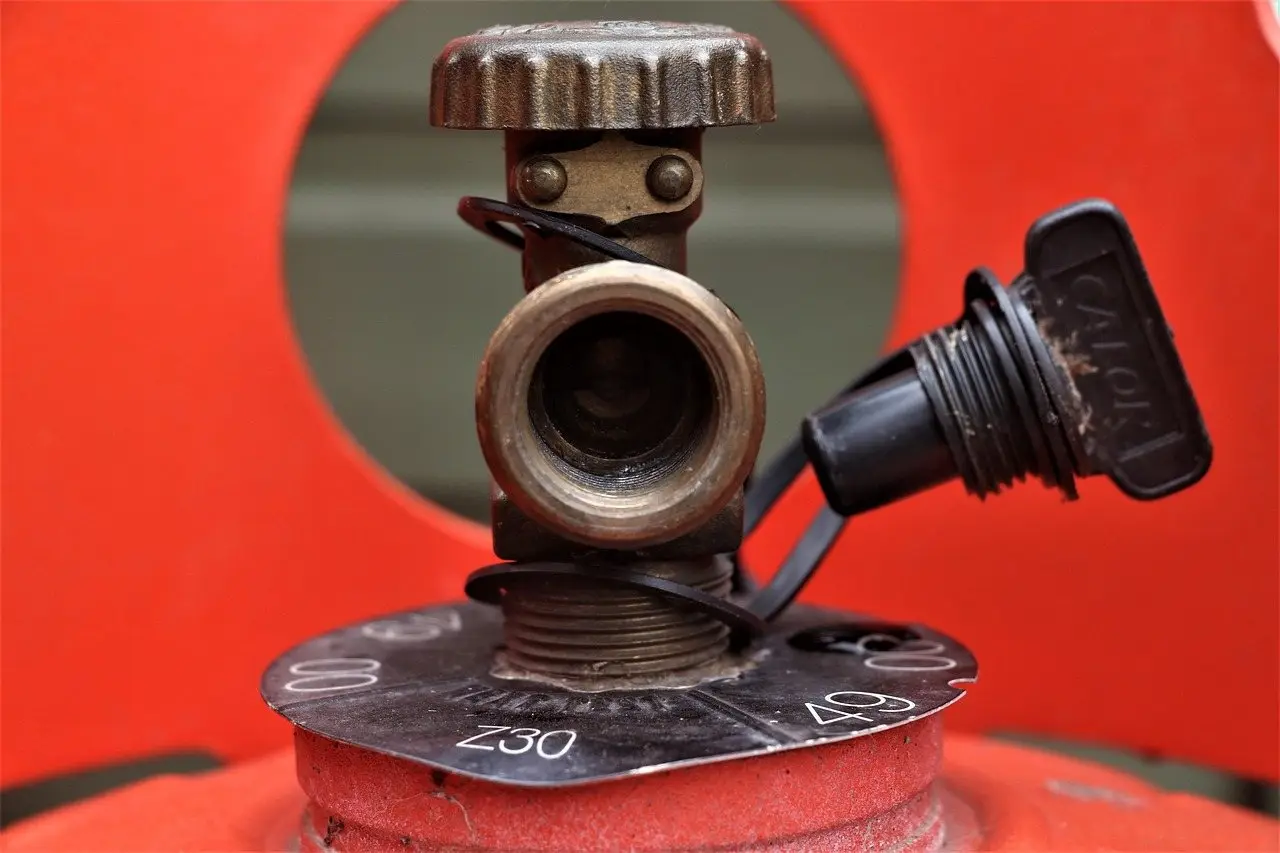
- Disconnect the tank, close its valve fully, cap it if you have the plug.
- Cap or bag the gas line opening. Spiders nesting in the venturi tubes is a common spring fault that presents as a yellow, weak flame.
- Check the hose now, while you remember — cracks, stiffness, rodent damage.
- Use a breathable cover, not a sealed plastic sheet, which traps moisture against the metal and rusts it.
What the cold actually does
Propane’s freezing point is below −180°C, so nothing a garden sees comes close. What cold does is lower the vapour pressure in the tank: the grill is slower to reach temperature on a very cold day, and a nearly empty tank performs noticeably worse than a full one. That is a performance effect, not a safety one.
The spring reconnection check
Open the tank valve with the burners off, then brush soapy water over the hose, the regulator and both ends of the connection. Growing bubbles mean escaping gas. Close the valve, tighten or replace, test again. Bubbles along the hose itself rather than at a joint means replace the hose — it is cheap and a cracked one cannot be repaired.
If you leave it connected anyway
Most of the time nothing happens. But you are leaving a live gas connection through months of freeze-thaw, damp and rodents. At minimum, close the tank valve fully and inspect the hose carefully before the first cook.
Common questions
Should you disconnect a propane tank from the grill for winter?
Where should a propane tank be stored over winter?
Does propane freeze in winter?
Can you leave the grill outside with the tank connected?
How do I check for a leak when reconnecting in spring?
What else should I do to winterize a gas grill?
Backyard Weekly
Know what to plant, week by week
Join the weekly email for seasonal jobs, fixes for what is going wrong, and gear worth buying.
Not ready to subscribe? The planting calendar is free and needs no email.
By subscribing you agree to our privacy policy. Grow In Backyard will never sell your address.
Keep reading
Can I Leave My Grill Outside in the Winter? Mostly Yes
Grills are built for outdoors. What fails is moisture sitting in burners and fireboxes, so the prep matters far more than whether it stays out.
How to Reset a Gas Grill Regulator (The Bypass Trip)
A grill stuck at low flame has usually tripped its excess-flow safety valve. The 60-second reset, and the opening order that stops it happening again.
How to Clean Grill Grates — 4 Tools, No Wire Bristles
How to clean grill grates without a wire brush shedding into food. 4 tools compared on cast iron and deep cleans. See which suits your grill.
What Can I Use Instead of Charcoal? Four That Work
Hardwood, charcoal briquettes from other sources, a gas conversion or an electric grill all work. What never works is construction timber or lighter fuel alone.