
Are Solar Outdoor Lights Worth It? For Ambience, Yes
Solar lights need no wiring and cost nothing to run, but output and winter runtime are limited. They suit marking paths, not lighting them.
 By
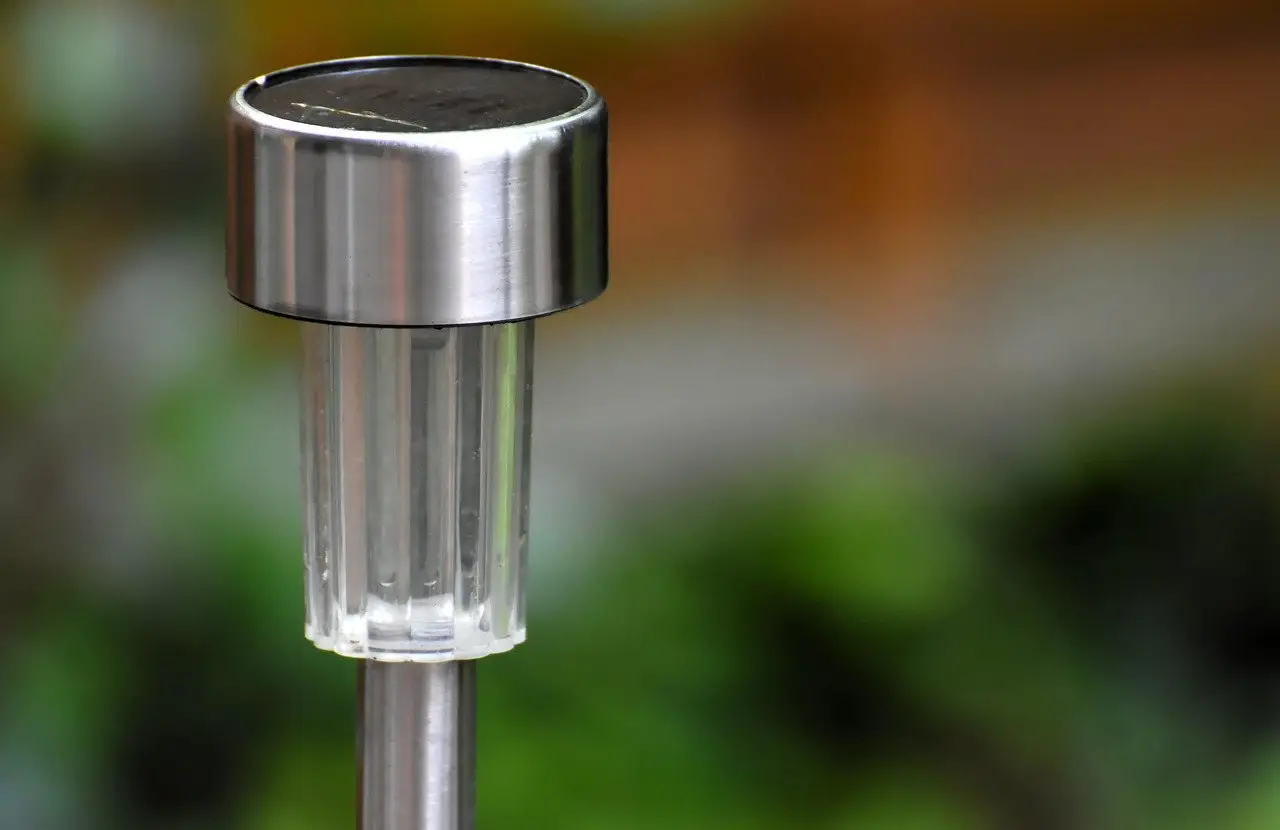
On this page
Good at showing where things are. Poor at illuminating them. Solar lights need no wiring and cost nothing to run — but output is modest and winter runtime collapses exactly when nights are longest.
What they are good and bad at
| Job | Solar | Mains / low-voltage LED |
|---|---|---|
| Marking a path edge | Good | Good, overkill |
| Ambience in borders | Good | Good |
| Seeing the ground to walk | Poor | Good |
| Security lighting | Poor | Good |
| Winter reliability | Poor | Unaffected |
| Installation | None — push in | Cable, often a trench |
| Running cost | Zero | Low with LED |
Why winter is the problem
Two things move against each other at once:
- Less charge in — short days, low sun angle, heavy cloud
- More demand out — the dark period doubles
A light that ran all night in June may manage an hour or two in December. Cold also temporarily reduces battery capacity, and a panel under fallen leaves makes all of it worse.
Site for the panel, not for the light
The most common failure is a light placed where it looks right rather than where it charges. Direct sun for a good part of the day is what determines whether it works in October.
What to look for when buying
- A separate panel on a lead — site the panel in sun, the light where you want it. The single most useful feature.
- A replaceable battery. Many use standard rechargeable cells costing very little; sealed units become disposable when the cell tires.
- A genuine weatherproof rating, not just “outdoor”.
- A panel you can reach to wipe.
- Stakes long enough to stay upright in soft soil — a small detail that causes a lot of irritation.
Note that quoted lumen figures matter less than any of these, because the limit in practice is how much charge the thing actually gets.
Keeping them working
- Clean the panels every few weeks — a thin film of dust measurably cuts charging
- Cut back growth that shades them as the season progresses
- Replace batteries when runtime drops, rather than the whole fitting
- Bring decorative sets indoors in deep winter rather than letting them cycle flat repeatedly, which shortens battery life
For a driveway specifically
Marker lights along the edges: yes — that is the job most people actually want, and solar does it well.
Lighting the surface to see by, or for security: no. A mains or low-voltage LED flood with a motion sensor delivers output solar cannot approach consistently, and it does it in January as well as in June.
Common questions
Are solar outdoor lights worth it?
Why do solar lights stop working in winter?
How long do solar light batteries last?
Are solar lights bright enough for a driveway?
What makes a good solar light?
How do you make solar lights last longer?
Backyard Weekly
Know what to plant, week by week
Join the weekly email for seasonal jobs, fixes for what is going wrong, and gear worth buying.
Not ready to subscribe? The planting calendar is free and needs no email.
By subscribing you agree to our privacy policy. Grow In Backyard will never sell your address.
Keep reading
Outdoor Garden Lighting Ideas That Get Used Past Month Two
Most outdoor lighting gets hung once and never turned on again. The five kinds worth the effort, and the color temperature that makes or breaks all of them.
What Are Flood Lights Used For? Wide, Even Coverage
A flood light spreads a wide beam over an area rather than picking out a point. That beam angle is what separates it from a spot light, not brightness.
Can String Lights Cause a Fire? Rarely, With LEDs
LED string lights run cool and are a low risk. The hazards that remain are daisy-chaining, damaged cable and indoor-rated sets left out in the weather.
Garden Decor Ideas That Don't Look Cluttered in a Year
Most backyard decor gets added piece by piece until the yard looks like a garden center. A short list of what earns its place, and what to skip.