
How Much Epsom Salt Per Gallon of Water for Plants?
One tablespoon per gallon is the standard rate, monthly at most. It only helps where magnesium is genuinely short, which is rarer than the internet suggests.
 By
On this page
One tablespoon per gallon, monthly at most. That is the standard soil-drench rate, and a foliar spray goes weaker — one to two teaspoons per gallon. The more useful question is whether your plant needs it at all.
The rates
| Use | Rate | Frequency | Notes |
|---|---|---|---|
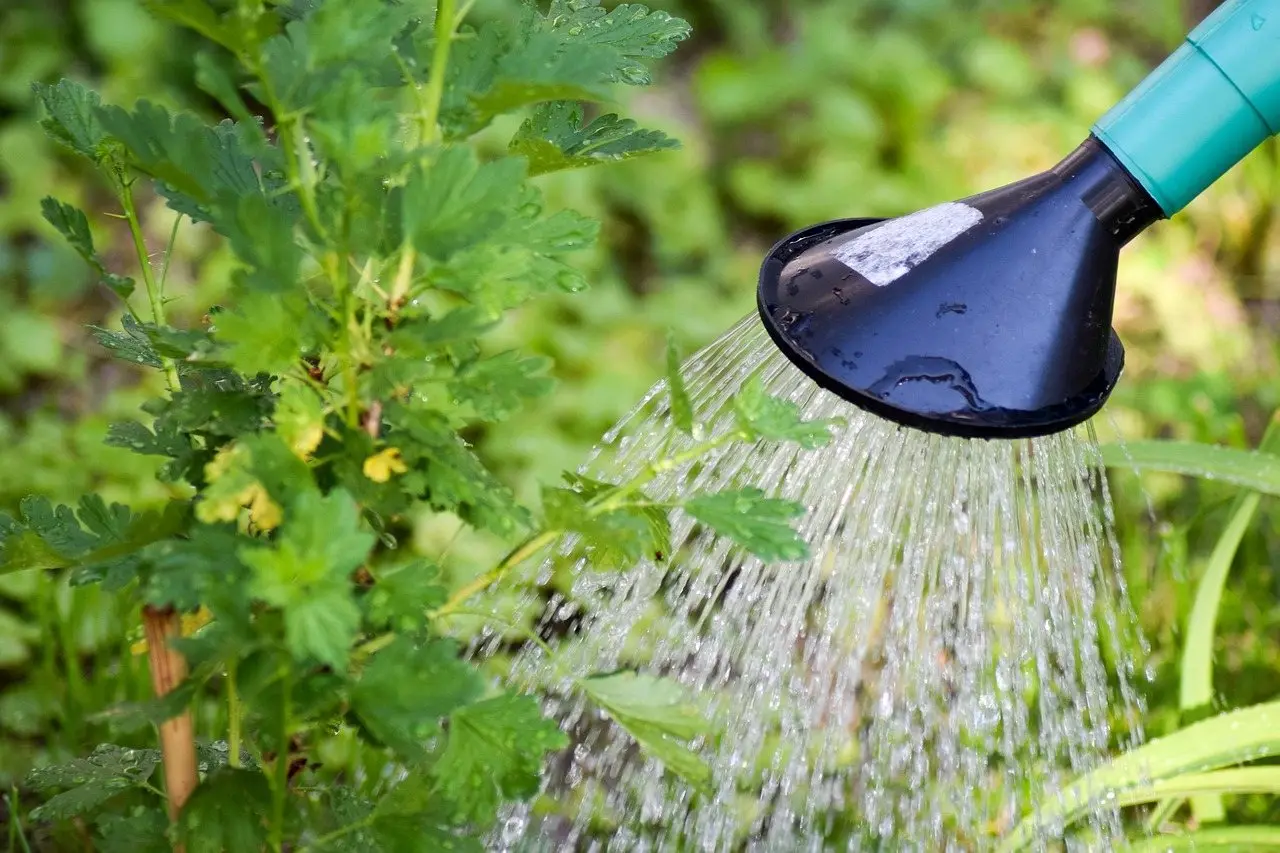
| Soil drench | 1 tbsp / gallon | Monthly at most | Water the root zone, not the crown |
| Foliar spray | 1–2 tsp / gallon | Every 2–4 weeks | Evening or cloud only |
| Containers | 1 tbsp / gallon | Less often | Salts accumulate with nowhere to drain |
| Lawn | Not recommended | — | Use a magnesium-containing lawn feed instead |
First, check it is actually magnesium
Magnesium is mobile inside the plant, so a plant running short strips it out of old leaves to build new ones. That produces a very specific picture:
- Yellowing between the veins, with the veins themselves staying clearly green
- Starting on the oldest, lowest leaves and moving upward
- Often a reddish or purple tint to the yellowed tissue on some species
Which leaves went yellow first is the whole test
Oldest leaves first = a mobile nutrient, which points to magnesium or nitrogen. Newest leaves first = an immobile one, which points to iron. Epsom salt helps with exactly one of those.
The blossom end rot claim
Epsom salt does not prevent blossom end rot
Blossom end rot is a calcium transport failure caused by uneven watering, not a magnesium shortage. Adding magnesium can make it marginally worse, because magnesium and calcium compete for uptake. Even watering and mulch are the fix.
Why more is not better
Magnesium competes with calcium and potassium for root uptake. Dosing soil that is not short of magnesium can induce a shortage of something else — a self-inflicted problem that looks like the original one and invites more dosing.
It also adds salts, which matters most in containers, where there is nowhere for them to go.
The honest recommendation
A basic soil test costs little and answers the question that all of this depends on. Magnesium shortage is real — it turns up most on light sandy soils and in long-used container mixes — but it is far less common than the volume of advice about it suggests.
Test, then treat. One tablespoon per gallon, monthly, on a plant that genuinely needs it.
Common questions
How much Epsom salt per gallon of water for plants?
What does magnesium deficiency look like?
Does Epsom salt help tomatoes?
Can you use too much Epsom salt on plants?
Should Epsom salt go on the soil or on the leaves?
Is a soil test worth doing before using Epsom salt?
Backyard Weekly
Know what to plant, week by week
Join the weekly email for seasonal jobs, fixes for what is going wrong, and gear worth buying.
Not ready to subscribe? The planting calendar is free and needs no email.
By subscribing you agree to our privacy policy. Grow In Backyard will never sell your address.
Keep reading
Is Epsom Salt Good for Plants? Mostly No, and Here Is Why
Epsom salt is magnesium sulphate. It helps the small number of plants actually short of magnesium, and does nothing at all for the rest — sometimes real harm.
Will Epsom Salt Kill Grass? Not Really — and That's the Problem
Epsom salt is magnesium sulfate, not a herbicide. It won't reliably kill grass, and the vinegar-and-Epsom recipes work through the vinegar.
Organic Fertilizer Examples — 4 and What Each Feeds
Organic fertilizer examples are not interchangeable; each feeds one thing. 4 compared on nitrogen, phosphorus and potassium. See which your beds want.
How Often Should Outdoor Plants Be Fertilized?
Containers need feeding every one to two weeks once compost runs out. Ground-grown plants often need nothing beyond annual compost.