
Can You Use Old Gas in a Lawn Mower? Under 30 Days, Yes
Petrol degrades within a month and ethanol blends absorb water and separate. Past 90 days, dispose of it rather than risk a gummed carburettor.
 By
On this page
Under 30 days, yes. One to three months: dilute heavily with fresh. Past 90 days, dispose of it — the volatile fractions have gone, oxidation leaves gums that block small jets, and ethanol blends may have absorbed water and separated.
Fuel age
| Age | Use it? |
|---|---|
| Under 30 days | Yes |
| 1–3 months | Dilute heavily with fresh |
| Over 90 days | Dispose of it |
| Any age, visibly separated or cloudy | Dispose |
| Treated with stabiliser when fresh | Up to a year or more |
Heat, air exposure and ethanol content all shorten these. Fuel left in the mower over winter is the usual reason a machine will not start in spring.
Why ethanol makes it worse
Ethanol is hygroscopic — it pulls moisture out of the air. Once the blend holds more water than it can carry, the mixture separates into a water-ethanol layer at the bottom of the tank with petrol above.
That layer sits exactly where the fuel pickup is
So the engine draws the corrosive fraction first. Ethanol also attacks older rubber and plastic components never designed for it, which is why fuel lines and primer bulbs perish on older mowers.
Telling good fuel from bad
- Smell — fresh is sharp and solvent-like; stale is sour or varnish-like
- Colour — fresh is clear to pale straw; old darkens toward brown
- Clarity — layers or cloudiness means water
- In use — hard starting, running rough, surging, or starting then dying when the choke closes
Stabiliser and winter storage
Add stabiliser when the fuel is fresh. It prevents oxidation; it does not reverse it, so treating old fuel achieves nothing.
For winter, pick one:
- Run the tank dry, then run the carburettor dry too — the carburettor is where varnish forms.
- Or fill with stabilised fuel and run for a few minutes, so the treated fuel reaches the carburettor.
Half-measures — a part-full tank of untreated fuel — are the worst option, because the air space above the fuel is what drives oxidation.
Disposal
Hazardous waste, not the bin
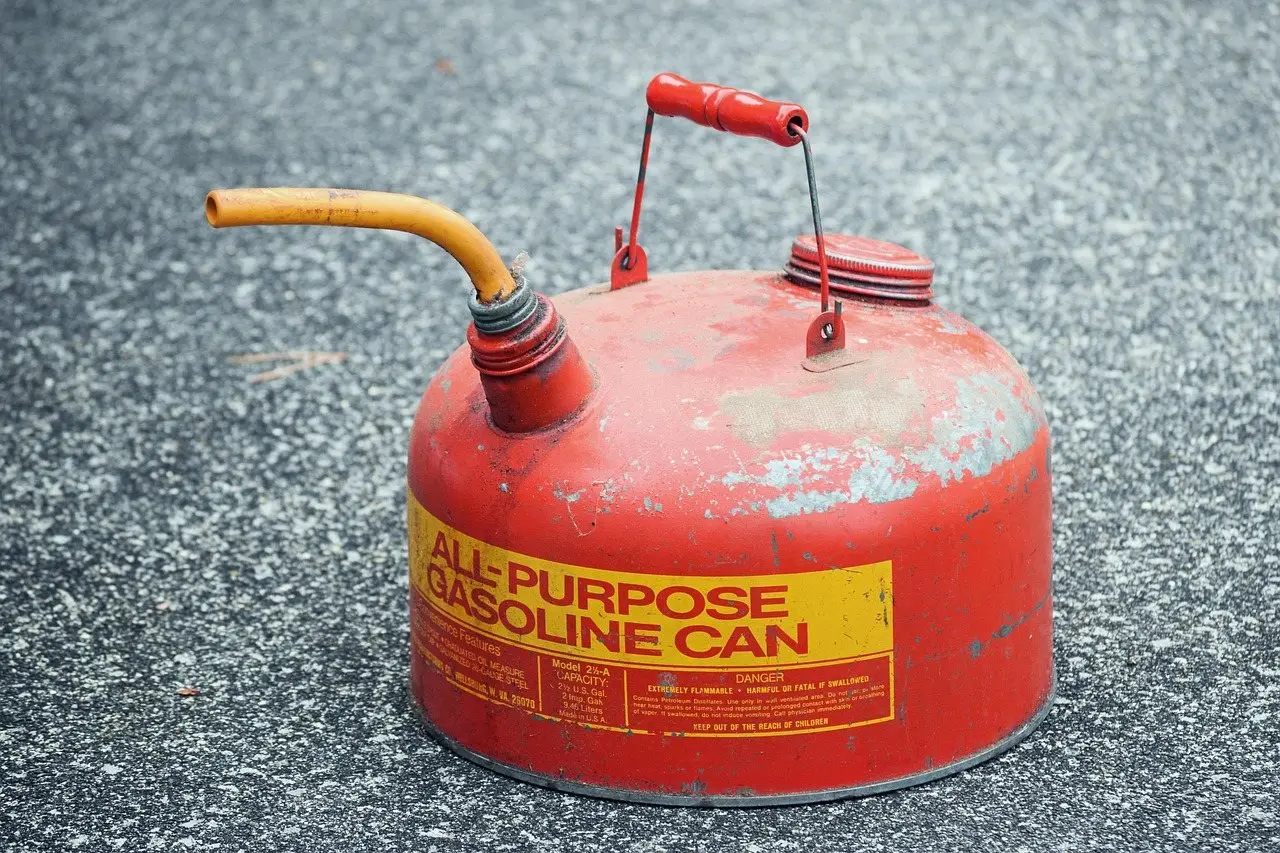
Take it in a proper sealed fuel container to a household hazardous waste facility or a recycling centre that accepts it. Some garages take small quantities. Never down a drain, onto soil, into a watercourse, into household bins, and never burn it.
Common questions
Can you use old gas in a lawn mower?
How long does petrol last in a lawn mower?
Why is ethanol petrol worse for small engines?
What are the signs of bad petrol?
Should I use fuel stabiliser?
How do you dispose of old petrol?
Backyard Weekly
Know what to plant, week by week
Join the weekly email for seasonal jobs, fixes for what is going wrong, and gear worth buying.
Not ready to subscribe? The planting calendar is free and needs no email.
By subscribing you agree to our privacy policy. Grow In Backyard will never sell your address.
Keep reading
Push Mower — 4 Types Matched to Lawn Size and Slope
A push mower suits most small lawns, until the ground tilts. 4 types compared on slope, grass length and cut. See which matches your lawn.
How Long Do Lawn Mower Batteries Last? Two Answers
A cordless pack runs 30 to 60 minutes per charge and lasts 3 to 5 years; a riding mower's lead-acid starter battery lasts 3 to 4. Storage decides both.
How to Clean Garden Tools — 4 Items, One Autumn Hour
How to clean garden tools at season's end: scrape, sharpen, then oil. 4 items cover the whole routine in about an hour. See what each one does.
Centipede Grass vs St Augustine: Which Southern Lawn Wins
Centipede is the low-input option for acid sandy soil; St Augustine handles shade, salt and traffic better. Soil pH and shade decide it.