Elephant Ear Plant Care: Light, Water and Overwintering
Colocasia wants wet feet and heat; Alocasia wants drainage and humidity. Which one you have decides the care — plus how to lift and store the tubers.
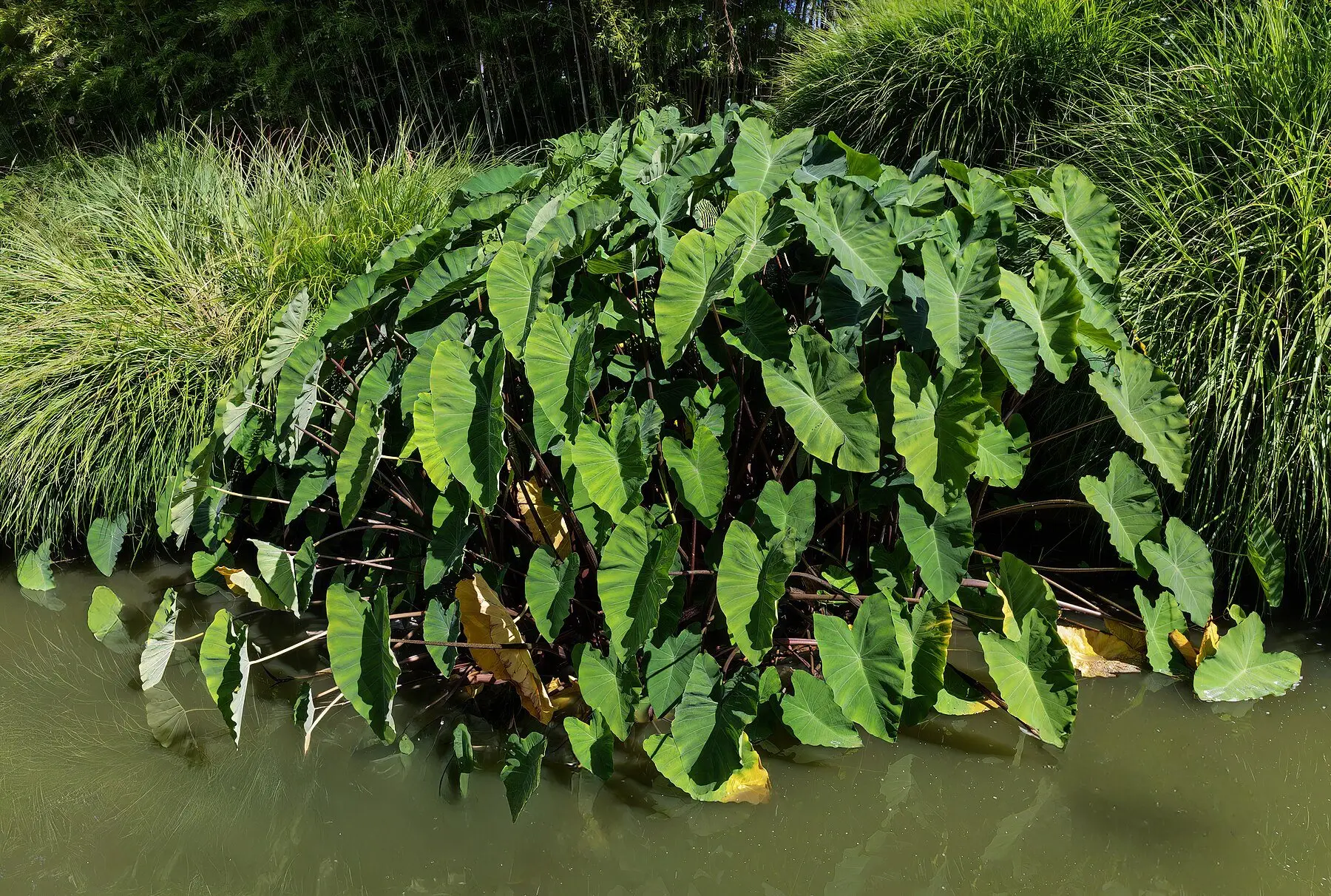
_Colocasia_esculenta_-_Les_Martels,_Giroussens_Tarn.jpg)
On this page
“Elephant ear” covers two genera with almost opposite requirements, which is why the plant has a reputation for being both unkillable and impossible. Work out which one you have and the care becomes obvious.
Telling them apart
| Colocasia | Alocasia | |
|---|---|---|
| Leaf direction | Points down, drooping | Points up and outward |
| Stem attachment | Into the middle of the leaf | At the notch on the leaf edge |
| Leaf surface | Matte, slightly velvety | Often glossy, with prominent veins |
| Native habitat | Marsh and pond margins | Rainforest understory |
| Water | Constantly wet; tolerates standing water | Top 1–2 inches dry between waterings |
| Light | Full sun to part shade | Bright indirect |
| Spread | Runners and offsets — spreads widely | Clumps |
| Common names | Taro, dasheen | African mask, upright elephant ear |
A third genus, Xanthosoma, is sold under the same name and behaves much like Colocasia with slightly better drought tolerance.
Light
Colocasia: full sun is fine — as long as the soil is genuinely wet. Full sun plus dry soil scorches the leaf margins within days, and that is the usual sequence behind “it burned in the sun”.
Alocasia: bright indirect light. Direct midday sun bleaches and burns it. Indoors, a few feet back from an east or north window, or filtered light from a south one.
Dark cultivars — Black Magic, Black Coral, Regal Shields — hold their colour much better in stronger light.
Water
This is where the two diverge completely.
Colocasia is a bog plant. It is close to impossible to overwater in active growth. Stand the pot in a saucer of water, or plant it at a pond margin. It wilts dramatically within hours of drying out, and repeated wilting is what shortens its life.
Alocasia rots in soggy compost. Let the top inch or two dry, then water thoroughly and let it drain properly. It also wants humidity above about 60% — indoors in winter that means a pebble tray or a humidifier, not misting, which does very little.
Guttation is not a problem
Both drip water from the leaf tips, especially in the morning. That is guttation — root pressure pushing out excess water — and it means the plant is well hydrated, not diseased.
Soil and feeding
Rich organic soil, and a lot of it. Colocasia is happy in heavy, water-retentive compost; Alocasia wants a chunky aroid mix — potting soil with added bark, perlite, and coco coir.
They are heavy feeders. A leaf that size is expensive to build. Feed every two to four weeks through the growing season with a balanced liquid fertilizer, or work slow-release granules in at planting. Nitrogen shortage shows up first as pale, undersized new leaves.
Planting outdoors
Plant tubers after the last frost, when the soil is above 65°F — they simply sit and rot in cold ground. Blunt end down, pointed end up, about 2–4 inches deep, spaced 2–4 feet apart.
Expect nothing for three to eight weeks. They are slow to start and then astonishingly fast in heat.
Common problems
| Symptom | Likely cause |
|---|---|
| Yellow lower leaves, occasional | Normal leaf turnover |
| Widespread yellowing | Colocasia: too dry. Alocasia: too wet. Or nitrogen shortage |
| Brown, crisp leaf edges | Low humidity, or salt build-up from tap water and fertilizer |
| Drooping despite wet soil | Root rot — check the tuber for softness |
| Fine webbing on leaf undersides | Spider mites; common on indoor Alocasia in dry air |
| Sudden collapse in autumn | Dormancy beginning, or cold damage below ~50°F |
Dormancy is not death. Alocasia routinely drops every leaf indoors in winter. Keep the soil barely moist, stop feeding, and it usually resprouts in spring.
Overwintering
Zone 8 and warmer: mulch heavily and leave them in the ground.
Colder: wait for the first frost to blacken the foliage, then cut stems back to a few inches, lift the tubers, and brush the soil off without washing them. Cure for a few days somewhere dry and airy, then pack in peat, sawdust, or paper bags and store at 45–60°F — a basement or an unheated closet. Check monthly and discard anything soft.
Container plants are simpler: bring the whole pot indoors before it drops below 50°F, cut the water right back, and treat it as a houseplant until spring.
Safety
All parts contain calcium oxalate — microscopic needle-shaped crystals that cause severe burning and swelling of the mouth and throat if chewed. It is toxic to cats and dogs, and the sap irritates sensitive skin, so wear gloves when dividing tubers.
Colocasia esculenta is taro, a staple across the tropics — but only after long cooking breaks down the oxalates. Ornamental cultivars are not grown for eating. Treat the whole plant as decorative and keep it away from small children and pets.
Common questions
What is the difference between Colocasia and Alocasia?
How much water do elephant ears need?
Why are my elephant ear leaves turning yellow?
How do you overwinter elephant ears?
Are elephant ear plants poisonous?
Do elephant ears need full sun?
Backyard Weekly
Know what to plant, week by week
Free planting calendar. Join the weekly email for seasonal jobs, fixes for what is going wrong, and gear worth buying.
Set MONETIZATION.email.endpoint in src/config/site.ts to enable this form.
By subscribing you agree to our privacy policy. Grow In Backyard will never sell your address.
Keep reading
Outdoor Plants in Pots: What Survives, and What Kills Them
A pot outdoors is a harsher place than the ground — hotter, drier, and colder in winter. How to pick plants and pots that cope, and get through the cold.
Rubber Tree Plant Care: Light, Water, and Why Leaves Drop
Ficus elastica drops leaves when it is moved, overwatered, or cold — usually all three. What it actually needs indoors, and how to prune one that has gone leggy.
Tradescantia Zebrina Care: Light, Pinching, and Legginess
The stripes fade and the stems go bare in low light, and no amount of feeding fixes it. What this plant needs, and how to rebuild one that has gone straggly.
How to Grow Garlic in Pots: Depth, Size and Overwintering
Garlic needs a cold spell and eight months in the pot, so container size and winter protection decide whether you get bulbs or scallions.