
What Sprinkler Covers the Most Area? Impact and Rotor
An impact or rotor sprinkler throws furthest on a single head. But coverage is set by water pressure and flow, not by the sprinkler you buy.
 By
On this page
Impact and rotor sprinklers throw furthest — commonly 40 to 50 feet across at good pressure. But the honest answer is that coverage is set by your water pressure and flow, not by which sprinkler you buy.
The types
| Type | Pattern | Typical reach | Evenness | Best for |
|---|---|---|---|---|
| Impact | Circle or arc | 40–50 ft dia | Moderate | Large open lawns |
| Rotor | Circle or arc | 40–50 ft dia | Good | Large lawns, quieter |
| Oscillating | Rectangle | 20–40 ft wide | Best | Rectangular lawns |
| Travelling | Follows the hose | Whole path | Moderate | Long or awkward lawns |
| Stationary | Small fixed pattern | Short | Varies | Beds and small patches |
Shape first, distance second
A circle on a rectangular lawn means dry corners or a drenched middle. An oscillating sprinkler covering less ground but matching the shape often waters the lawn better than an impact head covering more.
Pressure is the real limit
Throw distance comes from how fast water leaves the nozzle, and that comes from pressure. A head rated for a 45-foot circle at 50 psi may manage barely half that at 25 psi.
This is why two neighbours with the same sprinkler get different results, and why the number on the box is a best case rather than a promise.
Measure before you buy:
- Pressure — a screw-on gauge at the outdoor tap costs very little
- Flow — time how long a bucket of known volume takes to fill, and convert to gallons per minute
- Compare both against the sprinkler’s stated requirements
Why your sprinkler underperforms
- Low mains pressure — the usual answer
- A long, narrow or kinked hose restricting flow
- The tap not fully open
- A clogged nozzle — debris from the supply, easily missed
- Several sprinklers running at once, splitting the available flow
Run one sprinkler on a short, wide hose with the tap fully open before deciding the sprinkler is the problem.
One big head or two small ones?
Usually two, if your flow supports it.
A single large circle puts much more water near the centre than at the edge, so the lawn dries unevenly and you end up running it longer to get the edges right — overwatering the middle to do it.
Two overlapping heads even that out. It is the principle every designed irrigation system uses: heads are spaced so that each one’s spray reaches the next, which is called head-to-head coverage and is why professional layouts look over-provisioned.
A big circle is not an evenly watered circle
Coverage figures describe where water lands, not how much lands there. The edge of a 45-foot circle receives far less than the middle.
Common questions
What type of sprinkler covers the most area?
Does water pressure limit sprinkler coverage?
Is an impact sprinkler better than an oscillating one?
How much area can one sprinkler water?
Why does my sprinkler not reach as far as advertised?
Is one big sprinkler better than two small ones?
Backyard Weekly
Know what to plant, week by week
Join the weekly email for seasonal jobs, fixes for what is going wrong, and gear worth buying.
Not ready to subscribe? The planting calendar is free and needs no email.
By subscribing you agree to our privacy policy. Grow In Backyard will never sell your address.
Keep reading
5 Types of Sprinkler Systems, and Which Suits Your Yard
Spray, rotor, rotary nozzle, drip and impact each water a different shape and rate. How to pick, and why mixing two types on one zone wastes water.
How Does a Sprinkler System Work? Zones, Valves and Pressure
A controller opens one valve at a time because your water supply cannot feed every head at once. The parts, why zoning exists, and what backflow prevention is for.
Best Garden Hose — 4 Picks and the Spec That Decides
The best garden hose is decided by burst pressure and fittings. 4 picks compared on weight, kinking and repair. See which suits your tap.
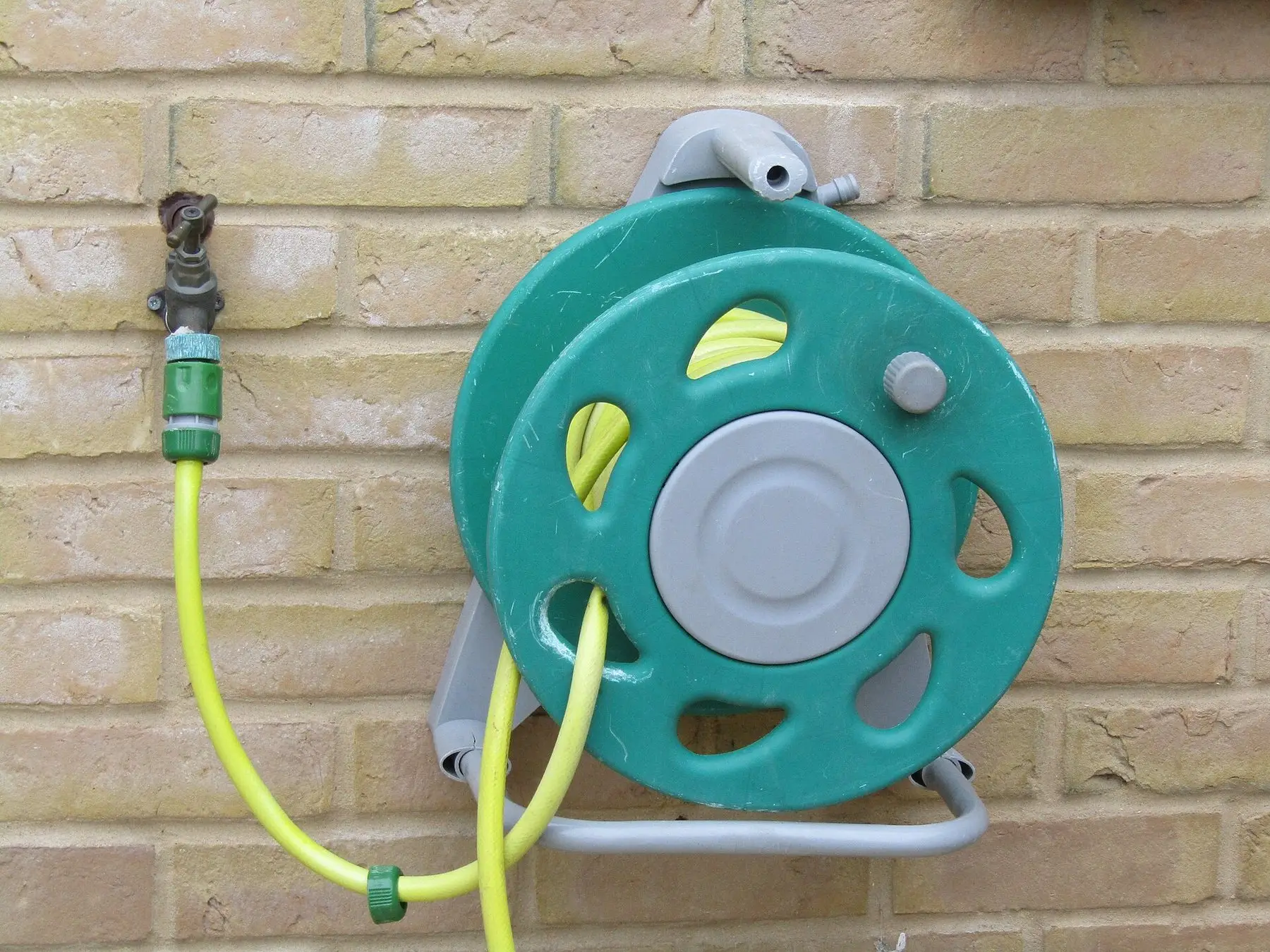
Garden Hose Reel — 4 Types and the Mount That Holds
A garden hose reel fails at the wall fixing, not the reel. 4 types compared on capacity, mounting and awkward gardens. See which suits your run.