
How Does a Sprinkler System Work? Zones, Valves and Pressure
A controller opens one valve at a time because your water supply cannot feed every head at once. The parts, why zoning exists, and what backflow prevention is for.
 By
On this page
An irrigation system looks complicated and is conceptually simple: a timer opens one valve at a time. Everything else is plumbing.
The part worth understanding is why it is one at a time — because that single constraint explains zones, run times, and most of what goes wrong.
The parts
Controller (timer). The brain. Sends 24-volt signals telling each valve when to open and for how long.
Backflow preventer. Sits between your house supply and the irrigation, and stops water flowing back the wrong way.
Valve manifold. A cluster of valves, usually in a buried box. Each valve has a solenoid — a small electromagnet that, when energised, releases pressure above a rubber diaphragm, letting water push it open.
Lateral lines. Buried pipe from each valve to its heads.
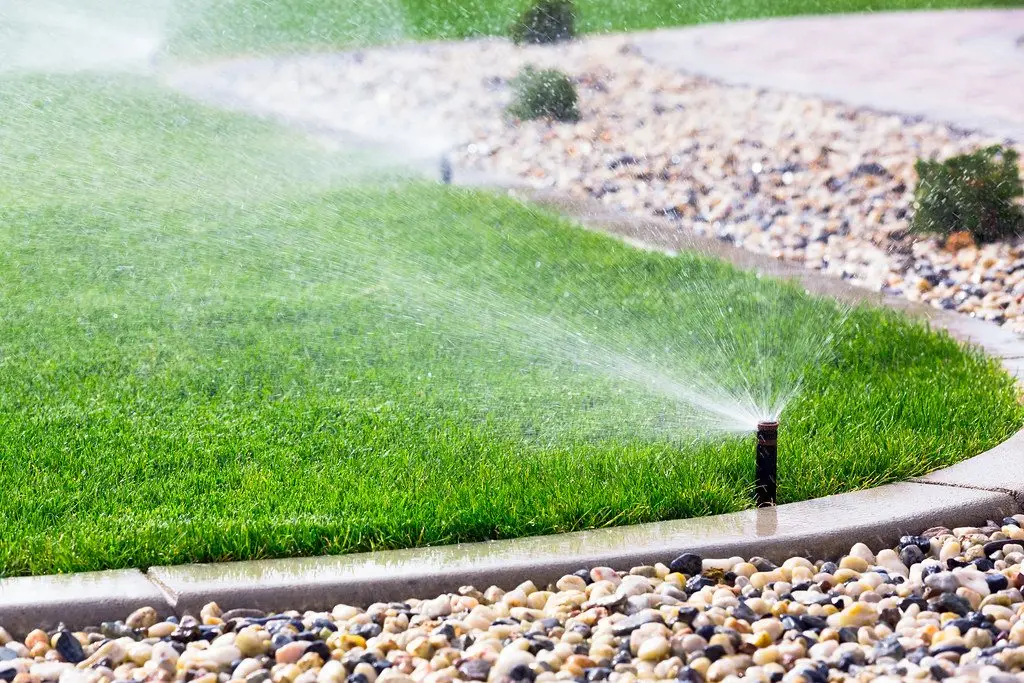
Heads. Pop up under water pressure, spray, then retract when pressure drops.
Drip lines, in beds — emitters delivering water slowly at the root zone rather than through the air. This is the efficient option wherever you are not watering a lawn.
Why zones exist
Your house supply delivers roughly 10–15 gallons per minute. A single rotor head can use 3 GPM or more.
The arithmetic is unforgiving: four or five rotors is a zone. Twenty heads running together means every head gets a fraction of the pressure it needs, and none of them throw water where they were aimed.
So the system waters in batches. That is the entire reason for zoning, and it is also why a system takes an hour or more to run through.
The useful side effect: zones can be programmed differently. A shaded bed, a south-facing lawn and a row of established shrubs all want different amounts of water, and separate zones let you give it to them.
Never mix head types on one zone
Spray heads apply water roughly three times faster than rotors. Put both on one zone and you must choose between drowning the spray area or under-watering the rotor area. There is no run time that works for both — this is the single most common design mistake in a DIY system.
Backflow prevention, which is not optional
If supply pressure drops suddenly — a burst main, a fire hydrant opening — water can be siphoned backwards through the pipes. Irrigation water has been sitting in soil, among fertilizer and animal waste.
A backflow preventer physically prevents that reversal. It is required by plumbing code almost everywhere, and in many jurisdictions must be tested annually by a certified tester. If you inherited a system with the house, find out when it was last tested.
Setting run times
The goal is deep, infrequent watering — it drives roots down, and shallow daily watering does the opposite.
- Roughly 1 inch of water a week, including rain, for most lawns.
- Spray zones: ~15 minutes. Rotor zones: ~40–45 minutes. Same amount of water, very different clock.
- Early morning, 4–8 am. Evening watering leaves foliage wet overnight and invites disease.
- Cycle and soak on clay or slopes: two or three shorter runs with gaps, rather than one long run that mostly becomes runoff.
The tuna tin test
Put a few straight-sided tins around a zone and run it for 15 minutes. Measure the depth in each. That tells you the real application rate and — more usefully — how evenly the zone covers, which is something no controller setting can fix if the heads are badly placed.
Common faults
| Symptom | Usual cause |
|---|---|
| One zone dead, others fine | Solenoid, broken wire, or controller output |
| One zone weak | Partly closed valve, leak in that lateral, clogged nozzles |
| A zone will not shut off | Debris in the valve diaphragm |
| Heads will not retract | Grit in the head, or low pressure |
| Misting instead of droplets | Pressure too high — fit pressure-regulating heads |
| Dry patches between heads | Poor spacing — heads must overlap, spray reaching head to head |
Winterizing
Anywhere the ground freezes, water left in buried pipe expands and cracks fittings, valves and heads.
The standard method is a blowout: compressed air pushed through each zone in turn until only mist comes out. It is worth paying for, because too much air pressure damages exactly the components you are trying to protect — and the pressure limits are lower than most people assume.
Common questions
How does a sprinkler system work?
Why is a sprinkler system divided into zones?
What does a backflow preventer do?
What is the difference between spray heads and rotors?
Why is one sprinkler zone not working?
Do sprinkler systems need to be winterized?
Backyard Weekly
Know what to plant, week by week
Join the weekly email for seasonal jobs, fixes for what is going wrong, and gear worth buying.
Not ready to subscribe? The planting calendar is free and needs no email.
By subscribing you agree to our privacy policy. Grow In Backyard will never sell your address.
Keep reading
Best Garden Hose — 4 Picks and the Spec That Decides
The best garden hose is decided by burst pressure and fittings. 4 picks compared on weight, kinking and repair. See which suits your tap.
Garden Hose Reel — 4 Types and the Mount That Holds
A garden hose reel fails at the wall fixing, not the reel. 4 types compared on capacity, mounting and awkward gardens. See which suits your run.
How to Plant Grass Seed So It Actually Comes Up
Seed fails from poor contact and a surface that dried out once, not from bad seed. Soil prep, sowing rates, and the watering routine that carries it to germination.
How to Use a Soaker Hose — 4 Parts, Even Watering
How to use a soaker hose comes down to pressure and layout. 4 parts make the run water evenly from end to end. See which your line is missing.