
How Much Shade Does a Pergola Provide? Less Than You Think
Bare rafters give roughly 30 to 50 percent at midday and almost none when the sun is low. Orientation and rafter spacing matter more than adding timber.
 By
On this page
Roughly 30 to 50 percent at midday, and very little when the sun is low. That gap between expectation and reality is the single most common disappointment with a pergola — people picture noon and then sit out at five.
What the structure alone gives you
| Setup | Midday shade | Low sun | Notes |
|---|---|---|---|
| 2x4 rafters, wide spacing | ~30% | Very little | Decorative more than functional |
| 2x6 on edge, 16 in centres | ~40–50% | Poor | The common sensible default |
| 2x6 on edge, 12 in centres | ~50–60% | Moderate | Starts to feel enclosed |
| Rafters + cross battens | ~70% | Moderate | Big gain, modest cost |
| Mature deciduous climber | ~90% in summer | Good | Winter sun still gets through |
| Louvre roof / canopy | Up to 100% | Full | Changes wind and drainage |
Depth does more work than spacing
A deep rafter on edge casts a much wider shadow when the sun strikes it at an angle than a shallow one at the same centres. Going from 2x4 to 2x6 buys more shade than closing the spacing by the same proportion — and keeps the structure feeling open.
Orientation
Run the rafters north to south if you want shade through the middle of the day. The sun then crosses them at an angle and their depth blocks it.
Rafters running east to west let the midday sun travel straight along the gaps to the ground — the worst case for exactly the hours you most want cover.
Why low sun defeats all of it
A pergola is a horizontal screen, and low morning and evening sun arrives nearly horizontally. It passes under the whole structure, between the posts, and lands on the seating.
Nothing you do to the roof fixes this. If late afternoon sun is the problem, the answer is a vertical element — a screen, a trellis panel, a reed blind or a drop-down shade on the sunny side.
Getting to real shade
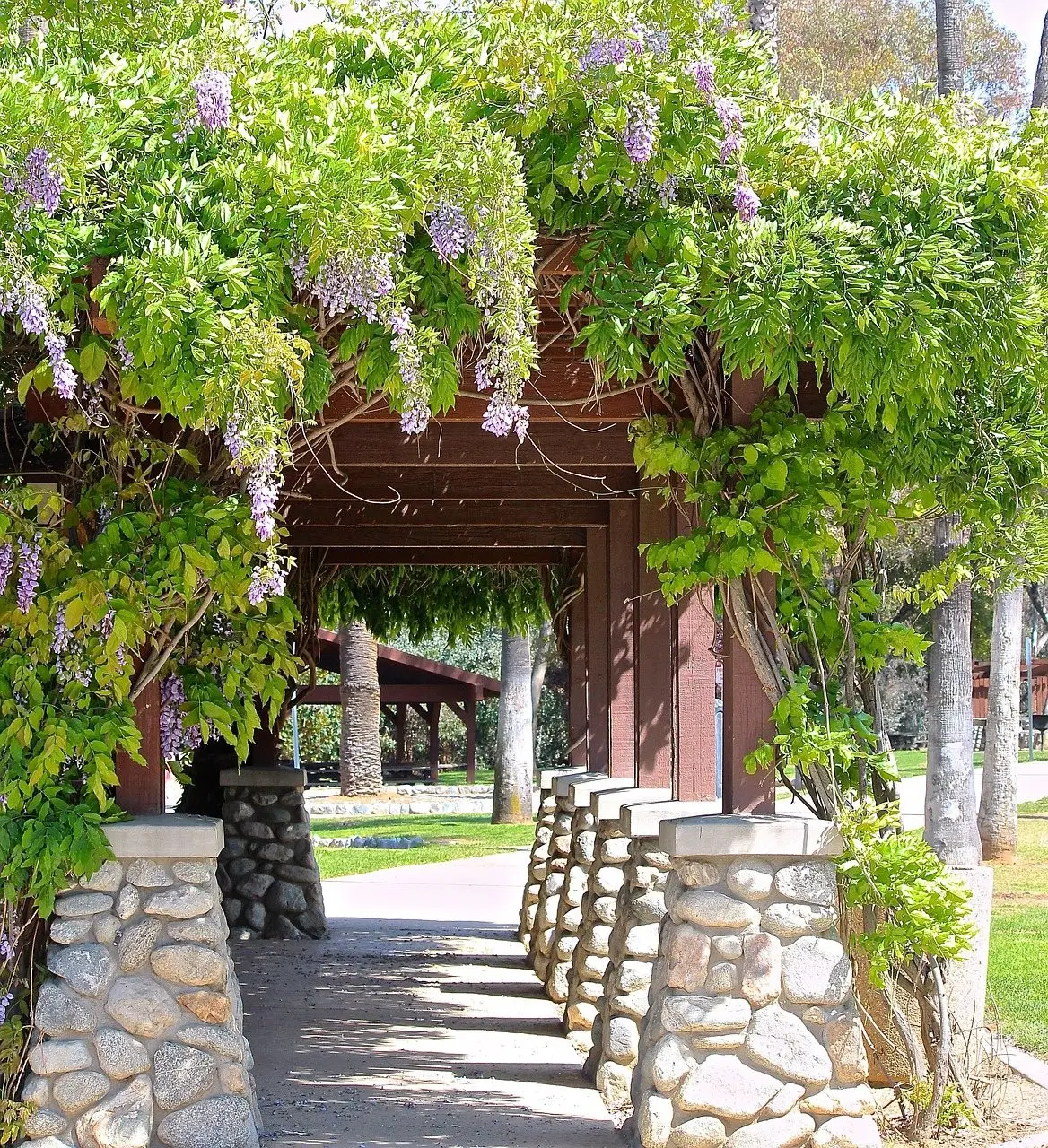
A climber is the traditional answer and still the best one for most gardens. Wisteria, grape vine and Virginia creeper all get a mature pergola close to full summer cover, and a deciduous climber has the real advantage of letting winter sun back through.
A mature climber is a structural load
Wisteria in particular becomes heavy and exerts real force as the stems thicken. Size the posts and beams for it from the start — retrofitting support under an established vine is miserable work.
A cover gets you there faster:
- Retractable canopy — shade when you want it, open when you do not
- Shade sail — cheap and effective; needs tensioning and catches wind
- Louvre roof — pivots from open to closed, the most flexible and the most expensive
- Polycarbonate panels — full cover plus rain protection
Anything that sheds rain creates drainage you have to plan for, and anything solid catches far more wind, which means posts and footings sized for it rather than inherited from an open design.
Common questions
How much shade does a pergola actually provide?
Which way should pergola rafters run for maximum shade?
How close should pergola rafters be for good shade?
Do you need plants to get real shade from a pergola?
Can you make a pergola fully shaded?
Does pergola height change the amount of shade?
Backyard Weekly
Know what to plant, week by week
Join the weekly email for seasonal jobs, fixes for what is going wrong, and gear worth buying.
Not ready to subscribe? The planting calendar is free and needs no email.
By subscribing you agree to our privacy policy. Grow In Backyard will never sell your address.
Keep reading
How Tall Should a Pergola Be? 8 to 10 Feet Works
Eight feet is the practical minimum and ten suits most gardens. Height changes shade, proportion and wind load, and each pulls in a different direction.
What Size Post for a Pergola? 6x6 Unless It Is Small
4x4 works for a small low pergola in a sheltered spot. Everything else wants 6x6 — posts fail by leverage at the base, not by crushing.
Patio Umbrellas: Size It to the Table, Weight It to the Wind
Two numbers decide whether an outdoor umbrella works: the span against your table, and the base weight. Plus which fabrics actually survive a season.
How Much Value Does a Pergola Add to a Home?
Rarely a dollar-for-dollar return. A pergola sells a house faster more often than it raises the price, and condition matters more than the structure itself.