
What Keeps Bees Away Outside? Remove the Attraction First
Most bees at a table are after sugar or meat — and the ones after meat are wasps. What actually works outdoors, and what to leave alone.
 By
On this page
Before anything else: the insect at your table is probably not a bee. That one correction changes both the answer and the stakes.
Bee or wasp
| Bee | Wasp | |
|---|---|---|
| Body | Round, furry | Smooth, shiny, narrow waist |
| Legs | Thick, often pollen-laden | Thin, dangle in flight |
| Wants | Nectar and pollen | Meat, sugar, your drink |
| At a barbecue | Almost never | Constantly |
| Sting | Once, then dies (honey bee) | Repeatedly |
| What to do | Leave it alone | Manage the food |
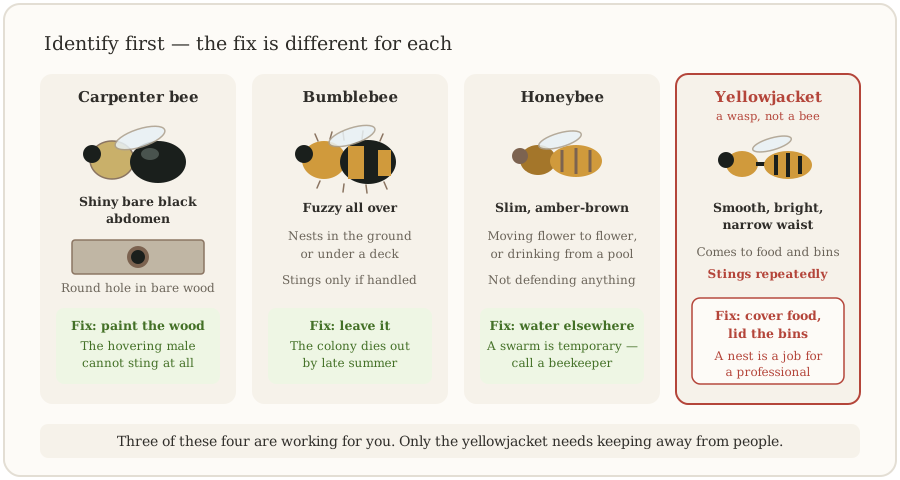
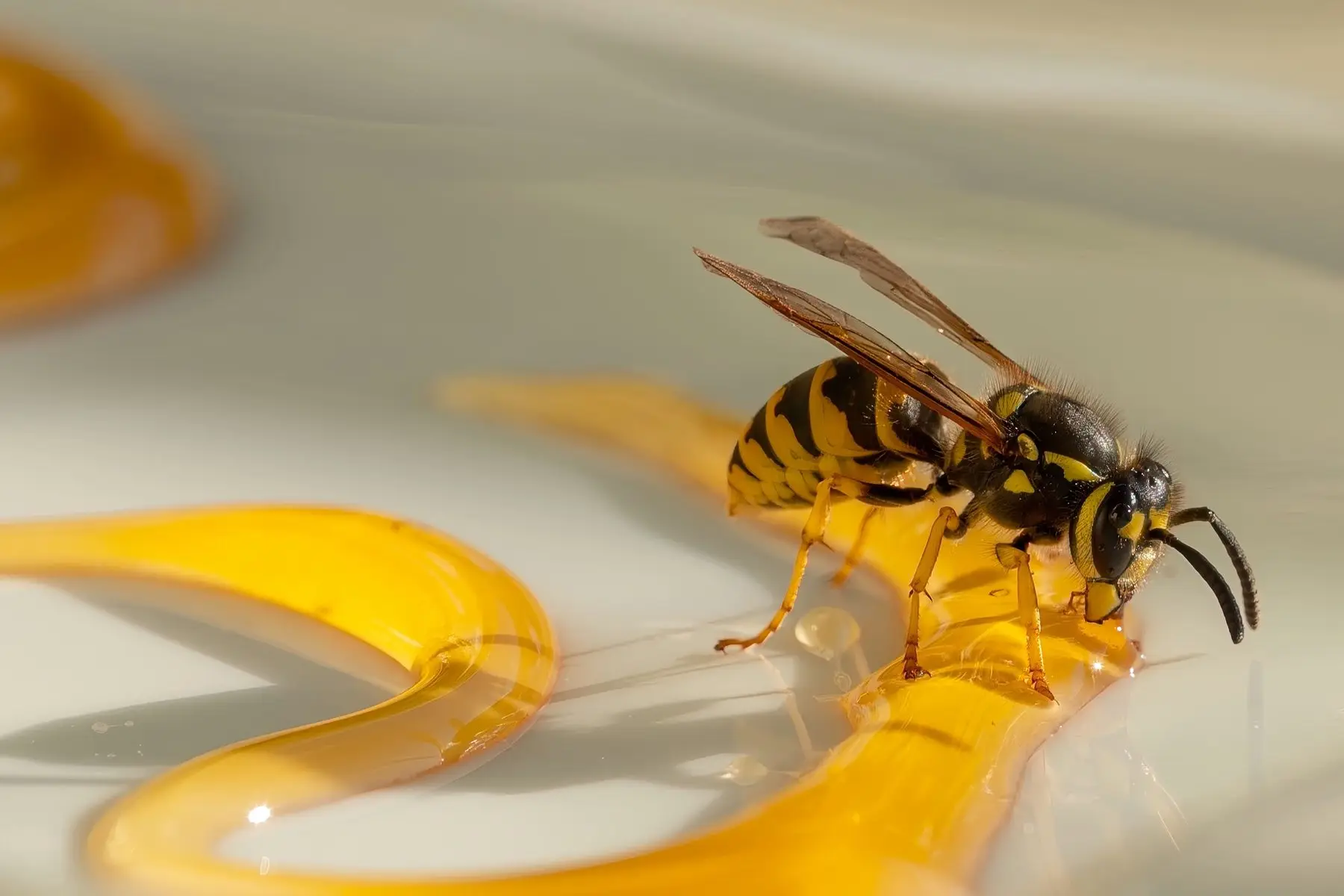
This matters beyond pedantry. Bees are in trouble and are doing work your garden depends on, and almost every “bee problem” at a table is a wasp problem wearing the wrong name.
What actually works
In order of effect:
- Covered drinks. Cans and open glasses are the single biggest draw — and a wasp inside a can is how people get stung in the mouth
- Lidded bins, kept away from where you sit
- Clear fallen fruit promptly. Windfalls under a tree are a wasp magnet by September
- Wipe the table between courses; clear plates rather than leaving them
- Serve, then close things up rather than leaving a spread out
- Move the eating area away from bins, compost and fruit trees
A decoy plate works better than a repellent
Put something sweet or meaty well away from the table, upwind. Wasps find the easier food and stay there. It is the same logic as a trap crop, and it costs nothing.
What barely works
- Essential oils — peppermint, clove, lemongrass, citronella, eucalyptus. Real but weak and short-lived; needs reapplying constantly and loses to any actual food
- Fake nests. Some basis in territoriality, poor and inconsistent results in practice
- Traps. They do catch wasps and they also attract more, so keep them at the far end of the garden and never on the table
- Swatting. Actively harmful — a crushed wasp releases an alarm pheromone that recruits others
Why late summer is worse
Not coincidence, and worth understanding because it tells you when it ends:
- Spring and summer: workers hunt insects to feed the larvae
- In return, the larvae secrete a sugary fluid the adults feed on
- Late summer: the queen stops laying, the larvae are gone, and that sugar supply ends
- The adult workers are now unemployed and craving sugar — which is when they find your table
- It stops at the first hard frosts
Nests
- Honey bees — call a local beekeeper. A swarm is usually collected free, and should never be sprayed
- Bumblebees — leave it. Small colonies, gone by autumn, nest never reused
- Wasps, well away from foot traffic — leave it to die out naturally in autumn
- Wasps near a door, path, or in a wall cavity — a pest controller, not a ladder and an aerosol
Common questions
What keeps bees away outside?
Are they actually bees?
What smells do bees and wasps dislike?
Why do wasps get aggressive in late summer?
Does a fake wasp nest work?
What should I do about a nest?
Backyard Weekly
Know what to plant, week by week
Join the weekly email for seasonal jobs, fixes for what is going wrong, and gear worth buying.
Not ready to subscribe? The planting calendar is free and needs no email.
By subscribing you agree to our privacy policy. Grow In Backyard will never sell your address.
Keep reading
Best Beehive for Beginners — 5 Hives, One Lifting Test
The best beehive for beginners is the one you can lift full. 5 hive types compared on weight, cost and first-year work. See which suits your back.
Bee With a Green Head: What You Are Actually Looking At
Metallic green usually means a sweat bee, an orchid bee or a green bottle fly. How to tell them apart, whether they sting, and why they are worth keeping.
Can I Keep Bees in My Backyard? Usually Yes, With Conditions
Most places allow backyard hives, often with registration, setbacks and a flyway barrier. What to check, and the space a hive really needs.
Do Butterfly Houses Work? Almost Never, and Here Is Why
Butterfly houses are sold everywhere and are essentially never used by butterflies. What the research found, and what actually helps them overwinter.