
Can I Keep Bees in My Backyard? Usually Yes, With Conditions
Most places allow backyard hives, often with registration, setbacks and a flyway barrier. What to check, and the space a hive really needs.
 By
On this page
Usually yes — and often more easily than chickens. The catch is that three separate layers of rule can apply, and permission under one does not imply the others.
The three layers
| Layer | Typically requires |
|---|---|
| State / national | Hive registration, sometimes inspection |
| Municipal code | Hive limits, setbacks, flyway barrier, water on site |
| HOA / lease / deed | May prohibit outright |
Permission under one is not permission under another. A city that allows hives does not override a covenant that forbids them.
Registration is the step people skip
Many US states require hives to be registered with the department of agriculture; the UK strongly encourages registration on BeeBase; numerous other countries mandate it.
It exists so inspectors can trace and contain notifiable diseases like American foulbrood, and so keepers get warned about disease outbreaks and pesticide spraying nearby. It is usually free or nearly so, and it is how you find out there is a problem two streets away before it reaches your hives.
Space, and why placement matters more
A hive footprint is roughly two feet square. A small garden holds two hives comfortably.
What actually matters:
- Clear space in front of the entrance — a few feet, so bees can leave without obstruction
- Room to stand behind and beside it. You work a hive from behind, and you will be lifting boxes that weigh a great deal when full
- Morning sun, which gets the colony flying earlier
- Afternoon shade in hot climates
- Shelter from prevailing wind
- Level, firm ground — a hive full of honey is heavy and must not tilt
- Not pointing at a neighbour’s door, washing line or seating area
The flyway barrier
The most effective single thing you can do for the neighbours, and often required by code on small lots.
A fence, hedge or screen about six feet tall, a few feet in front of the hive entrance. Bees leaving are forced to climb steeply, which puts their flight path well above head height within a short distance rather than straight across a garden at chest level.
Cheap, simple, and it resolves most of what a neighbour would otherwise notice.
Water, before they find their own
Bees need water, and they will get it somewhere. If you do not provide it, they will use the nearest source — which is frequently a neighbour’s pool, pet bowl or birdbath, and that is how beekeeping arguments start.
- A shallow dish with stones or corks so they can land without drowning
- Close to the hive, and in place before the colony arrives
- Keep it filled. Bees that establish a water source elsewhere are hard to redirect
The neighbour conversation
Worth having before the hives arrive, not after.
- Honeybees are not aggressive away from the hive, and are far less trouble than wasps
- A known sting allergy next door is a serious consideration — this is the one situation that genuinely warrants rethinking, and it deserves an honest conversation rather than a hopeful one
- Offer honey. Unserious advice, consistently effective
- Tell them what you are doing and why, including the flyway barrier and the water
Which hive to start on is the other decision, and it mostly comes down to what a full box weighs — see the best beehive for beginners.
Why two hives
The answer that surprises beginners.
- A reference point. With one hive you cannot tell whether a slow colony is failing or simply normal for the season. With two, the comparison is obvious
- Recovery. A frame of brood or stores moved from the strong colony can rescue a weak or queenless one. With a single hive there is nothing to move
- Marginal extra work. The second hive costs far less time than the first
Read before the bees arrive, too: our pick of beekeeping books for beginners separates the one you learn from and the one you look things up in.
Before you commit
- Take a course, or find a local association. Beekeeping is a craft and books only get you so far
- Budget realistically — hive, frames, suit, smoker, tools and bees run to several hundred at minimum
- It is a time commitment through spring and summer, not a set-and-forget hobby
- Expect to be stung. Not often, and not badly, but it happens
Common questions
Can I keep bees in my backyard?
Do I have to register my beehives?
How much space does a beehive need?
What is a flyway barrier and do I need one?
Will my neighbours be at risk?
How many hives should a beginner start with?
Backyard Weekly
Know what to plant, week by week
Join the weekly email for seasonal jobs, fixes for what is going wrong, and gear worth buying.
Not ready to subscribe? The planting calendar is free and needs no email.
By subscribing you agree to our privacy policy. Grow In Backyard will never sell your address.
Keep reading
Best Beekeeping Books for Beginners — 6 Worth Owning
Pick the best beekeeping book for beginners by the job it does. 6 books compared: one to learn from, one to look things up in. See which you need.
Best Beehive for Beginners — 5 Hives, One Lifting Test
The best beehive for beginners is the one you can lift full. 5 hive types compared on weight, cost and first-year work. See which suits your back.
How to Keep Bees Away From a Deck or Porch, Safely
Most deck bee problems are carpenter bees, yellowjackets or foraging honeybees, and each needs a different answer. Identify first, then act.
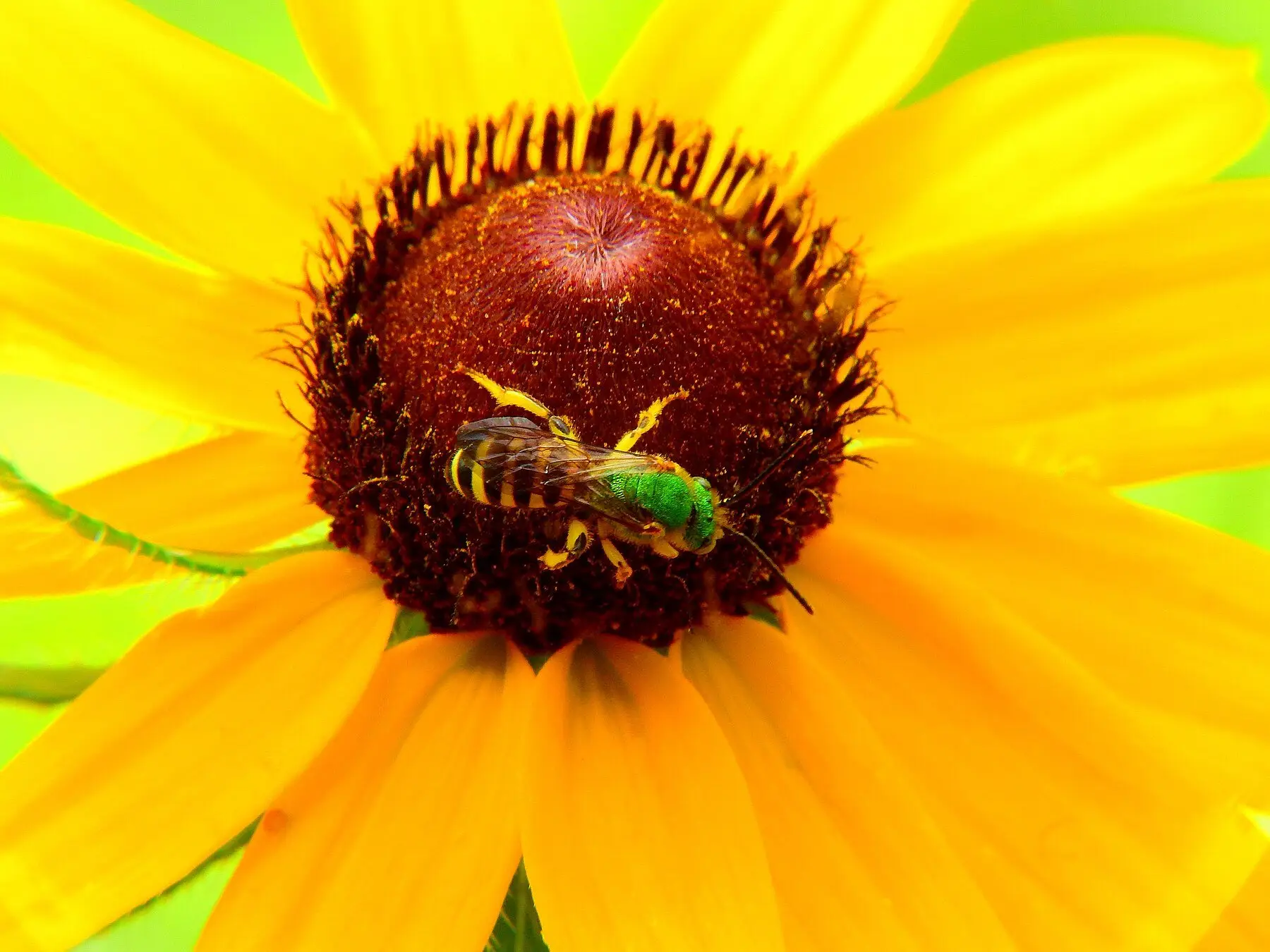
Bee With a Green Head: What You Are Actually Looking At
Metallic green usually means a sweat bee, an orchid bee or a green bottle fly. How to tell them apart, whether they sting, and why they are worth keeping.