
Raccoon Proof Deer Feeder — 5 Fixes That Keep Coons Out
A raccoon proof deer feeder needs a barrier raccoons cannot climb. 5 fixes compared, including retrofits. See which suits your feeder.
 By
We may earn a commission when you buy through links on this page, at no extra cost to you.
On this page
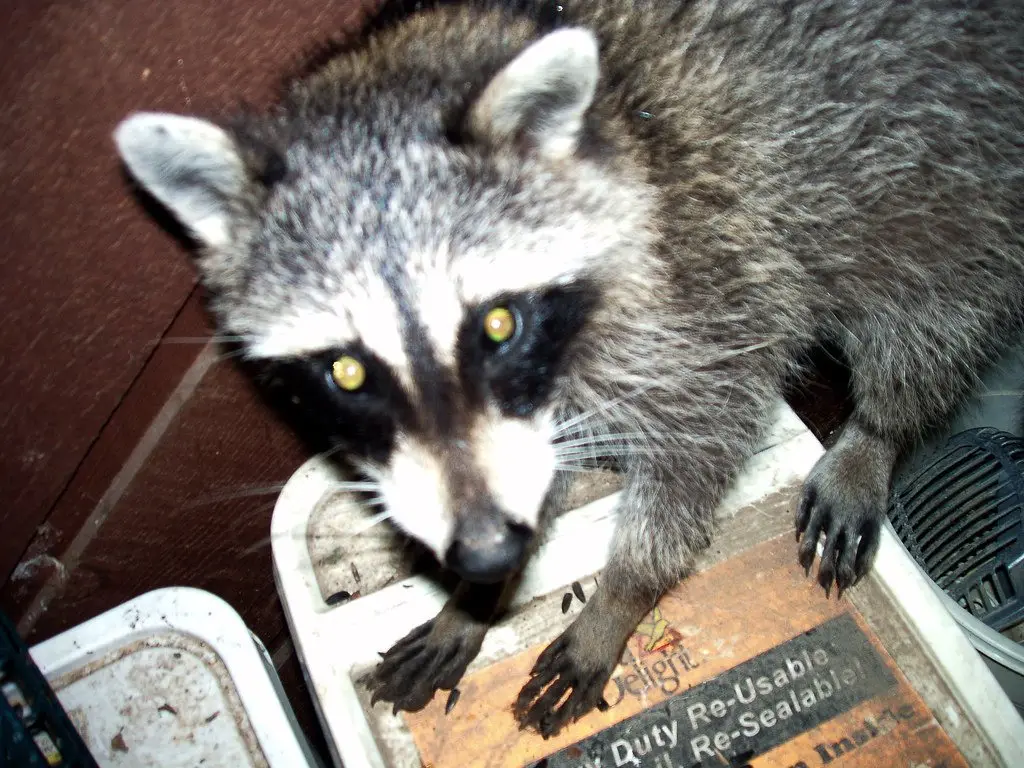
Raccoons are the reason feeder marketing uses the word “varmint-proof” so freely and means it so rarely. A raccoon climbs smooth steel, hangs upside down, and has five-fingered forepaws it will use on a latch for as many nights as the latch lasts.
So the only claim worth paying for is the one that works mechanically — not the one that makes access difficult.
What a raccoon can actually do
Worth being specific, because feeder design keeps underestimating it.
It climbs vertical smooth pipe, wooden posts, tripod legs and support cables. It descends head-first. It hangs by its hind feet. It reaches around and under obstacles with forepaws that have independent digits and a sense of touch good enough to find food in muddy water by feel alone.
And it returns. A raccoon that found corn at your feeder on Tuesday is a raccoon working on your latch on Wednesday, Thursday and Friday. Difficulty is a delay, not a solution.
| Approach | Stops raccoons | Why |
|---|---|---|
| Weight-triggered lid | Yes | 15 lb cannot generate the force; mechanical, not puzzle |
| Wide post baffle | Mostly | Defeats climbing — if no second route exists |
| Varmint cage on spinner | Partly | Protects the motor; feed still lands on the ground |
| Height alone | No | They climb smooth steel |
| Hanging, generous clearance | Mostly | Needs 5 ft below branch, 10 ft from trunk, plus baffle |
| Latches and lids | No | They have hands and patience |
| Ultrasonic repellers | No | No evidence of effect |
| Predator urine granules | No | Ignored, and washes off |
| Nothing out overnight | Yes | The only fully effective zero-cost answer |
Timing is free, and it does most of the work
This is the change people skip because it does not involve buying anything.
Raccoons are nocturnal. Deer feed heavily at dawn and dusk but will come in daylight. A spin-cast feeder on the standard dawn-and-dusk schedule throws corn onto the ground at sunset — which is precisely when raccoons begin their shift, and the corn sits there all night.
Instead: one cycle, shortly after first light, dispensing little enough that the deer clear it within an hour or so. By nightfall there is nothing on the ground worth a visit.
Tip
Reduce the amount before you buy anything. A feeder that empties in a week is feeding something other than deer, and the amount is a dial you already have.
The baffle, done properly
A baffle works by presenting a wide, smooth, downward-facing surface the animal cannot get a grip beyond. The failures are always the same two things.
Too narrow. A small cone gets climbed around. It needs to be wide enough that a raccoon reaching up from below cannot get a paw over the rim — think of a dustbin lid rather than a traffic cone.
A second route. This is the common one. The baffle on the post is irrelevant if there is a fence rail four feet away, a low branch overhead, or a shed roof within jumping distance. Stand where the feeder is and look for every surface within about ten feet in any direction, including above.
Fit the camera before the solution
Half of “raccoons are emptying my deer feeder” turns out to be something else when a timestamped record exists: squirrels working through the daylight hours, feral hogs where they occur, or simply more deer eating more corn than expected.
A trail camera for a week tells you which animal, how many, what time, and crucially which route they use to get up. That last detail decides where the baffle goes, and it is the difference between fixing the problem and buying hardware that addresses the wrong approach.
The legal part, which is not optional
Supplemental deer feeding is restricted or prohibited in a large number of states, and the reason is disease rather than fairness. A feeder concentrates deer nose-to-nose in one spot, repeatedly, which is an efficient way to transmit chronic wasting disease and bovine tuberculosis through a local population.
The rules also differ between baiting during a hunting season and year-round backyard feeding, and some states restrict it only in particular counties. Check your state wildlife agency’s page before setting anything up — it is a five-minute job that occasionally ends the project, which is better learned now than after buying a 300 lb feeder.
And whatever the feeder problem: no poison, and no body-gripping traps. Both are indiscriminate, both kill pets and non-target animals, and in this application both are illegal in most places.
How we picked
Designs assessed against documented raccoon climbing and manipulation ability, published feeder specifications, and what hunters and landowners report after a season — nothing here was tested on our own feeder. · Picks last checked October 2026.
- Does it beat climbing, or only reaching
- A raccoon climbs a smooth steel post, a tree, and a guy wire. Height alone fails. The question is always what happens once it is up there.
- Does it survive manipulation
- Raccoons have five-fingered forepaws and will work a latch, a lid or a spring for as long as it takes. Anything a person could open one-handed, a raccoon opens.
- Whether the deer can still use it
- A barrier tight enough to stop a raccoon can also stop a nervous doe. The useful designs separate the two by weight or by posture, not by difficulty.
- What it costs per season
- Raccoons do not eat a little. A family emptying a feeder nightly is a feed bill, and that recurring cost is usually what justifies a better feeder.
- Spill underneath
- Most raccoon problems start on the ground. A feeder that scatters corn feeds raccoons whatever guards are fitted above it.
Our picks
| # | Pick | Best for | Where to buy |
|---|---|---|---|
| 1 | Varmint-proof gravity feeder with weight-triggered lid | Best overall | Check price for Varmint-proof gravity feeder with weight-triggered lid → |
| 2 | Cone baffle for the feeder post | Best value retrofit | Check price for Cone baffle for the feeder post → |
| 3 | Varmint cage for a spin-cast feeder | Best for an existing spinner feeder | Check price for Varmint cage for a spin-cast feeder → |
| 4 | Hanging feeder on a long cable | Best where there are no good posts | Check price for Hanging feeder on a long cable → |
| 5 | Trail camera | Best way to find out what is actually happening | Check price for Trail camera → |
Best overall
Varmint-proof gravity feeder with weight-triggered lid
The one design that actually ends the problem. Prop the lid open for the first fortnight so the deer learn it, then set the weight.
- Mechanism
- Lid opens under the weight of a deer's head
- Excludes
- Raccoons, squirrels, birds, hogs
- Capacity
- Typically 50–300 lb
- Power
- None — gravity and a counterweight
- Feed
- Corn, pellets
What we liked
- Excludes raccoons mechanically rather than by difficulty
- No timer, no battery, no motor to fail
- Feed stays dry and unspoiled inside
- Nothing on the ground to attract anything
Worth knowing
- Deer take one to three weeks to learn the lid
- Heaviest and dearest option
- Counterweight needs setting correctly for your deer
Best value retrofit
Cone baffle for the feeder post
The first thing to fit and the cheapest thing that works. Make sure there is no second route up.
- Type
- Wide smooth cone or inverted dish
- Fits
- Tripod legs, single posts, hanging cables
- Stops
- Climbing raccoons, squirrels, possums
- Material
- Galvanised steel or heavy plastic
What we liked
- Climbing the post is how most raccoons get to a feeder
- Cheap, and fits a feeder you already own
- No moving parts to fail or be defeated
- Works on squirrels and possums at the same time
Worth knowing
- Only works if nothing else gives access — no nearby fence or branch
- Must be wide enough; a narrow cone gets climbed around
- Useless against raccoons feeding on spill below
Best for an existing spinner feeder
Varmint cage for a spin-cast feeder
Buy it with the baffle rather than instead of it. Together they cover climbing and prying; alone, each leaves a route.
- Type
- Welded cage around the motor and spinner plate
- Protects
- Motor, battery, spinner from chewing and prying
- Fits
- Most standard spin-cast units
- Material
- Welded steel
What we liked
- Raccoons attack the motor and wiring, not just the feed
- Stops them hanging on the plate to shake corn out
- Cheap relative to replacing a chewed motor
- Bolts onto equipment you already have
Worth knowing
- Does not stop them eating spill on the ground
- Adds weight to a tripod
Best where there are no good posts
Hanging feeder on a long cable
Good where trees are the only mounting point. Measure the clearances honestly; a 4 ft drop is one a raccoon makes.
- Mount
- Single cable, 5 ft below any branch
- Clearance
- 10 ft from any trunk or structure
- Add
- Baffle above the feeder
- Capacity
- Typically 40–100 lb
What we liked
- Removes every climbing route if hung with enough clearance
- No post to baffle and no legs to climb
- Simple, with nothing mechanical to fail
- Easy to raise or lower for filling
Worth knowing
- Clearances must be generous — raccoons jump and drop further than expected
- Swings in wind, which spills feed
- Still needs a baffle above it against a cable descent
Best way to find out what is actually happening
Trail camera
Fit this before buying a solution. Half of 'raccoon' feeder losses turn out to be squirrels, hogs, or deer eating more than expected.
- Trigger
- Infrared motion
- Night
- Infrared or no-glow flash
- Records
- Stills and video with timestamps
- Power
- AA batteries or solar
What we liked
- Tells you whether it is raccoons, hogs, squirrels or deer themselves
- Timestamps show when the feeder empties, which fixes the timer
- Shows which route the animals climb, so you baffle the right thing
- Useful long after the feeder problem is solved
Worth knowing
- One more battery to manage
- Cheap units misfire in wind and heat
Which should you buy?
Our verdict
- Best value:
- Cone baffle for the feeder post
The weight-triggered gravity feeder is the only design that excludes raccoons by physics rather than by making things awkward — a 15 lb raccoon cannot open a lid calibrated to a deer's head and neck, no matter how many nights it tries. Everything else is a delay. The cone baffle is the value pick because it is cheap, it fits a feeder you already own, and climbing the post is how most raccoons get up there. Add the discipline of feeding small amounts at dawn and you have solved most of it without buying anything at all.
| If you… | Buy | Because |
|---|---|---|
| You want the design raccoons genuinely cannot beat | A varmint-proof gravity feeder with a weight-triggered lid | A lid that only opens under the weight of a deer's head and neck excludes a 15 lb raccoon mechanically rather than by difficulty. |
| You already own a spin-cast feeder on a tripod | A cone baffle on the central post, plus timer discipline | A wide smooth cone defeats climbing. Feeding only at dawn, in small amounts, means little is left on the ground after dark. |
| Tight budget, existing feeder | Sheet-metal collar and a varmint cage | A smooth metal wrap round the post and a cage over the spinner plate are the two cheapest changes that measurably help. |
| Raccoons are hanging from the barrel itself | A hanging feeder on a long single wire, well clear of everything | Suspended at least 5 ft below any branch and 10 ft from any trunk, with a baffle above, it removes every approach route. |
| Backyard rather than a hunting lease | A trough you fill by hand at dawn, and nothing after dark | Timing beats hardware in a garden. Nothing left out overnight is the only fully raccoon-proof feeder there is. |
When not to buy at all
Check your state rules before putting out any feed for deer. Baiting and supplemental feeding are restricted or prohibited in a great many states, often specifically because concentrating deer at a feeder spreads chronic wasting disease and bovine tuberculosis — and those rules differ between hunting and backyard feeding. Skip ultrasonic repellers and predator-urine granules, which do not deter raccoons. And never use poison or a body-gripping trap to solve a feeder problem: both are indiscriminate, both kill pets and non-target wildlife, and in most places both are illegal in this use.
Common questions
What is the best raccoon proof deer feeder?
Can raccoons climb a metal feeder pole?
Does a timer feeder keep raccoons away?
How do I make a homemade coon proof deer feeder?
Why are raccoons eating my deer feed and not the deer?
Is it legal to feed deer in my backyard?
Backyard Weekly
Know what to plant, week by week
Join the weekly email for seasonal jobs, fixes for what is going wrong, and gear worth buying.
Not ready to subscribe? The planting calendar is free and needs no email.
By subscribing you agree to our privacy policy. Grow In Backyard will never sell your address.
Keep reading

How to Attract Deer to Your Property (Legally and Well)
Deer come for food, water, cover and quiet — in that order. What to plant, what they actually like, and why baiting is the wrong first move.

What to Feed Deer in Winter: Mostly, Don't
Winter feeding kills more deer than it saves — their gut cannot digest grain in cold months. If you feed at all, browse and hay are the only safe options.

Salt Blocks for Deer: What They Do and Where They Are Illegal
Deer crave sodium in spring and early summer, not autumn. What a mineral lick actually provides, and the baiting laws that catch people out.
How to Get Rid of Raccoons Under a Deck
Raccoons den under decks in spring to have kits. How to check before you block anything, evict them humanely, and skirt the deck so nothing returns.