
How to Get Rid of Ground Squirrels — 3 Measures
How to get rid of ground squirrels comes down to exclusion below ground. 3 measures compared on cost and effort. See which suits your beds.
 By
We may earn a commission when you buy through links on this page, at no extra cost to you.

On this page
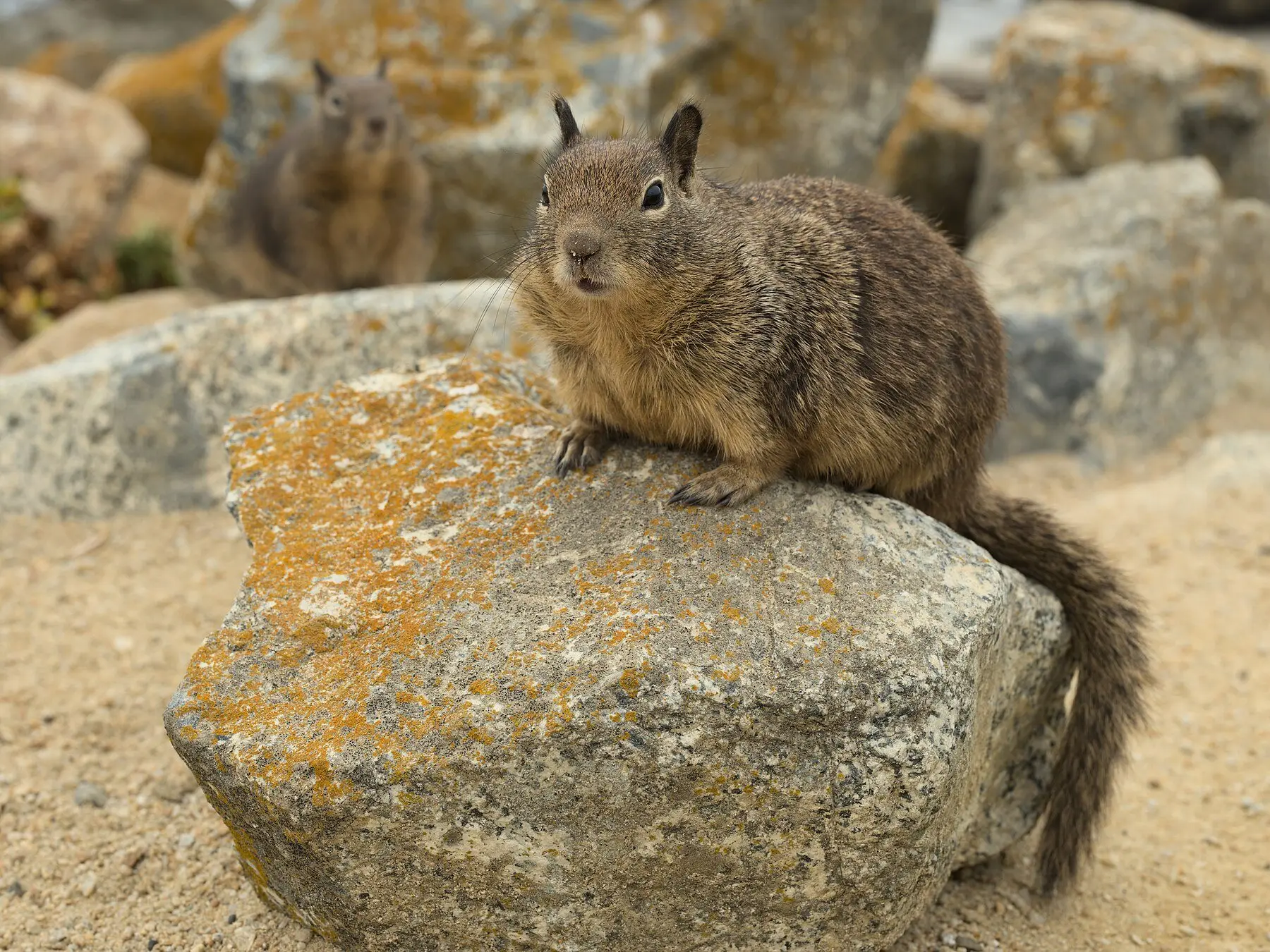
Ground squirrels are not tree squirrels that happen to be on the ground. They are colonial burrowers, and nearly every method aimed at tree squirrels fails against them.
Make sure that is what you have
| Ground squirrel | Chipmunk | Tree squirrel | |
|---|---|---|---|
| Body length | 9–11 in | ~5 in | 9–12 in |
| Face stripes | None | Bold, through the eye | None |
| Tail | Bushy, carried low | Held upright | Bushy, held high |
| Lives | Burrows, colonial | Burrows, solitary | Trees |
| Damage | Tunnels, crops, bulbs | Bulbs, minor tunnels | Feeders, attics, bark |
Get this right before acting. Chipmunks are protected in some states; ground squirrels are frequently classed as agricultural pests with quite different rules.
Why the burrows matter more than the eating
A colony’s tunnel system runs five to thirty feet with several entrances, and it does the kind of damage that costs money rather than vegetables:
- Undermines foundations, retaining walls, patios and driveways
- Severs irrigation lines and drains them into the tunnel
- Collapses under livestock — a serious cause of leg injuries
- Accelerates erosion on slopes, sometimes badly
- Strips bulbs, seedlings, tree bark and fruit as a side line
Do not handle dead ground squirrels or dig burrows bare-handed
California ground squirrels in particular are associated with plague-carrying fleas, which is why some western counties post warnings at trailheads.
Gloves for anything involving a burrow entrance or a carcass, and report a die-off — several dead animals in one area — to your county health department rather than clearing it yourself.
What actually works
1. Exclusion
The one investment that holds.
- Half-inch galvanised hardware cloth, not chicken wire, which they go straight through
- Buried at least 12 inches deep, and bent outward in an L at the bottom for another 12 inches — they dig down at the barrier, hit the horizontal apron, and give up
- Line raised beds underneath before filling them
- Skirt sheds, decks and crawl spaces the same way
- Cage individual plants and bulbs in baskets of the same mesh
- Protect young trees with a mesh collar around the base
2. Habitat
Ground squirrels need cover between burrow and food:
- Clear brush piles, woodpiles, rubble and debris near burrow areas
- Cut back thick ground cover and keep grass short around margins
- Remove fallen fruit, spilled birdseed, pet food and open compost
- Open up sightlines. They avoid crossing open ground where hawks hunt
- Leave the raptor perches, and do not discourage hawks and owls — they are the main natural control
3. Burrow collapse, repeatedly
Once you are sure a burrow is inactive:
- Collapse it with a spade or mattock, well down
- Backfill with soil and gravel and tamp it
- Mark it and check it again in a few days
- Do it again, every time it reopens
Persistence is the mechanism. A colony forced to rebuild continually, with no cover and no easy food, usually relocates. One pass achieves nothing.
Timing decides how hard the job is
Late spring to early summer is the window: they are out of hibernation, the young have not yet dispersed, and the population is at its most concentrated.
Winter is wasted — many species are dormant underground. Autumn is for exclusion work, so the barriers are in place before spring emergence.
What does not work
- Repellent sprays — capsaicin, castor oil, garlic. Short-lived and ignored by an established colony
- Predator urine. They live alongside actual predators
- Mothballs. Ineffective, and illegal used this way in most places
- Ultrasonic devices. Tested repeatedly, no effect
- Vibrating stakes and windmills. Habituated to within a week
- Flooding burrows with a hose. Wastes enormous amounts of water, rarely reaches the nest chamber, and soaks your own foundations
- Chewing gum, human hair, pepper and the rest of the folk list
The pattern is always the same: a dug burrow is a large investment, and an animal will tolerate a great deal of unpleasantness rather than abandon one.
Dogs, cats and traps
A dog with the run of the yard genuinely suppresses them — disturbance rather than catching, and it keeps working because it never becomes predictable. Cats take young ones but rarely adults, which are nearly their own size and fight.
Trapping is effective and is where local law starts to matter. Rules on live trapping, relocation and lethal control vary sharply by state and county, and relocating wildlife is illegal in many places. Check your state wildlife agency or county agricultural commissioner before you start, and if the colony is large, a licensed operator will resolve in a week what takes a homeowner a season.
Do not do this instead
Two approaches circulate that cause more trouble than the squirrels:
- Poison bait. Secondary poisoning kills the hawks, owls, foxes and dogs that eat the poisoned animal — removing the predators that were helping. Heavily restricted in many states
- Burrow fumigation devices and smoke bombs. Fire risk in dry country, and they reach other species using the same tunnels — burrowing owls, snakes and tortoises among them
Start with the hardware cloth. Everything else is maintenance.
Our picks
| # | Pick | Best for | Where to buy |
|---|---|---|---|
| 1 | Hardware cloth, 1/2 in | The measure that works | Check price for Hardware cloth, 1/2 in → |
| 2 | Landscape staples | For pinning the skirt | Check price for Landscape staples → |
| 3 | Tin snips | For cutting the mesh | Check price for Tin snips → |
The measure that works
Hardware cloth, 1/2 in
Exclusion is the answer because the tunnels are the problem. A 12-inch skirt bent outward is what turns them back.
- Mesh
- 1/2 in
- Depth
- Bury 12 in, bent outward in an L at the bottom
- Protects
- Foundations, walls, slopes, irrigation, raised beds
- Why
- The tunnels are the damage, not the eating
What we liked
- Burrowing animals turn back at a buried L-footer
- Protects the structural damage that actually costs money
- Lasts decades once buried
- Also excludes rats, voles and gophers
Worth knowing
- Real digging work to install properly
- Expensive over a long run
- Pointless if there is any gap left at an end
For pinning the skirt
Landscape staples
The compromise where you cannot dig a trench. Lay the mesh flat and outward, pin it hard, and let turf grow through it.
- Use
- Pinning mesh flat where it cannot be buried
- Length
- 6 in or longer
- Material
- Galvanised steel
- Where
- Along walls, under decking edges, around beds
What we liked
- Lets you lay a surface L-footer where digging is impossible
- Holds mesh flat until grass grows through and anchors it
- Cheap by the bag
Worth knowing
- Less effective than burying the mesh
- Pull out of loose sandy soil
For cutting the mesh
Tin snips
Cutting hardware cloth with the wrong tool is why people give up on exclusion halfway through. Spend the little this costs.
- Type
- Compound-action aviation snips
- Cuts
- Galvanised hardware cloth
- Why
- Ordinary scissors will not manage it
- Pair with
- Thick gloves — cut edges are sharp
What we liked
- Compound action cuts heavy mesh without wrecking your hands
- Clean cuts leave fewer snagging spurs
- Useful for every other mesh job in a garden
Worth knowing
- Cut edges are genuinely sharp; wear gloves
Common questions
What is the difference between a ground squirrel and a chipmunk?
How do I get rid of ground squirrels?
Do ground squirrel repellents work?
Are ground squirrel burrows actually damaging?
When is the best time to deal with ground squirrels?
Will a dog or cat get rid of ground squirrels?
Backyard Weekly
Know what to plant, week by week
Join the weekly email for seasonal jobs, fixes for what is going wrong, and gear worth buying.
Not ready to subscribe? The planting calendar is free and needs no email.
By subscribing you agree to our privacy policy. Grow In Backyard will never sell your address.
Keep reading
How to Attract Squirrels to Your Yard (And Whether To)
Nut trees, water and cover bring squirrels in far more durably than a feeder. What works, what to put out, and the costs worth weighing first.
When Are Chipmunks Most Active? Daily and Seasonal Patterns
Chipmunks are strictly daytime animals with morning and late-afternoon peaks. Why they vanish in midsummer, and why a January sighting is normal.
Will Squirrels Eat Your Garden? What's Actually at Risk
Squirrels dig up bulbs, strip tomatoes, and raid every nut tree in reach — but leave most vegetables alone. What they actually target, and what stops them.
How to Get Rid of Mice Under a Shed, and Keep Them Out
A shed on bearers is a dry, warm void with no predators. Skirting it with hardware cloth, the order to do the work in, and why baiting first backfires.