
Bees Behind Siding: How to Identify and Remove Them
Identify what is actually nesting before anything else — honey bees behind siding need a beekeeper, not a spray, and a sealed-in colony rots in the wall.
 By

On this page
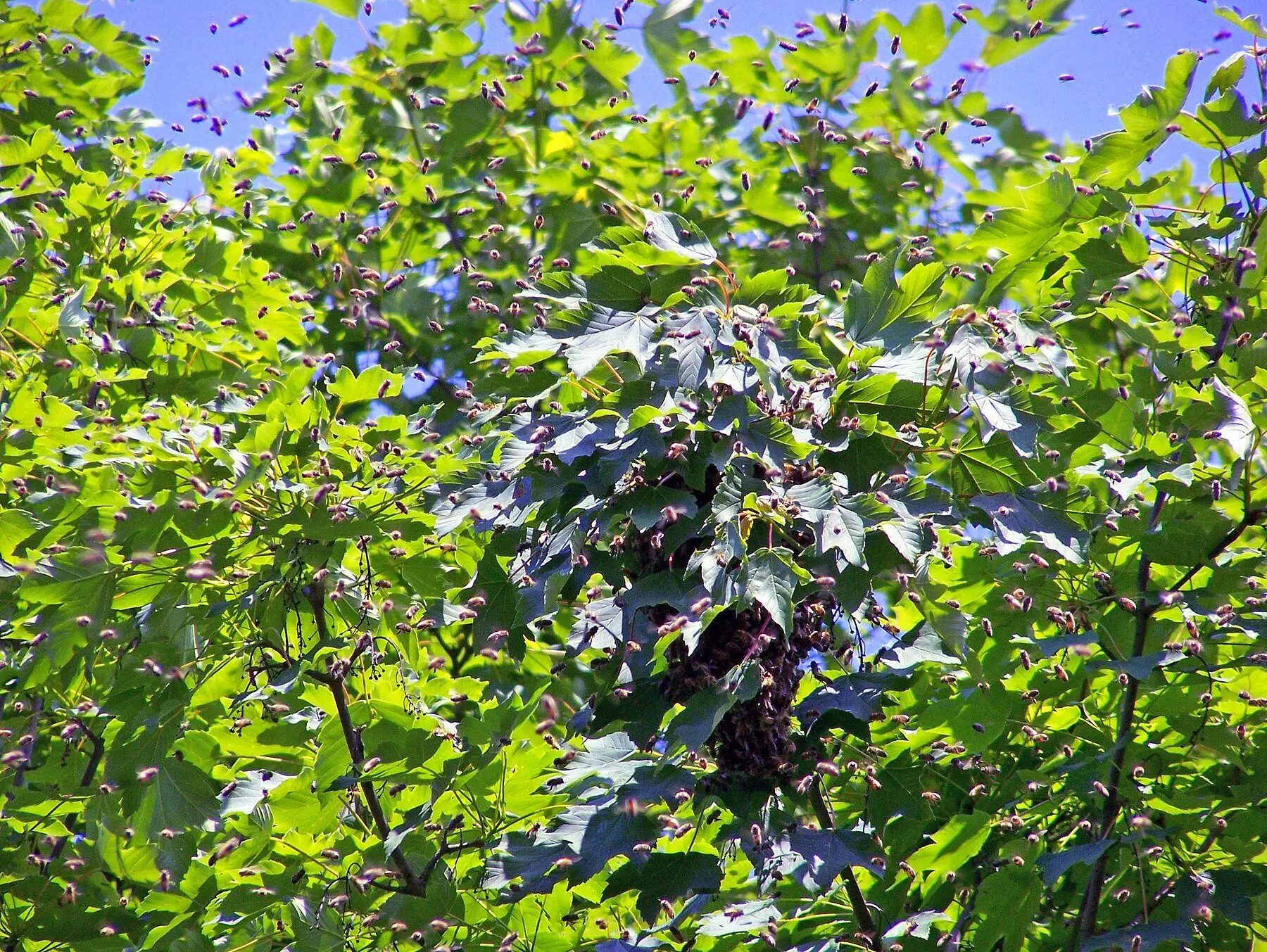
Before anything else: work out what it is. Honey bees behind siding need a beekeeper and a cutout; wasps need a different approach entirely; bumblebees need nothing at all. And sealing the hole while they are in there is the one action that turns a nuisance into a repair bill.
Identify it from a distance
Photograph one with zoom. Do not get close to the entrance.
| Honey bee | Bumblebee | Yellowjacket / hornet | Carpenter bee | |
|---|---|---|---|---|
| Look | Fuzzy, amber-brown, banded | Large, round, very fuzzy | Smooth, shiny, sharply marked | Bumblebee-like, shiny black abdomen |
| Size | ~½ in | ¾–1 in | ½–¾ in | ~1 in |
| Flight | Steady, heavy traffic | Slow, loud, few at a time | Fast, direct, darting | Hovering, territorial males |
| Colony | Thousands, perennial | A few hundred, annual | Hundreds to thousands, annual | Solitary |
| Entry | Any gap or crack | Any gap, often low down | Any gap | A perfect round ½ in hole it drilled |
| Answer | Beekeeper cutout | Wait until late summer | Dusk treatment, or wait for frost | Treat galleries, plug, paint |
Two quick tells: traffic volume — a honey bee colony has continuous heavy two-way traffic all day, while a bumblebee nest shows a handful of arrivals a minute. And coarse sawdust below a round hole means carpenter bee, every time.
The mistake to avoid
Do not seal an active entrance
This is the expensive one. Seal honey bees in and the colony dies, but the comb, brood and honey stay — and in a sun-facing wall they melt, ferment, soak into plaster and framing, and then draw ants, cockroaches, wax moths and rodents for years. Sealed-in wasps often chew through the interior wall and come out in the house. Seal only once the cavity is genuinely empty.
Honey bees: a cutout, not an extermination
An established colony is many pounds of honey and a substantial sheet of comb. The removal that works is a cutout: the siding is opened, comb and colony are removed, the cavity is cleaned of wax and residue, and then it is sealed.
- Call a local beekeeping association first. Most maintain swarm and removal lists, and some will do a viable colony cheaply or free.
- Not every “bee removal” service does cutouts — ask directly whether they remove the comb, because a service that only kills the colony leaves you the whole structural problem.
- A trap-out (a one-way cone that lets bees leave but not return) is sometimes offered. It is slow, it does not remove the comb, and the abandoned honey still has to come out.
Why the cavity gets cleaned
Old comb and pheromone residue actively attract the next swarm. A cavity that has held bees before is the most likely place in your house to hold them again, which is why cleaning matters as much as removing.
Bumblebees: wait
A bumblebee nest holds a few hundred individuals, is finished by late summer, and is never reused. They are docile away from the entrance and are among the best pollinators in the garden.
Unless the entrance is right beside a door or a play area, doing nothing is the correct answer, and it costs nothing. In many countries bumblebees are also protected to some degree.
Wasps and hornets
Also annual — workers die at the first hard frosts and only mated queens survive, elsewhere. If the entrance is out of the way, waiting for autumn works.
If it is by a door, a walkway or a play area, or if anyone in the household is allergic:
- Treat at dusk, when the colony is home and least active
- Stand to the side of the entrance, never underneath it
- Leave the hole open for several days afterwards, so returning foragers carry treatment in
- Hire it out if the nest is above head height, inside a cavity you cannot see, or if anyone is allergic. This is the species that genuinely hurts people.
Carpenter bees
A different problem: they are drilling the siding itself, not using an existing gap.
A near-perfect half-inch round hole, coarse sawdust beneath it, and yellowish staining. They tunnel along the grain and return to the same timber year after year, extending the galleries — which is how a cosmetic hole becomes real damage over a decade.
- Treat the galleries, then plug them once empty with dowel and exterior filler
- Paint or varnish the wood. They strongly prefer bare or weathered softwood, and finished timber is far less attractive
- The hovering bees at head height are males, which have no sting at all
Sealing up afterwards
Once the cavity is genuinely empty — after a cutout, or after the first hard frosts for an annual nest:
- Exterior caulk backed by stainless steel wool in the entry point
- Then walk the whole wall: behind gutters, soffit and fascia junctions, vents, utility penetrations, the ends of siding runs, and gaps where siding meets trim
- Fine mesh over vents that must stay open
The gap they used is rarely the only one.
Step by step
- Time
- P2D
- Cost
- $0
- You need
- Exterior caulk and stainless steel wool, for sealing afterwards
- Tools
- Binoculars or a phone camera with zoom, Flashlight
Identify the insect before touching anything
Watch the entry hole from a safe distance and photograph an insect with zoom. Honey bees are fuzzy, amber-brown and banded, and traffic is constant and heavy. Bumblebees are large and very fuzzy with a small colony. Yellowjackets and hornets are smooth, shiny and sharply marked, and fly fast and directly. Carpenter bees look like bumblebees with a bare shiny black abdomen and leave a perfectly round half-inch hole. Which one it is changes everything that follows.
Never seal the entrance while they are active
This is the mistake that turns a nuisance into structural damage. Sealing honey bees in leaves comb, brood and honey to melt and ferment inside the wall, which stains through drywall, rots framing and draws ants, roaches, wax moths and rodents for years. Sealed-in wasps often chew through the interior wall instead and end up in the house.
Call a beekeeper for honey bees
Honey bees in a wall are a cutout, not an extermination — the siding is opened, the comb and colony removed, and the cavity cleaned and sealed. Many local beekeeping associations maintain swarm and removal lists, and some will do it free or cheaply for a viable colony. Killing a honey bee colony in a wall leaves the comb behind, which is the whole problem.
Wait out bumblebees and a single-season wasp nest
Bumblebee colonies die out by late summer and never reuse the site, and wasp and hornet nests are annual — the workers die at the first hard frosts and only mated queens overwinter elsewhere. If the entrance is not somewhere people pass closely, doing nothing until autumn is usually the right answer and costs nothing.
Treat wasps at dusk, or hire it out
If a yellowjacket nest is by a door, a play area or a walkway, treat it at dusk when the colony is home and least active, standing to the side of the entrance rather than beneath it, and leave the hole open for several days so returning foragers carry the treatment in. A nest above head height, inside a wall cavity you cannot see, or near anyone allergic is a job for a professional.
Seal the cavity only once it is empty
After removal, or after the first hard frosts for an annual nest, close the entry with exterior caulk backed by stainless steel wool, and check the rest of the wall for gaps — behind gutters, at soffit and fascia junctions, around vents, utility penetrations and the ends of siding runs. An unsealed cavity that held a colony is the one most likely to be chosen again.
Common questions
How do I get rid of bees behind my siding?
Can I just seal the hole to keep bees out of the wall?
How do I know if they are honey bees or wasps?
Are honey bees in a wall dangerous to the house?
What are the round holes in my wooden siding?
Will the bees come back to the same wall next year?
Backyard Weekly
Know what to plant, week by week
Join the weekly email for seasonal jobs, fixes for what is going wrong, and gear worth buying.
Not ready to subscribe? The planting calendar is free and needs no email.
By subscribing you agree to our privacy policy. Grow In Backyard will never sell your address.
Keep reading
How to Get Rid of Frogs — 3 Fixes That Cut the Draw
How to get rid of frogs starts with the water and light drawing them in. 3 fixes compared for yards and pools. See which matches your problem.
How High Can a Rat Jump? And How Far, and How Small a Gap
A brown rat clears about three feet vertically and four horizontally, and fits through a gap the size of a quarter. What that means for rat-proofing.
Snakes in a Crawl Space or Under the House: What to Do
A snake under the house is following rodents and cool air. How to confirm it, get it out safely, and seal the gaps so the next one does not get in.
How to Keep Bees Away From a Deck or Porch, Safely
Most deck bee problems are carpenter bees, yellowjackets or foraging honeybees, and each needs a different answer. Identify first, then act.