
How to Deter Hawks From Backyard Chickens
Overhead cover is the only reliable defence. What works, what is illegal, and the breeds and cockerels that change a hawk's calculation.
 By
On this page
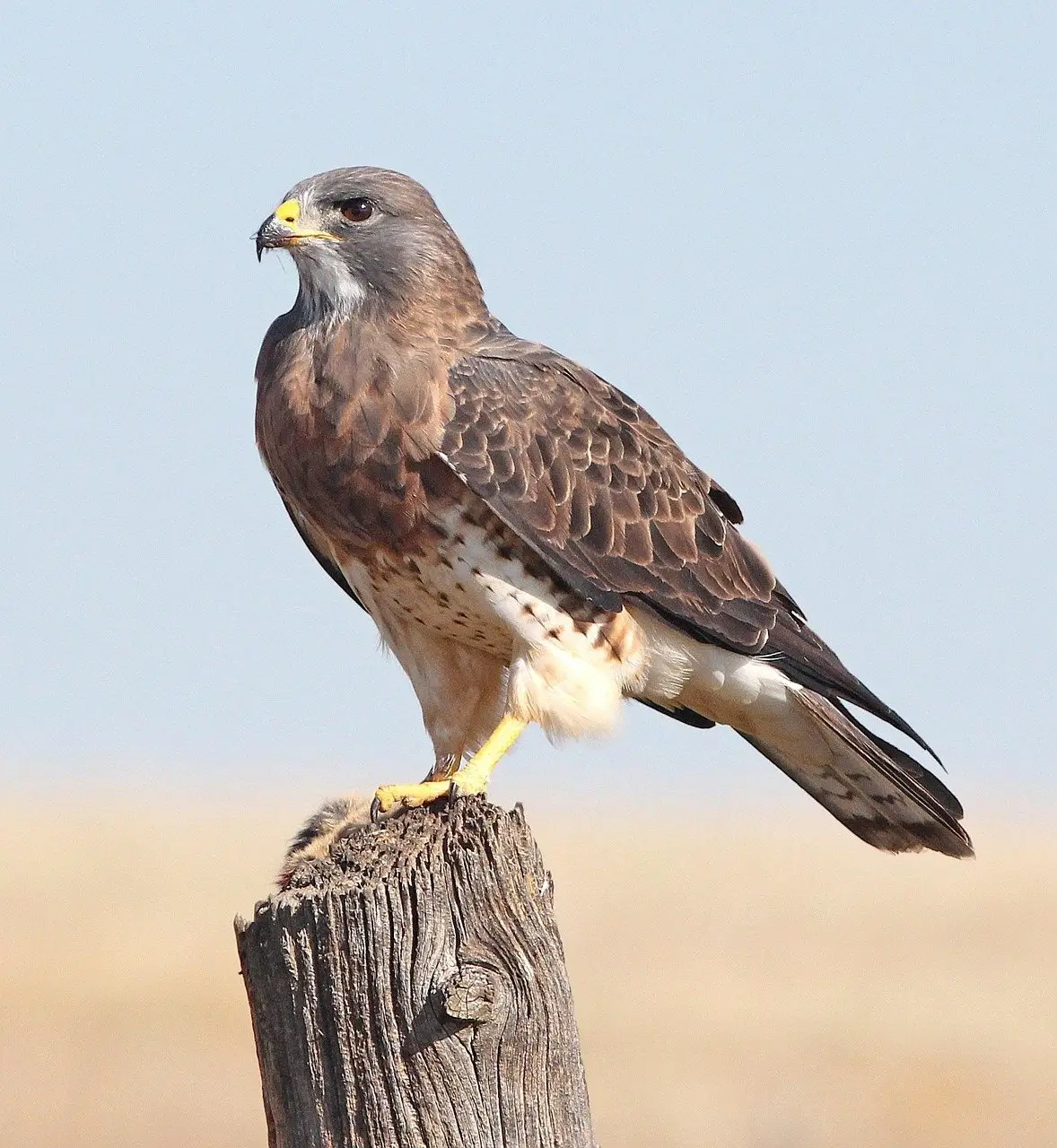
A hawk needs open sky above open ground. Take either away and the attack stops being worth attempting — which is why cover works and scare devices do not.
Cover, in order of effectiveness
| measure | effect |
|---|---|
| Full aviary netting over the run | Complete. The only certain fix |
| Welded wire roof over part of the run | Complete where they are |
| Shade sails or a pergola | Strong — breaks the dive line |
| Criss-crossed lines or tape overhead | Moderate; deters commitment |
| Dense shrubs and low trees in the run | Moderate; gives escape cover |
| Open run, no cover | None |
Netting needs to be taut and anchored. Slack netting is both a trap hazard for wild birds and something a determined hawk will push through.
It is illegal to shoot, trap or harass a hawk
In the US they are protected under the Migratory Bird Treaty Act, with federal penalties; in the UK under the Wildlife and Countryside Act. That applies while the bird is actively taking your chickens. Depredation permits exist in the US for severe, documented cases and come from US Fish and Wildlife Service — they are not routine.
Flock-level measures
- Keep a cockerel. The aerial alarm call is distinct from the ground-predator one, and the flock responds to it
- Choose darker or barred breeds where losses are ongoing — Barred Rock, Welsummer, anything mottled
- Keep chicks and bantams in covered runs entirely
- Supervise free-ranging, and stop it during the autumn migration peak if losses spike
- Feed inside or under cover, so the flock is not standing in the open at a predictable time
What does not work for long
- Plastic owls and hawk decoys — days
- Reflective tape, old CDs, scarecrows — days
- Radios — days
- Motion sprinklers — hawks habituate; also they stoop faster than the sensor responds
Use them rotated and moved, as a supplement. Never as the plan.
After a kill
A hawk that has fed successfully returns. Expect it back within a day or two, and get cover up before that happens rather than after the second loss — the pattern is predictable enough to act on.
Common questions
What actually stops a hawk taking chickens?
Is it legal to shoot or trap a hawk?
Do roosters protect hens from hawks?
Which chickens are most at risk?
Do scare devices work?
What about guinea fowl or geese?
Backyard Weekly
Know what to plant, week by week
Join the weekly email for seasonal jobs, fixes for what is going wrong, and gear worth buying.
Not ready to subscribe? The planting calendar is free and needs no email.
By subscribing you agree to our privacy policy. Grow In Backyard will never sell your address.
Keep reading
How to Keep Backyard Chickens Healthy: The Routine
Most flock illness is prevented by dry bedding, clean water, parasite checks and quarantine. The weekly routine and the signs that need acting on.
Best Chicken Coops to Buy — 4 Fixes Before You Order
Knowing the best chicken coops to buy starts with what prefabs get wrong. 4 fixes compared, plus when building costs less. See which your flock needs.
How Many Chickens Fit in a 12x12 Coop?
A 12x12 coop holds 36 standard hens on floor space alone — but roost length, ventilation and run access cut the real figure to nearer 20.
How to Keep Backyard Chickens Quiet
Hens are quiet except for the egg song and the complaint calls. What each noise means, what fixes it, and why no cockerel is ever quiet.