How Long Do Koi Live? 25 to 35 Years, With Caveats
Koi routinely outlive the pond they were bought for. What actually sets lifespan, the volume they need, and why the famous 226-year fish is not the benchmark.
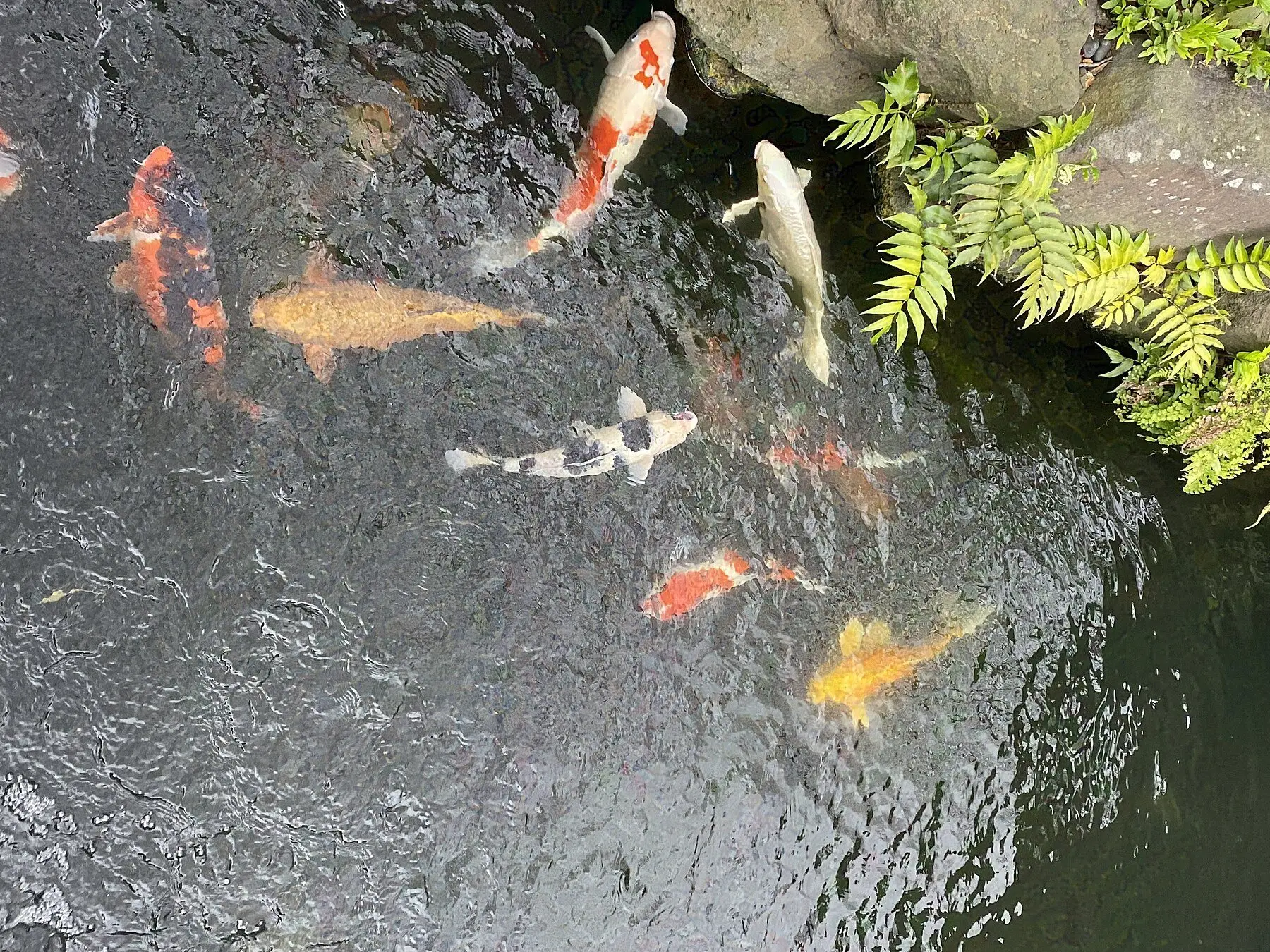

On this page
Twenty-five to thirty-five years in a good pond. Fifteen to twenty in an average one. Japanese bloodlines in ideal conditions can pass fifty.
Which means a koi bought casually is a longer commitment than a dog, and usually a longer one than the pond it went into.
About Hanako
Every article on this subject mentions Hanako, a scarlet koi said to have died in 1977 at 226 years old, her age read from growth rings in a scale.
Treat it as a curiosity rather than a benchmark. The claim rests on one scientist’s reading of one fish’s scales and has never been independently verified, and scale-ring ageing is not reliable over that span.
What it does illustrate is the real point: koi have no obvious fixed lifespan. They keep growing and keep going as long as conditions allow, so almost every koi that dies young dies of its environment.
What sets the lifespan
| Factor | Why it matters | Typical failure |
|---|---|---|
| Water quality | Ammonia and nitrite damage gills continuously | Filter too small, or not yet cycled |
| Volume | Dilutes waste; buffers temperature swings | 300-gallon feature stocked with six fish |
| Depth | Prevents freezing through and summer overheating | Under 3 ft |
| Temperature stability | Sudden swings suppress the immune system | Shallow pond in full sun |
| Diet | Wrong food at the wrong temperature is indigestible | Feeding through winter |
| Stocking density | Crowding raises waste and stress | Buying by pond area rather than volume |
| Predation | Herons take fish up to a surprising size | No net, no deep refuge |
| Genetics | Bloodline sets the ceiling, not the floor | — |
Water quality is not one factor among several — it is the one that kills. Ammonia and nitrite burn gill tissue, and a fish can be losing respiratory capacity for months while still swimming and feeding normally. By the time behaviour changes, the damage is often done.
New ponds kill fish because the filter is not alive yet
A filter is a bacterial colony, not a strainer. The bacteria that convert ammonia to nitrite and nitrite to nitrate take four to eight weeks to establish, and until they do, fish waste accumulates as ammonia. Stocking a brand-new pond with koi is the single most common way beginners lose expensive fish. Cycle the filter first — fishlessly if you can — and test ammonia and nitrite until both read zero.
Sizing the pond honestly
- 1,000 gallons minimum for koi at all.
- ~250 gallons per adult fish.
- 3 feet deep minimum, 4 or more in cold winters.
- Adult size: 24 to 36 inches. This is what catches people out — a 6-inch fish at the garden centre is a 2-foot fish in four years.
The arithmetic that matters: six young koi in a 300-gallon water feature is not a slow problem. It is a pond that will be four times overstocked within three years.
The grow-to-the-size-of-the-tank myth
Koi in a small volume do stay smaller, but not because they sense the space. Accumulated waste and growth-inhibiting hormones suppress external growth while internal organs continue developing — so a stunted koi is a deformed one, carrying organ damage and a shortened life. Small ponds do not produce small healthy fish. They produce sick ones that look manageable.
Winter
Koi are cold-water fish and overwinter outdoors perfectly well, given depth.
As water approaches 50°F they enter torpor — sitting near the bottom, barely moving, metabolism almost stopped. A pond 3 to 4 feet deep keeps a layer of warmer water beneath the ice.
- Stop feeding below about 50°F. They cannot digest it, and undigested food rots inside them.
- Switch to a wheatgerm-based food below about 60°F, before stopping.
- Keep a hole in the ice for gas exchange — a floating de-icer or an air stone.
- Never smash the ice. The shockwave concusses fish in torpor.
- Turn off or reduce waterfalls and fountains, which supercool the water and disturb the warm layer.
Predators
A heron will take koi up to a surprising size and will return daily once it finds a pond. So will racoons, otters, cats and kingfishers depending on where you are.
What works: depth — a section at least 3 feet deep gives fish somewhere to go — plus netting, a pond overhang or ledge, and dense planting at the margins. Decoy herons work briefly and then stop, as with most static deterrents; the reasoning is the same as for keeping ducks off a pool.
Can you eat them?
Yes, and essentially nobody does.
Koi are Cyprinus carpio — the common carp, a food fish farmed on a huge scale worldwide. There is no legal or safety barrier in most places.
There are three practical ones: ornamental koi are extremely bony, pond-raised fish taste muddy, and a mature koi may have been treated over decades with medications never assessed for food use. Add that a good specimen costs more than most cuts of meat, and the question answers itself.
The commitment, stated plainly
If the fish live 25 years, then buying koi means committing to a filter that runs continuously, water testing, winter management and a pond big enough for adults — for a quarter of a century.
That is a reasonable thing to take on. It is just worth knowing at the point of purchase rather than in year four, when six fish have outgrown the feature they were bought for and the options are a bigger pond or finding them a home.
Common questions
How long do koi fish live?
What actually determines how long a koi lives?
How big a pond do koi need?
Do koi stop growing in a small pond?
Can you eat koi?
How do koi survive winter?
Backyard Weekly
Know what to plant, week by week
Free planting calendar. Join the weekly email for seasonal jobs, fixes for what is going wrong, and gear worth buying.
Set MONETIZATION.email.endpoint in src/config/site.ts to enable this form.
By subscribing you agree to our privacy policy. Grow In Backyard will never sell your address.
Keep reading
How to Keep Ducks Out of a Swimming Pool, Humanely
Ducks pick pools for open water and no predators. Removing what attracts them works; chasing them does not, and in most places harming them is illegal.
How to Get Rid of Frogs and Toads (Yard and Pool)
Frogs are drawn to standing water, cover, and outdoor lights — remove those and most leave on their own. What actually works, and when to just leave them alone.
What Butterflies Need to Survive in a Backyard
Nectar flowers feed adult butterflies but cannot raise any. Caterpillars only eat specific host plants — that gap is why most butterfly gardens stay empty.
Are Corn Snakes Poisonous? No, and Not Venomous Either
Corn snakes are harmless constrictors often killed on sight because they mimic copperheads. How to tell them apart, and why one is worth keeping around.