How to Keep Ducks Out of a Swimming Pool, Humanely
Ducks pick pools for open water and no predators. Removing what attracts them works; chasing them does not, and in most places harming them is illegal.

On this page
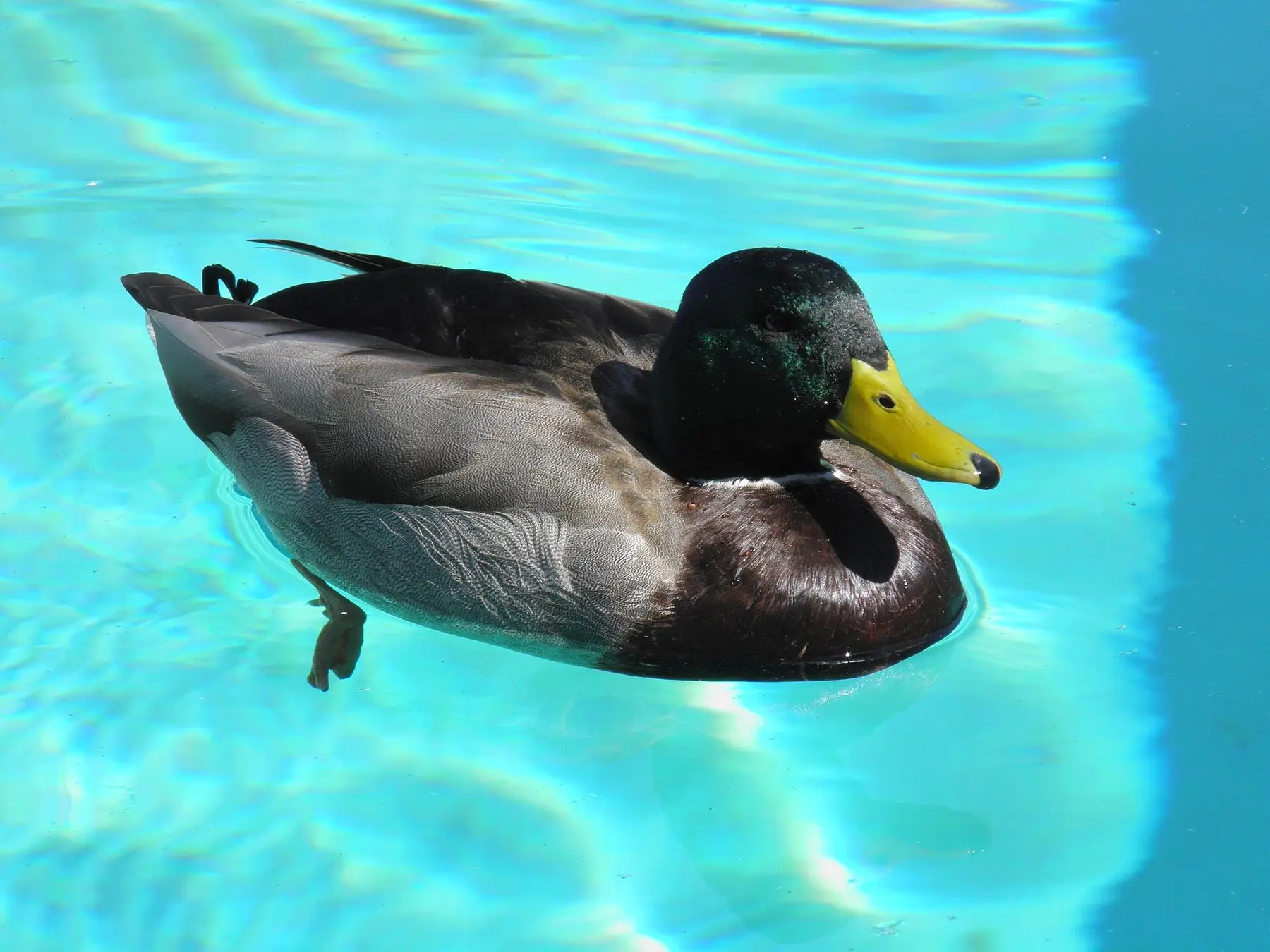
A swimming pool looks, to a mallard, like an excellent pond: open water, clear sightlines in every direction, nothing living in it that might eat them, and usually a supply of insects around the edge.
They are not making a mistake. The pool genuinely is good habitat, and the way to stop them using it is to make it less so.
Why they picked your pool
- Open water with clear views — safety from predators.
- No fish, no competition for whatever they can find.
- Insects on the surface and around the edge, especially near lights.
- Quiet. A pool that is rarely used is more attractive than a busy one.
- A previous good experience. Pairs return to water that worked last year.
Notably, algae and insects make a pool more attractive, so a neglected pool draws more interest than a well-maintained one.
What actually works
| Method | Works? | How long |
|---|---|---|
| Pool cover when not in use | Reliably | Indefinitely |
| Motion-activated sprinkler | Well | Weeks to months |
| Removing food sources nearby | Well | Indefinitely |
| Rotating multiple decoys | Moderately | Weeks, if moved often |
| Floating balls covering the surface | Moderately | Months |
| Reflective tape, mylar streamers | Briefly | Days to weeks |
| Static plastic owl or alligator head | Briefly | Days |
| Chasing them off | No | Minutes |
| Chemical repellents on water | No | Not appropriate for a pool |
A cover is the answer. It removes the water, which is the entire attraction. A solar cover, safety cover or automatic cover all work; the deterrent value is the same.
Motion-activated sprinklers are the best of the active deterrents. Sudden movement and noise triggered by the bird’s own approach is far more effective than anything static, because it does not become predictable.
Rotate whatever you use. The single reason decoys fail is that they stay put. A plastic owl moved to a different position every few days keeps working considerably longer than one left on the same post all summer.
Do not harm, trap or relocate ducks
Wild waterfowl are protected almost everywhere — by the Migratory Bird Treaty Act in the United States, the Wildlife and Countryside Act in the UK, and equivalent legislation across Canada and the EU. It is generally illegal to kill, injure, capture, or disturb them, and to destroy nests or eggs, without a licence. Penalties are real. Everything on this page is deterrence, which is both legal and more effective than the alternatives.
Remove what supports them
Stop feeding birds near the pool. Bird feeders, scattered bread and pet food left outside all signal a reliable food supply. This is the most commonly overlooked factor.
Deal with insects. Ducks eat them. Reducing standing water elsewhere, and moving lights that draw insects to the poolside, both help.
Keep the pool clean. Algae is food. A well-maintained pool is measurably less interesting.
Remove other standing water — bird baths, blocked gutters, water features — that make the whole garden read as wetland.
Reduce cover near the water’s edge. Ducks like somewhere to rest and preen beside the water.
The hygiene problem
This is the real reason to act, rather than aesthetics.
Waterfowl droppings can carry E. coli, Salmonella, Campylobacter, Cryptosporidium and Giardia, and the flatworm larvae that cause swimmer’s itch.
Chlorine at normal pool levels handles most bacteria within minutes. Cryptosporidium is highly chlorine-resistant and can survive for days in a properly chlorinated pool, which is why it is the organism behind most recreational water outbreaks.
So after duck visits:
- Remove droppings promptly with a net or scoop, and dispose of them away from the pool.
- Test the water — check chlorine and pH.
- Shock the pool if there has been significant contamination.
- Run the filter for a full turnover cycle.
- Backwash or clean the filter afterwards.
If ducklings arrive
A duck may nest in a garden and bring the brood to the pool. Ducklings can get in and then cannot climb the smooth sides out, and they drown.
- Float a ramp — a plank, a pool noodle chain, or a purpose-made animal escape ramp — so they can leave.
- Leave the cover off while they are present, because a cover a duckling can get under is worse than open water.
- Do not move the nest. It is illegal in most places, and ducklings leave within about 24 hours of hatching anyway.
- Wait it out. The family will move on to permanent water once the ducklings can travel.
Do ducks eat fish?
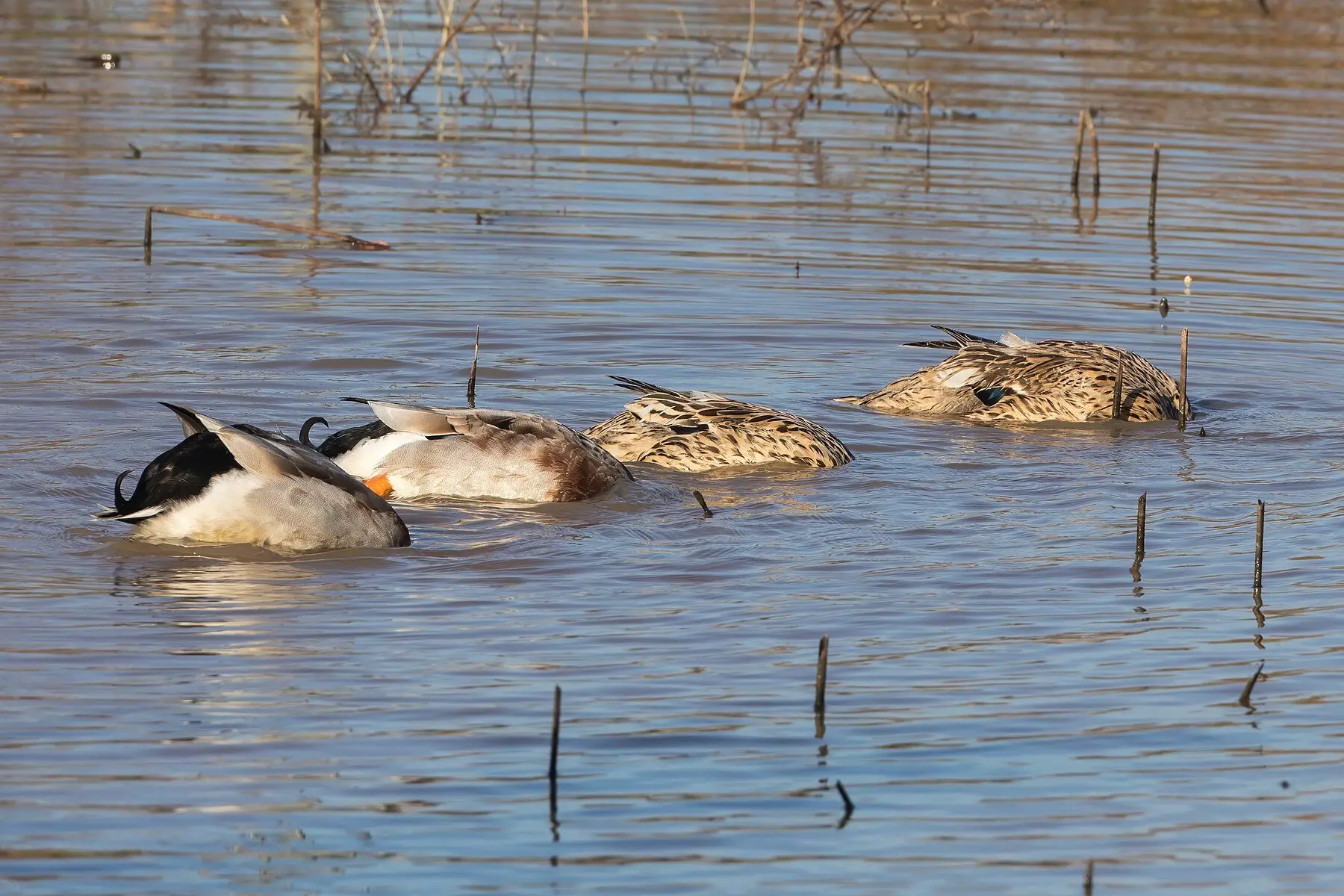
Yes — mallards are omnivores and will take small fish, fry, tadpoles, insects, snails and a great deal of plant material. It is one reason a pond stocked with fish attracts them, and one reason a pool with nothing living in it is a slightly odd choice for them beyond safety. If you have a garden pond as well, that is likely the draw and the pool is the safe resting spot.
A combination, not one thing
The pattern that works is layered and rotated:
- Cover the pool whenever it is not in use — the foundation.
- A motion sprinkler covering the approach.
- Two or three decoys, moved every few days.
- No food sources anywhere in the garden.
- Clean water, promptly maintained.
Any one of these alone gets learned around. Together, and changed regularly, they make the pool less attractive than the next option — which is all you are trying to achieve.
Common questions
Why do ducks keep coming to my pool?
What is the most effective way to keep ducks out of a pool?
Is duck droppings in a pool dangerous?
Can you legally remove or harm ducks?
Do decoys or pool floats keep ducks away?
What if a duck nests near the pool?
Backyard Weekly
Know what to plant, week by week
Free planting calendar. Join the weekly email for seasonal jobs, fixes for what is going wrong, and gear worth buying.
Set MONETIZATION.email.endpoint in src/config/site.ts to enable this form.
By subscribing you agree to our privacy policy. Grow In Backyard will never sell your address.
Keep reading
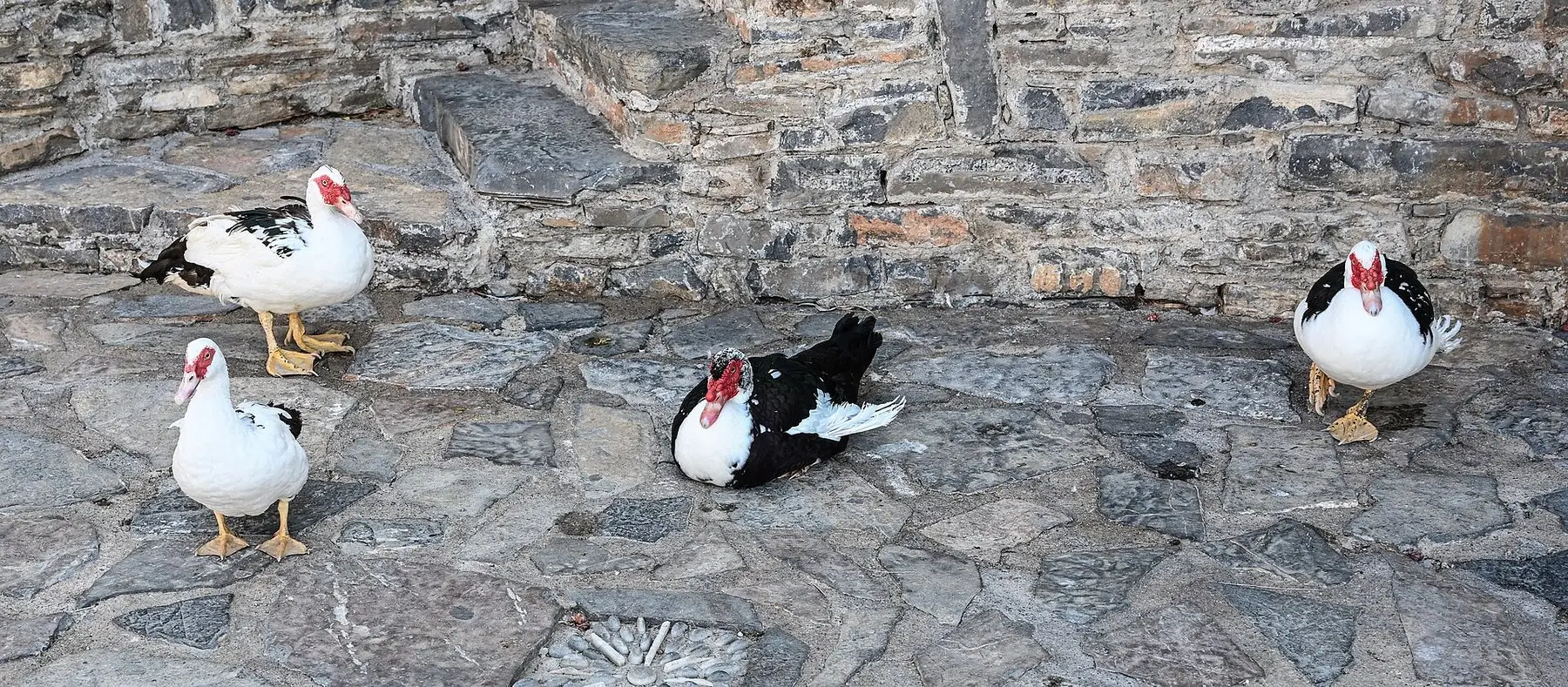
Can Ducks Eat Chicken Feed? Mostly, With One Fix
Chicken feed will not harm ducks, but it falls short on niacin. What to add if you free-feed a mixed flock, and the one chicken feed to avoid entirely.
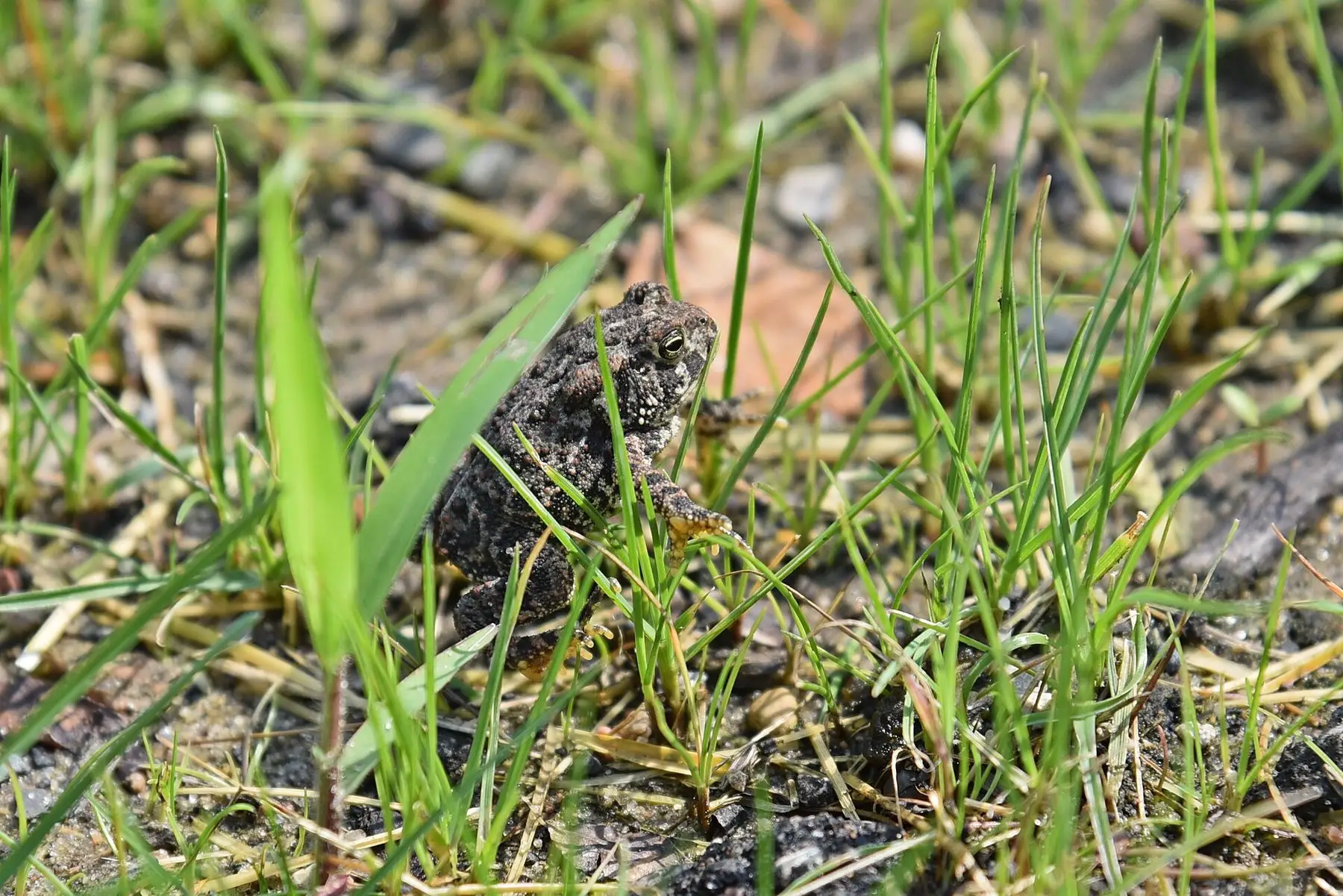
How to Get Rid of Frogs and Toads (Yard and Pool)
Frogs are drawn to standing water, cover, and outdoor lights — remove those and most leave on their own. What actually works, and when to just leave them alone.
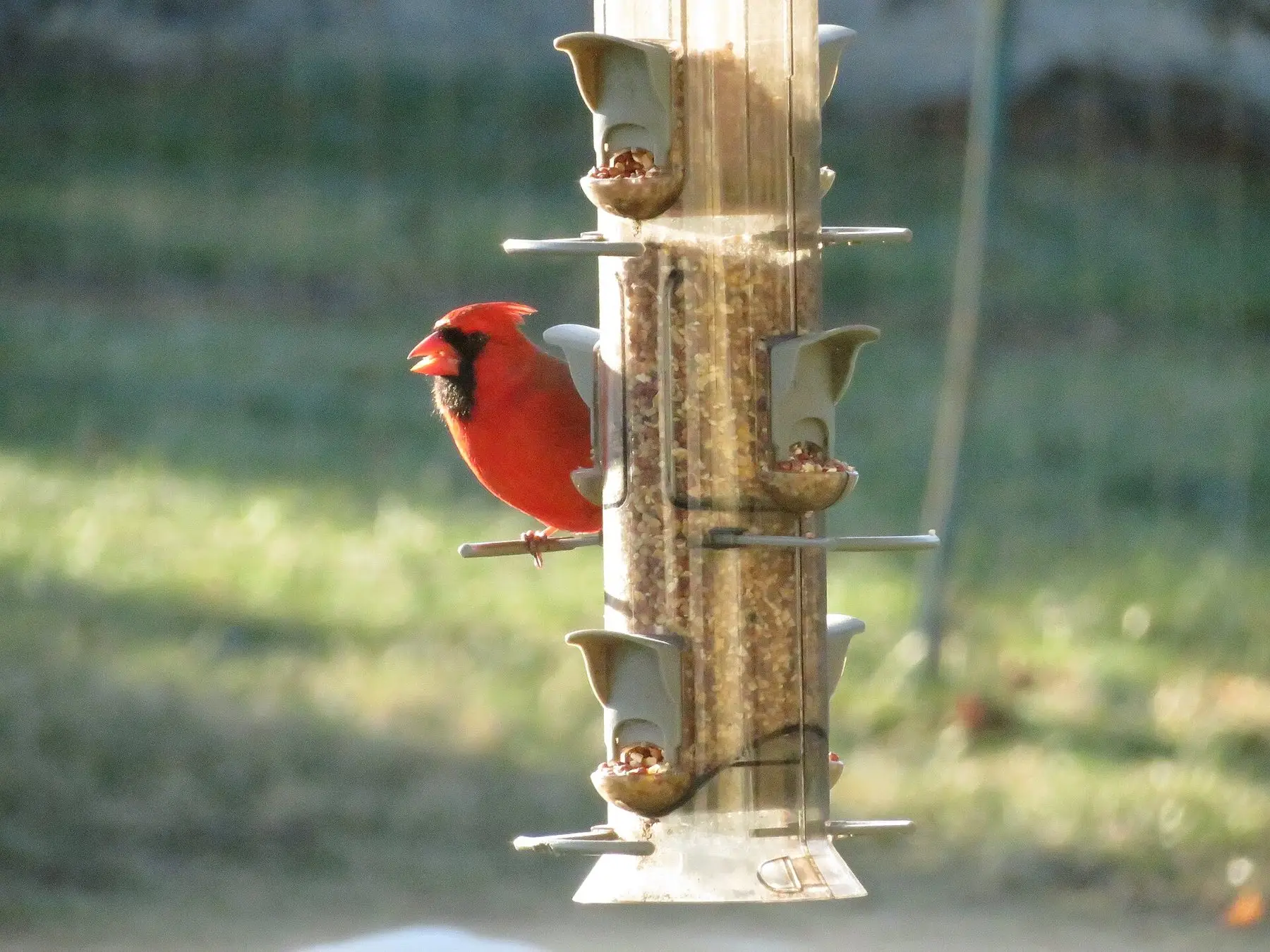
Squirrel-Proof Bird Feeders: What Actually Stops Them
Squirrels jump 10 feet sideways and 4 feet up, so placement defeats more of them than any feeder design. The mechanisms that work, and the ones that don't.
Do Ducks Eat Fish? What That Means for a Backyard Pond
Most backyard duck breeds will eat small fish, fry and eggs opportunistically. The bigger threat to your pond is not predation — it is what ducks do to the water.