
Do Ducks Need a Pond? What They Actually Require
Ducks do not need a pond, but they do need water deep enough to submerge their heads. What that means in practice, and what happens without it.
 By

On this page
No pond needed — but water is not optional. The requirement people misread is not swimming; it is depth enough to submerge the whole head. A rubber tub meets it. A chicken drinker does not.
The actual requirements
| Need | Minimum | Urgency |
|---|---|---|
| Drinking water | Constant, whenever feed is present | Critical — hours matter |
| Head-submersion depth | 4–6 in | Daily. Eyes and nostrils depend on it |
| Bathing water | A tub they can sit in | Strongly preferred; a day or two off is tolerable |
| Swimming water | Not required | Good for welfare, and for fertility in heavy breeds |
| A pond | Never required | Nice for you, hard on the pond |
Why the depth matters
A duck’s nostrils sit on the bill, and it clears them by dunking its whole head and shaking. The same action washes the eyes. There is no substitute.
Without that depth you start to see:
- Crusted or blocked nostrils
- Eye discharge and infections
- Poor preening, and therefore poor feather condition and waterproofing
Four to six inches is enough. A shallow chicken drinker is not, no matter how much water it holds in total.
Never feed without water available
Ducks cannot swallow dry feed without water — they take a mouthful and go straight to the drinker. Feed with no water is a genuine choking risk, not just a discomfort. Feed and water go out together, always.
The practical setup
For drinking: something they cannot climb into and foul, but can get their whole bill and head into. Poultry nipple drinkers alone are not enough — they do not allow head dunking.
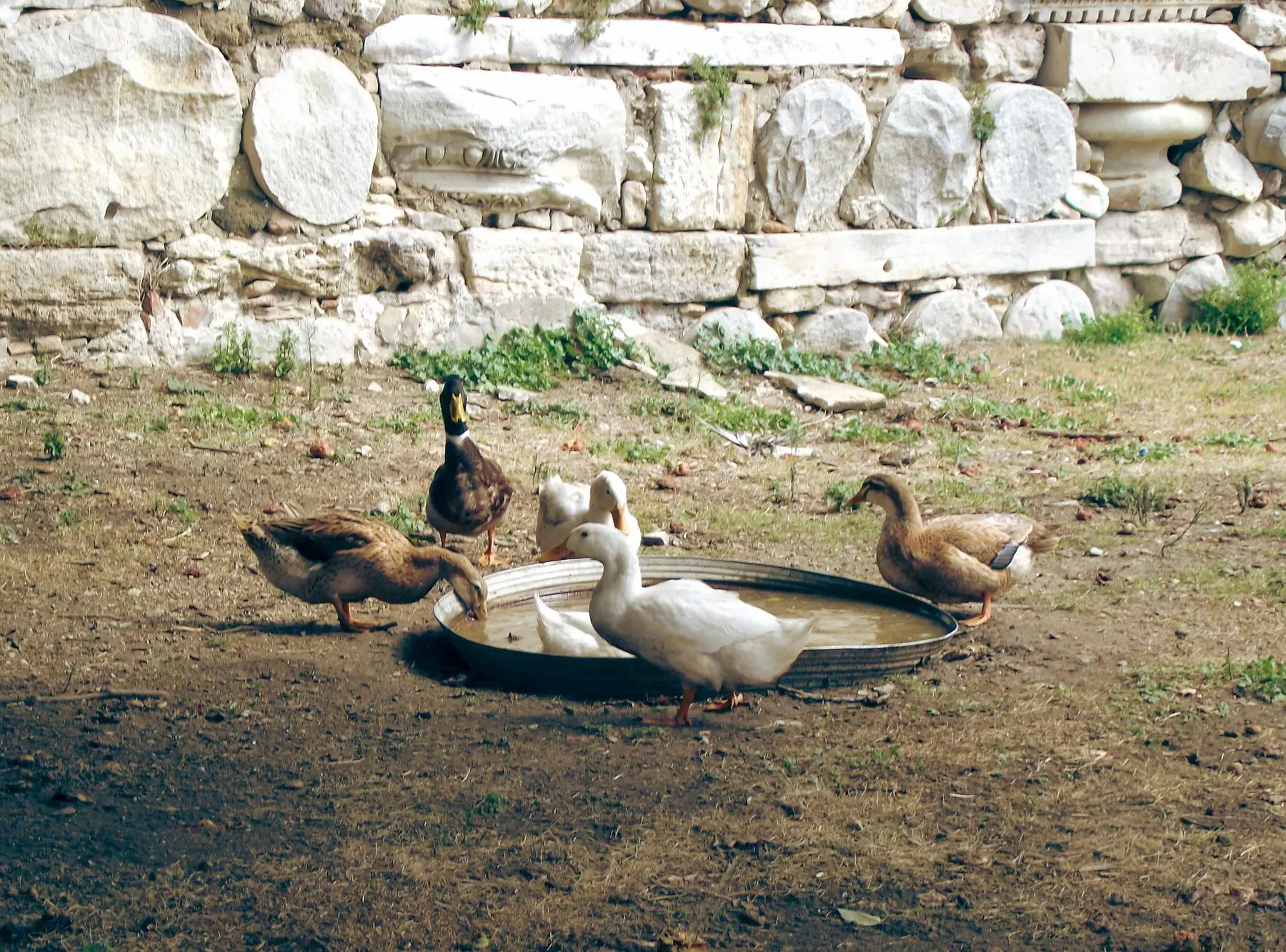
For bathing: a rubber feed tub, a mortar tub, a plastic storage box or a shallow kiddie pool. What matters most is that you can tip it out and refill it in under a minute, because you will be doing that constantly.
Siting it:
- On gravel, paving or a slab with somewhere for the overflow to run
- Away from the coop, so the bedding stays dry
- Somewhere you can reach with a hose
Duck water is filthy within hours
Ducks dabble mud, feed and droppings into their water as a matter of course. This is normal duck behaviour, not a sign of a bad setup. The design goal is not clean water for long — it is water that is trivially easy to change, which is why a tip-up tub beats a pool with a pump every time.
What ducks do to a garden pond
If you have an ornamental or wildlife pond, keep them apart. A small flock will:
- Strip the planting, including marginals and oxygenators
- Eat tadpoles, newts, insect larvae and small fish
- Stir the sediment into permanent brown turbidity
- Load it with nutrients, which means algae blooms and blanketweed
- Erode and puddle the margins into mud
A pond with ducks on it needs filtration far beyond what a wildlife pond has, or it becomes a mud hole. The arrangement that works is a fenced wildlife pond and a separate duck tub.
Ducklings
Different rules, and this is where losses happen.
Ducklings raised without a mother have no waterproofing — the oils come from her feathers, not their own preen gland, which is not yet productive. A duckling in open water becomes waterlogged and chilled quickly, and drowning is a real risk.
- Drinking water deep enough to clear the nostrils, narrow enough that they cannot sit in it
- Short supervised swims in shallow, warm water from around two to three weeks
- Dry them and return them to a warm brooder afterwards
- Never unsupervised water until they are fully feathered
How long can they go without?
- Drinking water: a few hours at most, and never overnight in warm weather. Treat it as constant.
- Head-dunking depth: daily. Skipping it shows up in eyes and nostrils quickly.
- Bathing: a day or two without harm. Beyond that, feather condition and behaviour both suffer.
- Swimming: indefinitely, for health — but in the heavier breeds mating on land is hard on the female and fertility drops, so a breeding flock benefits from water deep enough to mate in.
Common questions
Do ducks need a pond?
How long can ducks go without water?
What happens to ducks without swimming water?
What is the best water setup for backyard ducks?
Can ducks and a garden pond coexist?
Do ducklings need swimming water?
Backyard Weekly
Know what to plant, week by week
Join the weekly email for seasonal jobs, fixes for what is going wrong, and gear worth buying.
Not ready to subscribe? The planting calendar is free and needs no email.
By subscribing you agree to our privacy policy. Grow In Backyard will never sell your address.
Keep reading
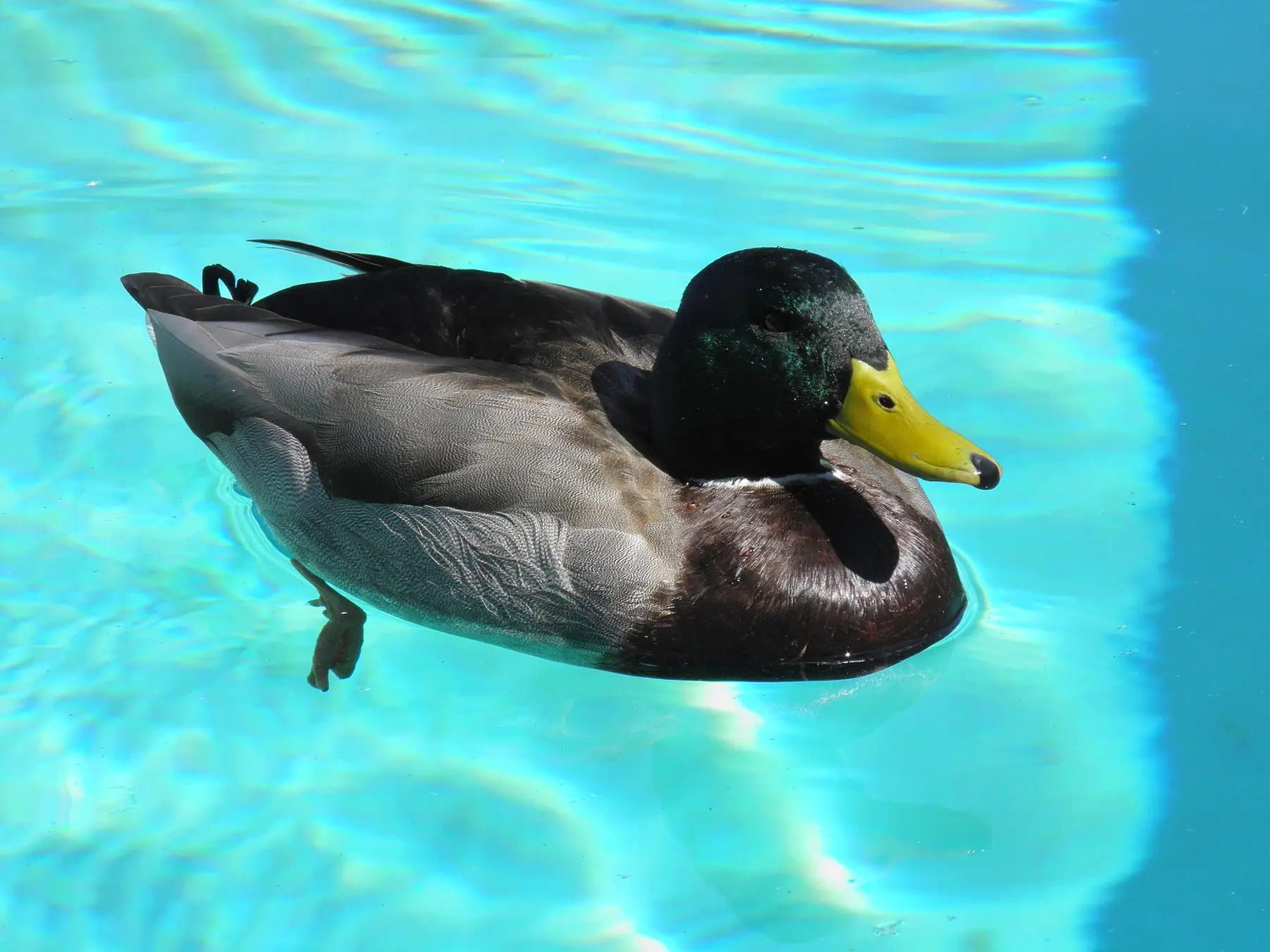
How to Keep Ducks Out of a Pool — 4 Humane Measures
How to keep ducks out of a pool: cover it, then break the habit. 4 humane measures compared on how long each lasts. See which suits your pool.
Can Ducks Eat Chicken Feed? Mostly, With One Fix
Chicken feed will not harm ducks, but it falls short on niacin. What to add if you free-feed a mixed flock, and the one chicken feed to avoid entirely.
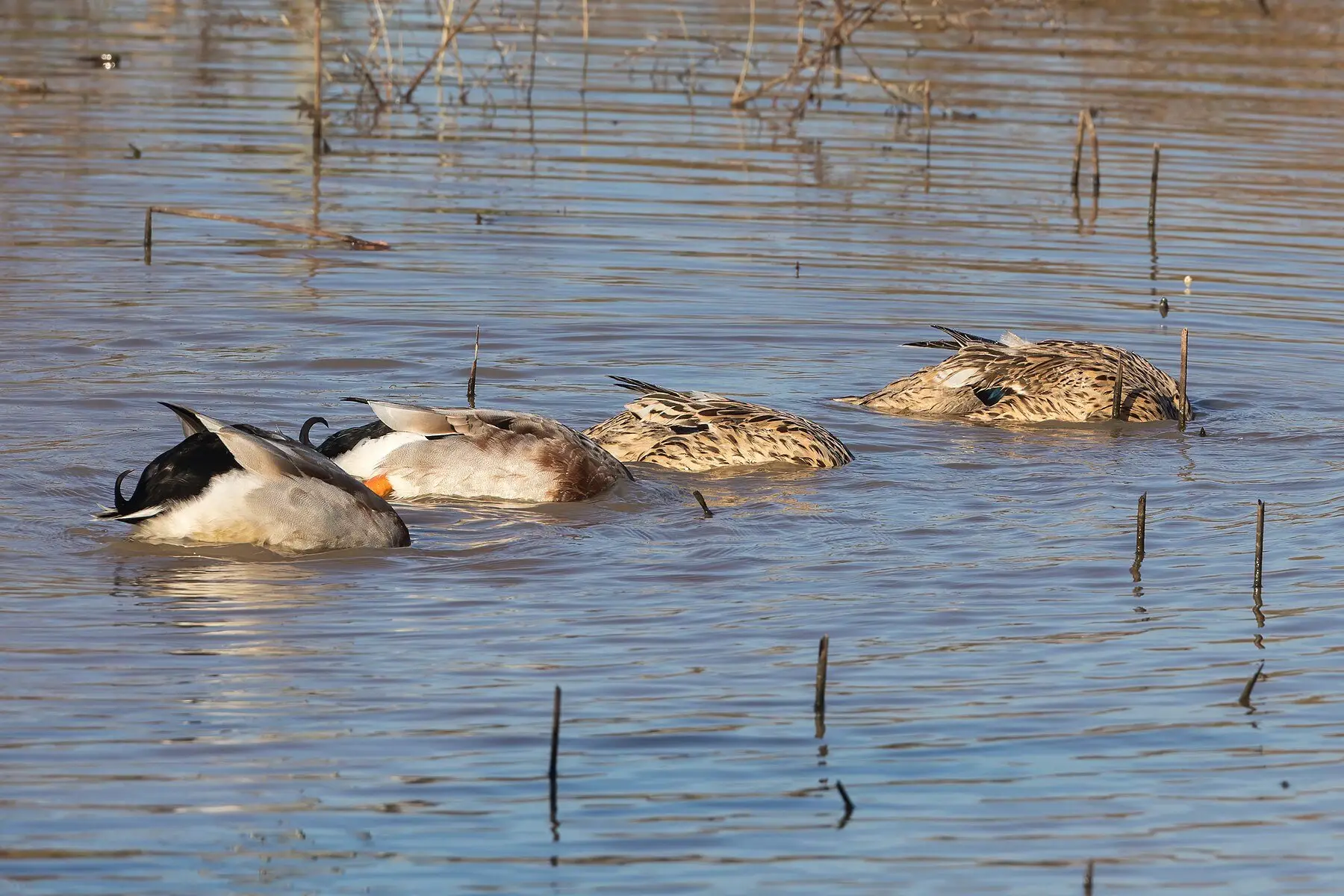
Do Ducks Eat Fish? What That Means for a Backyard Pond
Most backyard duck breeds will eat small fish, fry and eggs opportunistically. The bigger threat to your pond is not predation — it is what ducks do to the water.
Do Ducks Need Water at Night? Drinking vs Swimming
Ducks need drinking water available overnight if they also have food, but swimming water can be taken away. The safety reasons for splitting the two.