
Do Backyard Ducks Fly Away? Most Breeds Can't
Pekins, Rouens and most heavy domestics are too heavy to fly. Which breeds do leave, why wing clipping is rarely needed, and what actually keeps them home.
 By
On this page
Most backyard ducks do not fly away because most of them physically cannot. A Pekin manages a flapping hop. The breeds that genuinely fly are a short list, and Muscovy is at the top of it.
Who flies and who does not
| breed | flight | notes |
|---|---|---|
| Pekin | no | the standard backyard duck; a flapping hop at most |
| Rouen / Aylesbury / Saxony | no | heavy bodies, small wing area |
| Silver Appleyard / Buff Orpington duck | no | occasional short flutter |
| Cayuga | barely | low hops |
| Khaki Campbell | short bursts | startled flights, rarely far |
| Indian Runner | short bursts | upright and fast on foot instead |
| Welsh Harlequin | short bursts | capable but rarely bothers |
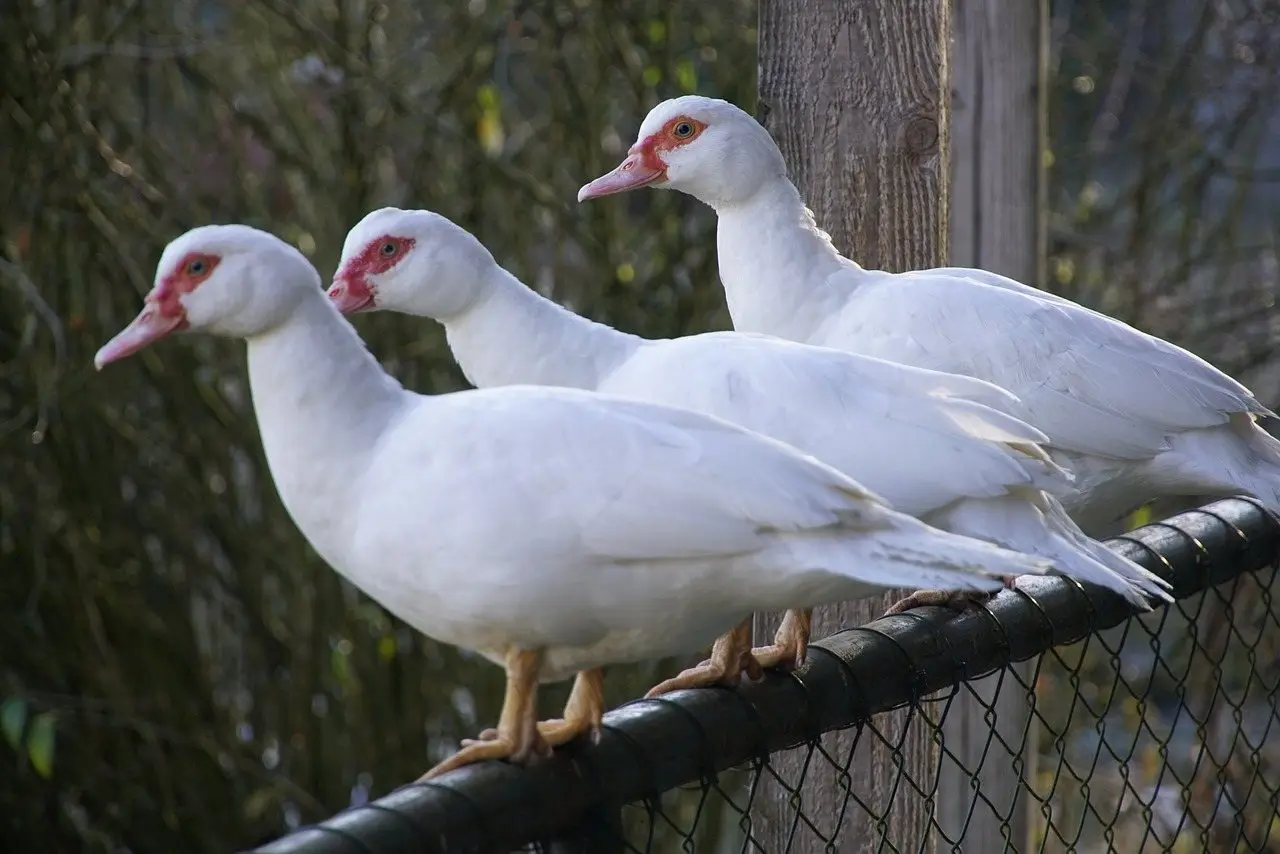
| Muscovy | yes, well | perches on roofs, fences and in trees |
| Call / East Indie | yes | small and fully capable |
| Mallard | yes | including feral park birds |
The pattern is weight against wing area. Centuries of selection for table birds produced animals that cannot get off the ground, which is convenient for keepers and a serious problem for the duck if a fox arrives.
Muscovy is a different animal in more ways than one
Muscovies are not descended from mallards like every other domestic duck — they are a separate species. They fly, they perch, they claw, they hiss rather than quack, and the females fly noticeably better than the heavier drakes. If you are keeping Muscovies, flight is a real consideration rather than a theoretical one.
Wing clipping, if you need it
Worth doing for Muscovies, Calls or East Indies in their first season, or anywhere a road is close. Pointless for Pekins.
- One wing only. Clipping both leaves the bird balanced and still able to fly
- Primary flight feathers only, cut to about half length
- Avoid blood feathers — new feathers with a visible dark shaft are still growing and will bleed heavily
- Repeat after each moult, roughly annually
- It is not permanent, and it removes the bird’s main escape from a predator
That last point matters. A clipped Muscovy in a garden with foxes has lost its one advantage.
What actually keeps ducks home
- A settling period. Two to three weeks shut in the housing and run before any free-ranging. This is what teaches the birds where home is, and skipping it is how new ducks get lost
- Reliable food in the same place, at the same time
- Clean water they can submerge their whole bill in
- A flock. Ducks are intensely social; a single duck is both a welfare problem and a wanderer
- A secure place to sleep, which they are shut into at dusk
Ducks that are fed and housed somewhere come back to it. The birds that go missing are almost always startled ones that landed somewhere unfamiliar, not birds that decided to leave.
The risk people should actually plan for
Not flight. Predation.
Ducks are slow on land, cannot flee upward, and sleep on the ground. Foxes, dogs, raccoons, mink and large hawks all take them, and a flock can be lost in a single night.
- Shut them in at dusk, every night, without exception
- Predator-proof housing — welded mesh, not chicken wire, with a dig barrier
- A fenced run for daytime, if foxes are about during the day
- Cover over the run where hawks hunt
Keeping ducks home is rarely the hard part. Keeping them alive is.
Common questions
Do backyard ducks fly away?
Which duck breeds can fly?
Do I need to clip my ducks' wings?
Will ducks come back if they fly off?
What keeps ducks from wandering?
Can ducks be kept without a fence?
Backyard Weekly
Know what to plant, week by week
Join the weekly email for seasonal jobs, fixes for what is going wrong, and gear worth buying.
Not ready to subscribe? The planting calendar is free and needs no email.
By subscribing you agree to our privacy policy. Grow In Backyard will never sell your address.
Keep reading
Best Ducks for a Backyard: Which Breed Suits a Small Garden
Noise, space and temperament decide this, not looks. The breeds that suit a suburban garden, the one to avoid near neighbours, and the quiet option.
Keeping Ducks in Residential Areas: Rules, Mess and Neighbours
Ducks are quieter than roosters but far messier than hens. The zoning questions to ask first, and what a suburban duck setup actually has to handle.
What Breed of Duck Is the Friendliest? Pekin and Welsh
Pekins, Welsh Harlequins and Cayugas are the calmest with people. The temperament table by breed, and why handling matters more than breed.
Do Ducks Eat Fish? What That Means for a Backyard Pond
Most backyard duck breeds will eat small fish, fry and eggs opportunistically. The bigger threat to your pond is not predation — it is what ducks do to the water.