
Best Ducks for a Backyard: Which Breed Suits a Small Garden
Noise, space and temperament decide this, not looks. The breeds that suit a suburban garden, the one to avoid near neighbours, and the quiet option.
 By
On this page
Welsh Harlequin for most gardens — calm, productive, and easier to live beside than the other light breeds. Muscovy if noise is the problem. And whatever you do, not Call ducks.
The shortlist
| Breed | Noise | Eggs/year | Size | Suits |
|---|---|---|---|---|
| Welsh Harlequin | Moderate | 240–330 | Light | Most gardens |
| Cayuga | Moderate | 100–150 | Medium | Hardy; striking dark plumage |
| Ancona | Moderate | 210–280 | Medium | Calm, good forager |
| Muscovy | Very quiet | 60–120 | Large | Close neighbours |
| Khaki Campbell | Loud | 280–320 | Light | Eggs above all else |
| Indian Runner | Loud | 250–300 | Light, upright | Foraging, entertainment |
| Call duck | Extremely loud | 25–75 | Tiny | Not a suburban garden |
The Call duck trap
Worth its own heading, because the mistake is so easy to make.
Call ducks are tiny and extremely appealing, and everything about their appearance says quiet ornamental pet.
They were bred as living decoys, kept to call wild ducks within range of a hunter across open water. Carrying sound a long way is the entire purpose of the breed.
A Call duck hen is among the loudest birds you can keep in a garden
Their size suggests a quiet pet. They are the opposite, by design.
If there is a house within earshot, this is the one breed on the list to rule out before anything else.
The quiet option
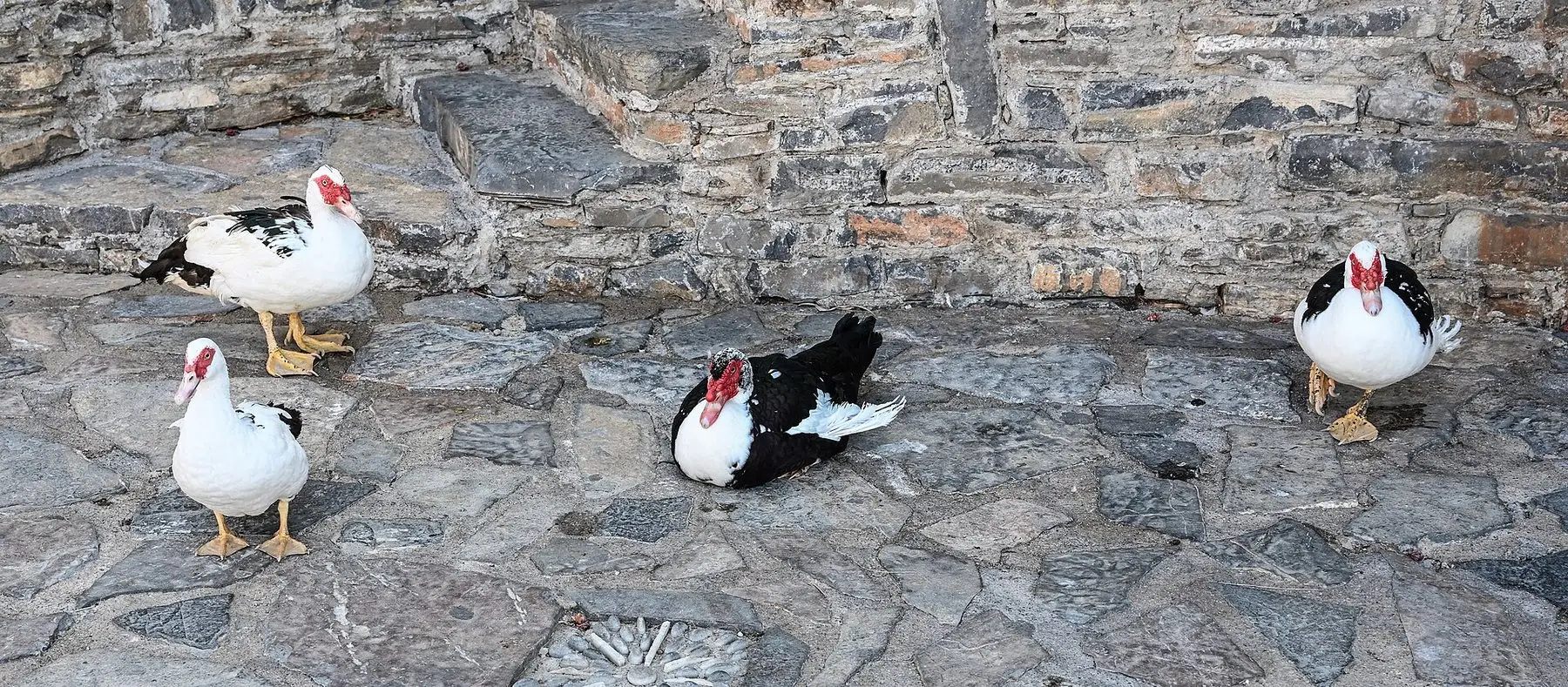
Muscovies do not quack. They hiss, and make a soft trill.
That is because they are not descended from the mallard, unlike every other domestic duck — they are a separate species, Cairina moschata, and the vocal apparatus is different.
The trade is real: 60–120 eggs a year, and large drakes. If noise is what decides whether you can keep ducks at all, that trade is usually worth taking.
Drakes are the quiet ones
A point that saves a lot of unnecessary worry.
The loud carrying quack is a female sound. A drake makes a hoarse, much quieter rasp.
So a group of hens with no drake is the noisier arrangement, and adding a drake does not make a flock louder. For eggs alone a drake is optional and contributes nothing to output.
Space, and the mud
The thing new duck keepers underestimate is not space — it is water
About four square feet each in the house is enough; ducks need less shelter than chickens and mostly want to be outside.
Ground is the harder problem. Ducks graze and dabble, and a small lawn will go to bare mud over a wet winter. Plan for where the water sits and where it drains before the birds arrive.
How many
Three or four.
Ducks are strongly social and a lone duck does badly, so two is the floor — and three means one loss does not leave a bird on its own.
Starting small also lets you find out what the water and mud actually do to your garden at a scale you can still change your mind about.
Common questions
What is the best duck breed for a backyard?
What is the quietest duck breed?
Which duck should I avoid in a suburban garden?
Are drakes quieter than female ducks?
How much space do backyard ducks need?
How many ducks should I start with?
Backyard Weekly
Know what to plant, week by week
Join the weekly email for seasonal jobs, fixes for what is going wrong, and gear worth buying.
Not ready to subscribe? The planting calendar is free and needs no email.
By subscribing you agree to our privacy policy. Grow In Backyard will never sell your address.
Keep reading
Best Ducks for Eggs: Five Breeds, and What Each Costs You
A Khaki Campbell out-lays almost any chicken. Five laying breeds compared on eggs per year, noise, temperament and how long the output actually holds up.
Keeping Ducks in Residential Areas: Rules, Mess and Neighbours
Ducks are quieter than roosters but far messier than hens. The zoning questions to ask first, and what a suburban duck setup actually has to handle.
How to Keep Ducks From Spilling Water: What Actually Works
Ducks will always make a mess of water — it is how they feed and clean. Waterer setups that contain the mess without taking away what they need.
Can Ducks Eat Chicken Feed? Mostly, With One Fix
Chicken feed will not harm ducks, but it falls short on niacin. What to add if you free-feed a mixed flock, and the one chicken feed to avoid entirely.