
Can Squirrels Be Tamed? Habituated, Not Tame
A squirrel taking food from your hand has learned a situation, not become tame. What changes, what doesn't, and why it ends badly for the animal.
 By
On this page
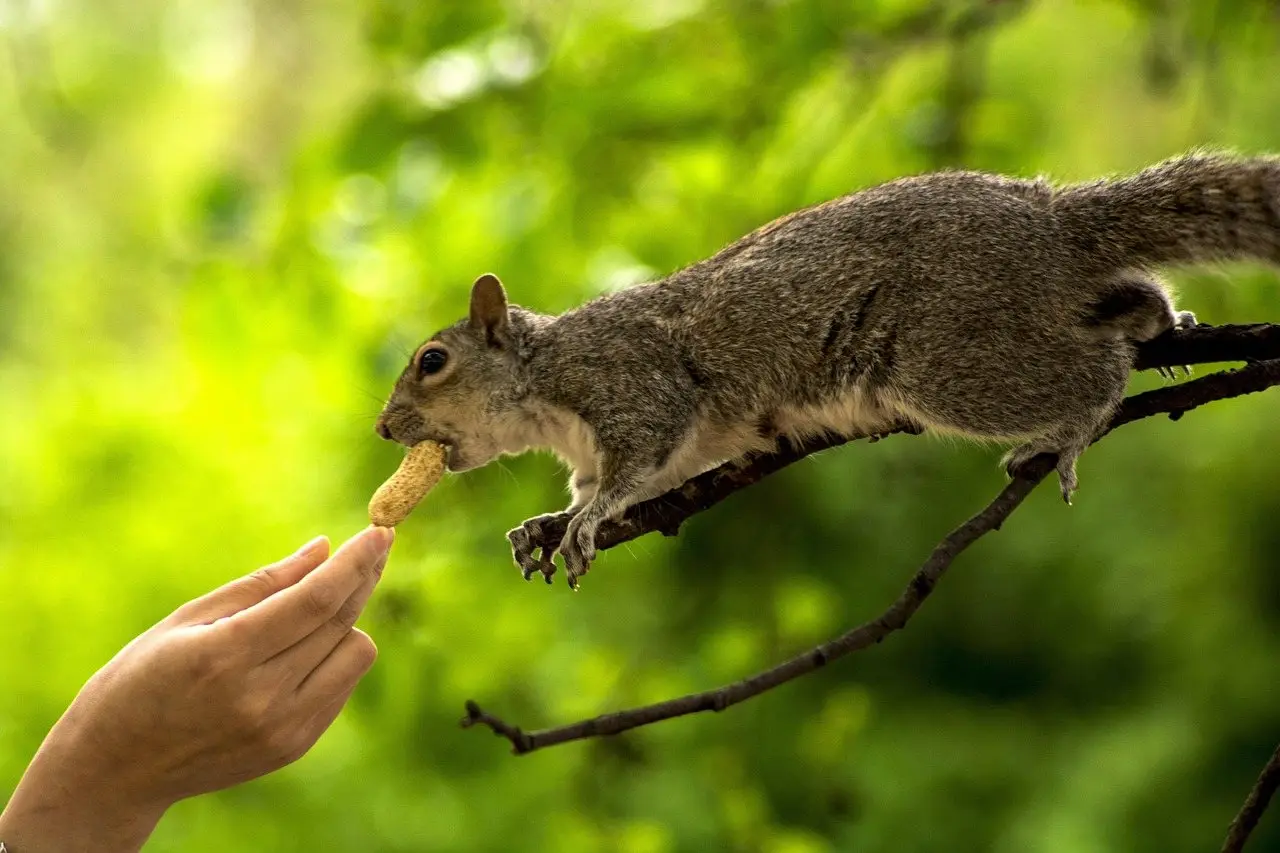
A squirrel can be habituated, not tamed. It learns that a situation produces food and stops treating you as a predator. Nothing about the animal itself changes — including the bite.
The distinction that matters
| habituation | domestication | |
|---|---|---|
| Timescale | days to weeks | hundreds of generations |
| Mechanism | learning | genetic change |
| What changes | the animal’s response to a situation | the animal |
| Reversible | yes, within weeks of the food stopping | no |
| Examples | park squirrels, urban foxes | dog, rabbit, ferret, guinea pig |
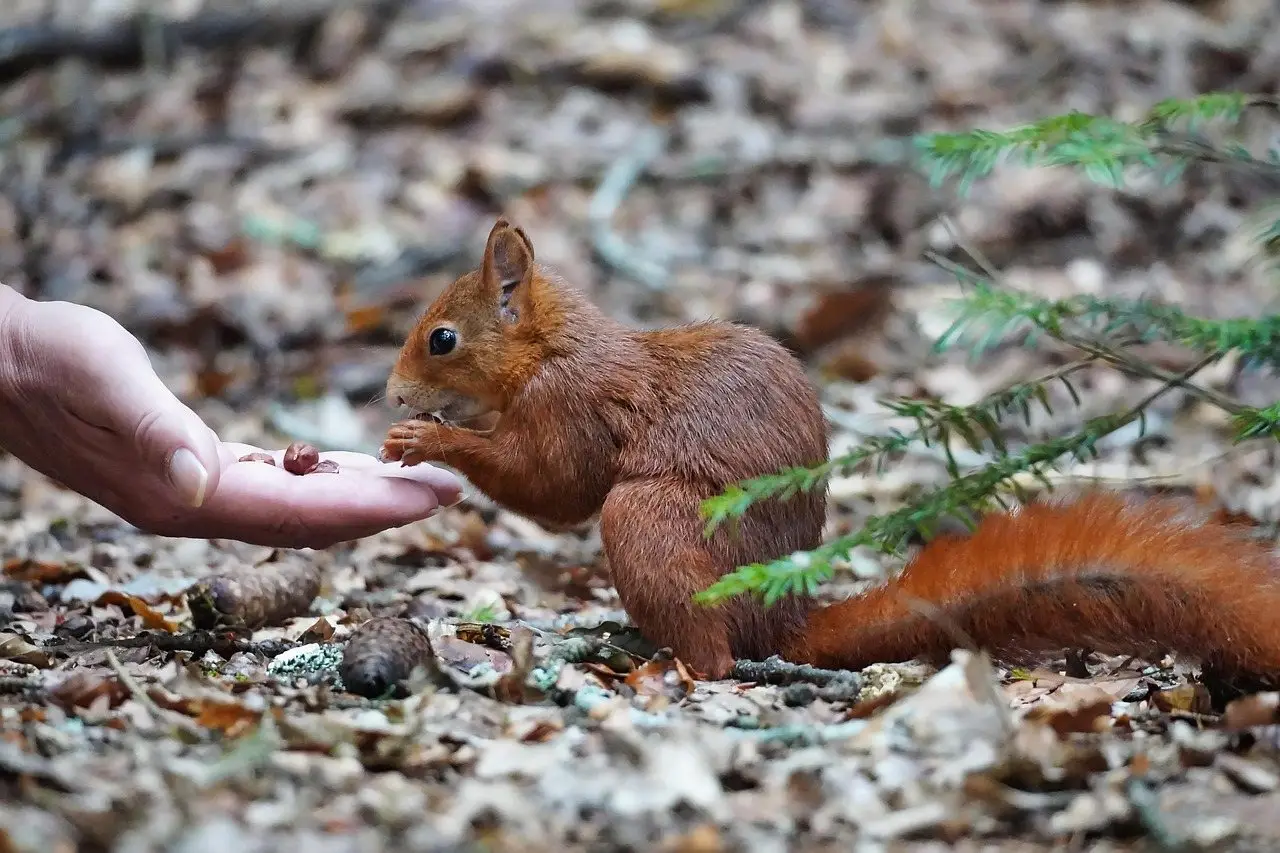
A park squirrel sitting on a bench taking peanuts is running an entirely normal wild squirrel behaviour — exploiting a reliable food source — with the fear response switched off by repeated harmless experience.
Switch the food off and the fear comes back in a few weeks.
How fast it happens
Faster than people expect, because the underlying maths is simple. Every harmless human encounter lowers the cost of tolerating people; every peanut raises the benefit.
| setting | typical flight distance |
|---|---|
| Rural woodland, hunted | tens of feet, often before you see the animal |
| Suburban garden | retreats a short way and watches |
| Busy urban park | a few feet |
| Park with regular hand-feeding | approaches people directly |
Researchers call this flight initiation distance, and urban populations consistently record a fraction of rural figures.
Habituated is not safe to handle
A squirrel taking food from an open palm will still bite hard if it is grabbed, cornered, or if your hand comes up empty and it decides to check. The incisors are long and the wound is a deep puncture that needs washing and same-day medical advice.
What it costs the squirrel
- It approaches strangers, who are startled, and that is how bites happen — and how someone else ends up calling pest control
- It moves closer to roads, cats and dogs in pursuit of reliable food
- It caches less in autumn, because food is arriving daily. The back step is not there in February
- Concentration spreads disease. Feeding sites gather squirrels at unnatural densities, which is exactly how squirrel pox and mange move through a population
- It is restricted in some parks and municipalities, precisely because of the bite risk
The captive-bred question
Captive-bred southern flying squirrels are sold legally in some US states and prohibited in others. Captive-bred is not domesticated.
- They retain full wild behaviour
- They are nocturnal, so the animal is awake when you are not
- They bond intensely with one person and can become territorial
- Aggression at sexual maturity is common
- Ten years of specialist care, and an exotic vet who will see one is hard to find
The found-kit version
This is where most people actually arrive at the question, and the answer is firm: do not keep it.
- Raising a wild squirrel requires a licence in most jurisdictions
- Cow’s milk and human formula cause fatal diarrhoea within days
- A cold kit cannot digest and must be warmed before anything else
- Hand-raised squirrels are frequently unreleasable and often aggressive by their first autumn
What to do instead: keep cats and dogs away, put the kit in an open box at the base of the tree with gentle warmth underneath, watch from a distance for two to three hours — mothers routinely retrieve — and if nobody comes, call a licensed wildlife rehabilitator.
The version that costs nothing
Watch them. A garden squirrel that has not been fed is doing the full repertoire — caching, assessing nuts by weight, spiral-climbing away from you, tail-flicking at the cat — and none of that survives habituation intact. The tame one is the less interesting animal.
Common questions
Can a wild squirrel be tamed?
Are squirrels domesticated anywhere?
How long does it take to habituate a squirrel?
Is it bad to hand-feed squirrels?
Can I keep a squirrel that I raised from a baby?
Do squirrels remember and recognise people?
Backyard Weekly
Know what to plant, week by week
Join the weekly email for seasonal jobs, fixes for what is going wrong, and gear worth buying.
Not ready to subscribe? The planting calendar is free and needs no email.
By subscribing you agree to our privacy policy. Grow In Backyard will never sell your address.
Keep reading
Can Squirrels Be Pets? Legality, Reality and Why Not
Keeping a squirrel is illegal in most US states, and the ones raised by people usually end badly. What actually happens, and the lawful alternatives.
Why Are Squirrels Afraid of Humans? And Why City Ones Aren't
Squirrels read us as a predator by size and gaze. Why urban squirrels lose the fear in a few generations, and what the flight distance actually tracks.
Pros and Cons of Feeding Squirrels: An Honest Accounting
Feeding squirrels is enjoyable and mostly harmless to them — the costs land on your roof, your bird feeders, your neighbours and your bulbs.
Can Squirrels Cause Electrical Fires? Yes, and They Do
Gnawed cable insulation is a documented ignition source in roof spaces. Why they chew wires, the warning signs, and the metal mesh that stops it.