
Can Chickens Eat Lawn Clippings? Only Fresh and Short
Fresh short clippings are fine in small amounts. Long clippings cause crop impaction, and a treated or mown-wet pile is genuinely dangerous.
 By
On this page
Short, fresh, untreated clippings: yes. Long ones cause crop impaction, a heap ferments within hours, and a treated lawn passes chemicals to the birds and into their eggs.
Why length is the whole issue
A chicken has no teeth. It swallows grass whole into the crop, where it waits before passing to the gizzard to be ground.
- Short pieces move through normally
- Long strands wind around each other into a dense fibrous ball that cannot pass
That ball is impacted crop, and it is why a bird that has been into a pile of long clippings goes off its feed, stands hunched with a firm swollen crop, and gets worse over days.
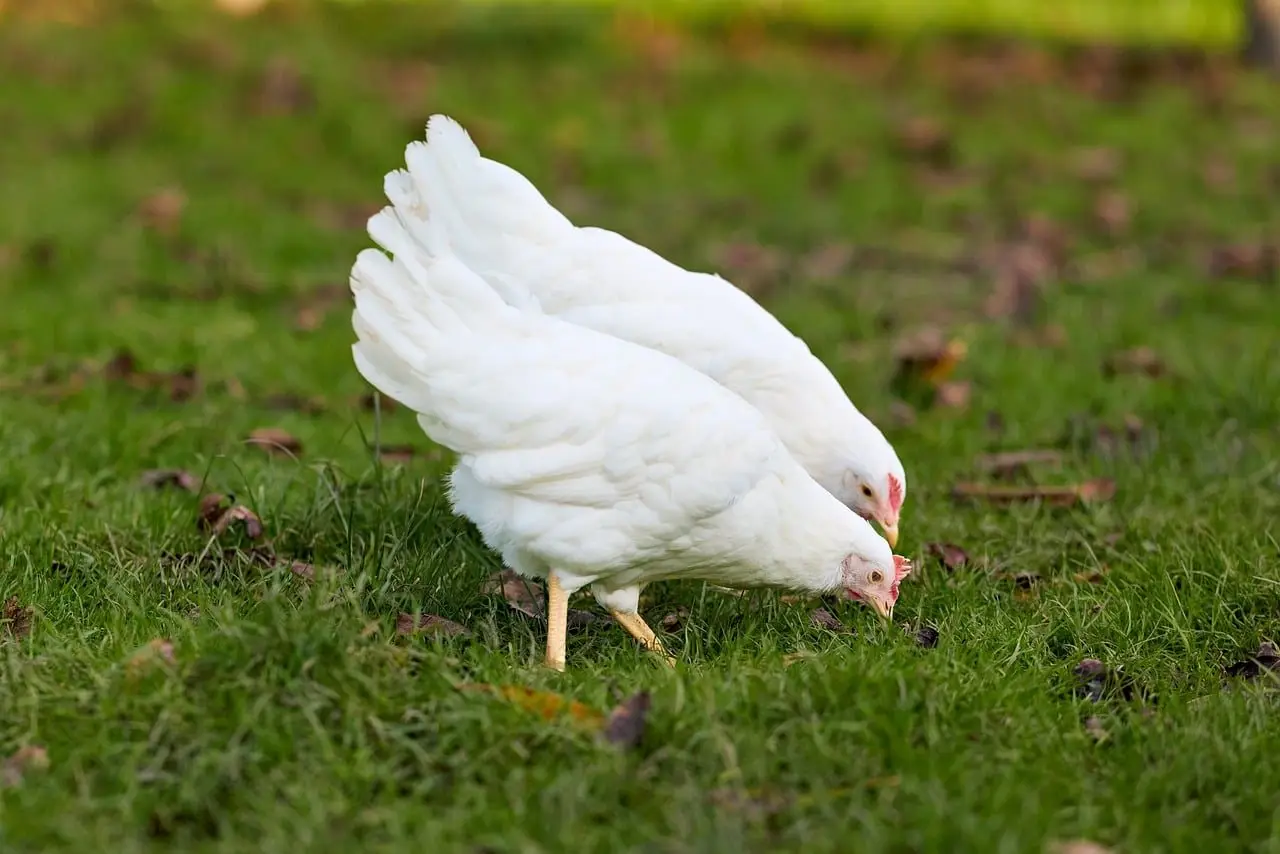
Grazing birds do not get this. A hen tearing at a lawn takes short bites because that is all her beak can manage. The hazard is specifically the pile of cut material a mower produces.
Signs of an impacted crop
A crop that is still firm and full first thing in the morning, before the bird has eaten, is the sign. A normal crop empties overnight. Add a bird that is hunched, quiet and off its food and that is a veterinary matter, not something to massage out at home.
The chemical problem
Whatever is on the lawn goes into the chicken.
- Herbicides — including common broadleaf weed-and-feed products
- Insecticides, including grub treatments
- Some fertilisers at high rates
- Moss killers containing iron sulphate
Observe the interval printed on the product label before birds go on the grass or eat its clippings — and if you do not know what was applied or when, do not use the clippings. For laying hens this is not only about the bird; residues can reach the eggs.
Doing it properly
- Mow regularly so the clippings are short. A mulching mower is best
- Collect and use them the same day
- Scatter a thin layer across the run rather than tipping out a bucket
- Let them work through it — chickens enjoy picking over scattered greens
- Rake up what is left at the end of the day
- Compost the surplus rather than leaving it in the run
The better version of the same idea
If greens are the goal, there are safer ways to supply them:
- Let the birds onto the lawn, in a tractor or under supervision. They self-regulate, the grass gets manured, and nothing is impacted
- A grazing frame — a mesh panel laid over grass, so birds nibble the tops without scratching the roots out
- Leafy kitchen greens, hung up to make them work for it
- A planted run corner, fenced until the growth is established
A lawn mown short is one of the better supplements a backyard flock gets. A heap of long grass left by the mower is one of the more common ways a healthy hen ends up at the vet.
Common questions
Can chickens eat grass clippings?
Why do long grass clippings cause impacted crop?
How short should clippings be?
Are clippings from a treated lawn safe?
Can clippings be left in a pile for the chickens?
How much grass can a chicken eat?
Backyard Weekly
Know what to plant, week by week
Join the weekly email for seasonal jobs, fixes for what is going wrong, and gear worth buying.
Not ready to subscribe? The planting calendar is free and needs no email.
By subscribing you agree to our privacy policy. Grow In Backyard will never sell your address.
Keep reading
How to Keep Backyard Chickens Healthy: The Routine
Most flock illness is prevented by dry bedding, clean water, parasite checks and quarantine. The weekly routine and the signs that need acting on.
Backyard Chickens: What It Actually Takes
Space, cost, time, and the rules nobody mentions. An honest account of keeping backyard chickens before you buy the coop — including why the eggs are not free.
What Lawn Fertilizer to Use in Spring: Light and Late
Spring wants a modest nitrogen feed after the lawn greens up on its own — not an early heavy one. Ratios, timing and the pre-emergent question.

Can Dogs Get Sick From Backyard Chickens? Two Ways
Salmonella from droppings and coccidia from the run are the realistic risks, plus eating eggs raw. What actually transmits and what does not.