
Pea Gravel Landscaping: Where It Works and Where It Fails
Pea gravel is cheap and drains well, but it migrates, sinks and is hard to walk on. Where to use it, what goes underneath, and the sizes that matter.
 By
On this page
Pea gravel is the cheapest surface that still looks deliberate. It is also rounded, which is the single fact that decides everywhere it works and everywhere it does not.
Where it works, and where it does not
| Use | Verdict | Why |
|---|---|---|
| Informal path | Good | Drains, cheap, soft look |
| Fire pit surround | Good | Non-combustible, drains |
| Dog run | Good | Washes clean, no mud |
| Side yard, narrow access | Good | Cheap for low-traffic ground |
| Drainage field, dry creek edges | Good | Free-draining |
| Patio with furniture | Poor | Chair legs sink and tip |
| Driveway | Poor | Ruts, spreads, migrates to the road |
| Wheelbarrow or bin route | Poor | Wheels dig in |
| Steep slope | Poor | Rolls downhill |
| Playground under swings | Poor | Wrong material for fall zones |
| Against siding | Avoid | Keep clear of weep holes and cladding |
The build-up, from the bottom
This is where most pea gravel projects are decided.
- Excavate to allow for the full build-up — about five to seven inches for a seating area, three to four for a simple path
- Compact the subgrade. A plate compactor from a hire shop, or a hand tamper on a small area
- Edge now, not later. Steel, aluminium, concrete, treated timber, or a soldier course of pavers. Set it an inch proud of the finished gravel
- Base course, for anything walked or sat on: three to four inches of crushed stone — angular, with fines — compacted in two lifts
- Geotextile over the base. Woven fabric, overlapped six inches at the seams
- Pea gravel, two to three inches. Rake level, do not compact
For a purely decorative bed with no traffic, you can skip the base course — but not the fabric and not the edge.
Plastic sheeting is the common mistake
Landscape plastic under gravel traps water, kills the soil below, and gives the stones a slippery plane to slide on. Within two seasons you have a gravel slick with a pond underneath.
Woven geotextile lets water through and holds the stones off the soil. It is a different product from the black plastic sold beside it, and it costs little more.
Sizes and quantities
- Pea gravel is nominally 3/8 inch, rounded, usually in buff, grey or mixed river tones
- 3/8 inch is the usable size. Half-inch and above is harder underfoot; a quarter-inch packs tighter but reads as grit
- Coverage: roughly one cubic yard covers about 100 square feet at three inches deep, or about 160 square feet at two inches. A cubic yard weighs on the order of 1.2 to 1.4 tons
- Order about ten percent over. Settlement and spillage take more than the calculator says
- Bulk beats bags above about ten bags — the price per unit is a fraction, and bags of gravel are heavy to carry
Keeping it looking right
- Reset the level once a year. Rake the high spots back into the hollows
- Top up every two or three years on a path, less on a bed
- Blow or rake leaves off before they break down — organic matter in gravel is what grows the weeds
- Weeds that do appear pull easily from gravel, which is one of its advantages; a hoe destroys the level, so pull by hand
- Keep it off the lawn edge. Gravel in a mower is a projectile and a repair bill
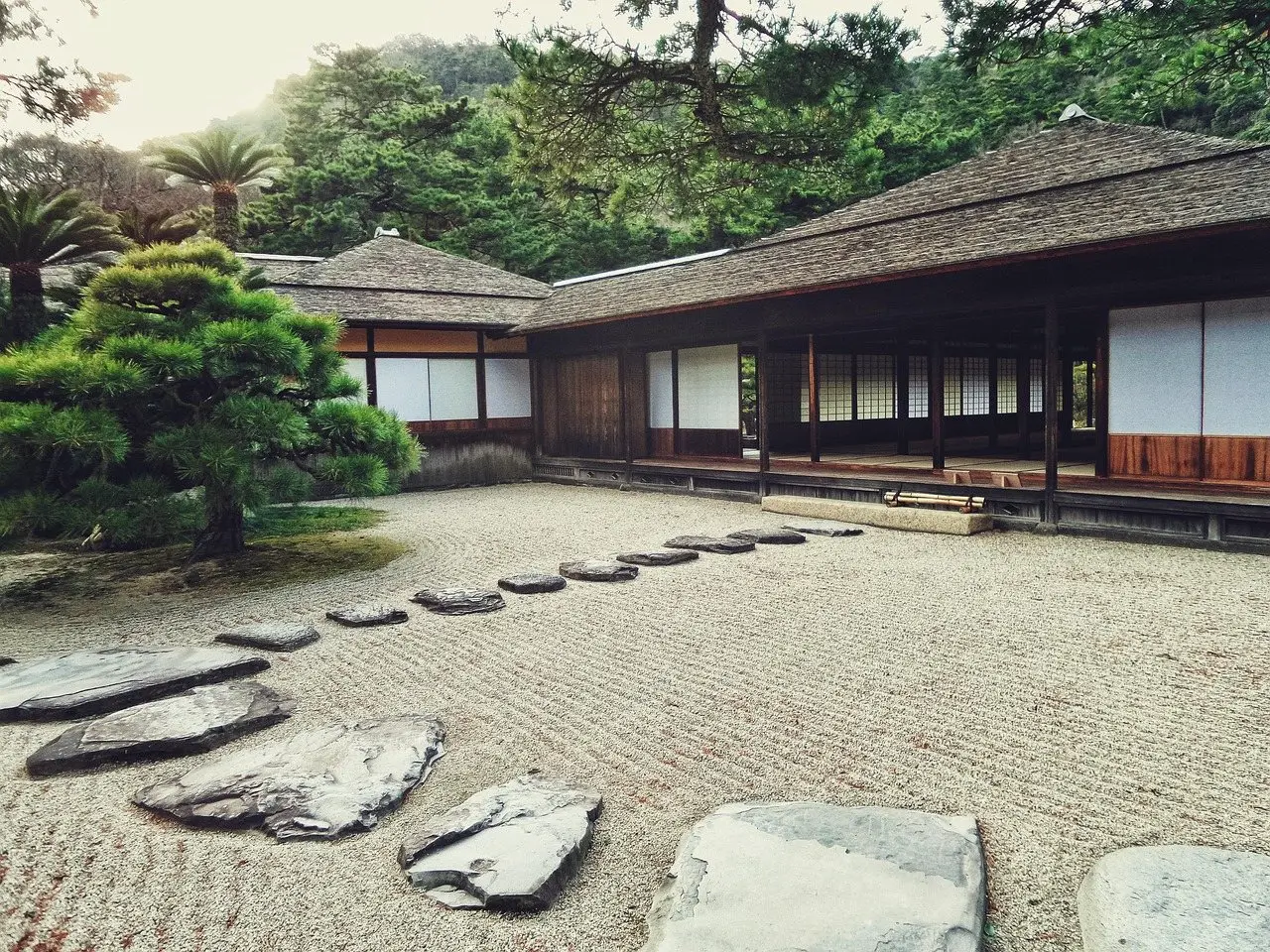
A stepping-stone spine makes a gravel path usable
The complaint about gravel paths is walking on them — heels sink, wheels dig, and it is hard work with a loaded barrow.
Set flat stones or pavers down the centre line, flush with the gravel, and the path carries traffic while still reading as gravel. It also stops the middle wearing into a trench.
Pea gravel against the alternatives
- Crushed stone — angular, locks together, load-bearing, harsher underfoot and in looks. The right choice for drives, bases and anything with wheels
- Decomposed granite — firmer and smoother, compacts to a semi-solid surface, but it tracks indoors and needs a stabiliser to stay put on a slope
- Bark mulch — softer and warmer in beds, breaks down and feeds weeds, needs replacing
- Paving — the permanent answer, several times the cost
- River rock, 1 to 2 inch — better for drainage channels and beds you do not walk on, too coarse for a path
The honest summary is that pea gravel is excellent at being cheap, free-draining and informal, and poor at being firm. Match the use to that and it works for years.
Common questions
Is pea gravel good for landscaping?
How deep should pea gravel be?
What do you put under pea gravel?
Does pea gravel attract bugs or snakes?
Pea gravel or crushed stone — which is better?
How do I stop pea gravel from spreading?
Backyard Weekly
Know what to plant, week by week
Join the weekly email for seasonal jobs, fixes for what is going wrong, and gear worth buying.
Not ready to subscribe? The planting calendar is free and needs no email.
By subscribing you agree to our privacy policy. Grow In Backyard will never sell your address.
Keep reading
What to Put Under Decorative Stones: Fabric, Not Plastic
Woven landscape fabric lets water through and holds stones clear of soil. Plastic sheeting traps water and kills the ground beneath it.
What Is the Best Surface for a Patio? Match It to the Use
Concrete slabs are the cheapest solid option, porcelain the most maintenance-free, gravel the easiest to lay. The base matters more than any of them.
What Is the Best Mulch to Stop Weeds? Depth Beats Material
Any mulch at 7–10 cm suppresses weeds well. Coarse bark lasts longest, but nothing stops seeds landing on top and germinating in the mulch itself.
Backyard Drainage Ideas That Fix the Water, Not the Symptom
A wet yard has one of four causes. How to find which, and which fix matches it — French drain, dry creek, regrade, or dry well — with real costs.