
Does Lawn Fertilizer Expire? Granular Keeps Indefinitely
Dry granular fertilizer does not expire if kept dry. Weed-and-feed and liquids do degrade. How to store it and when to throw it out.
 By
On this page
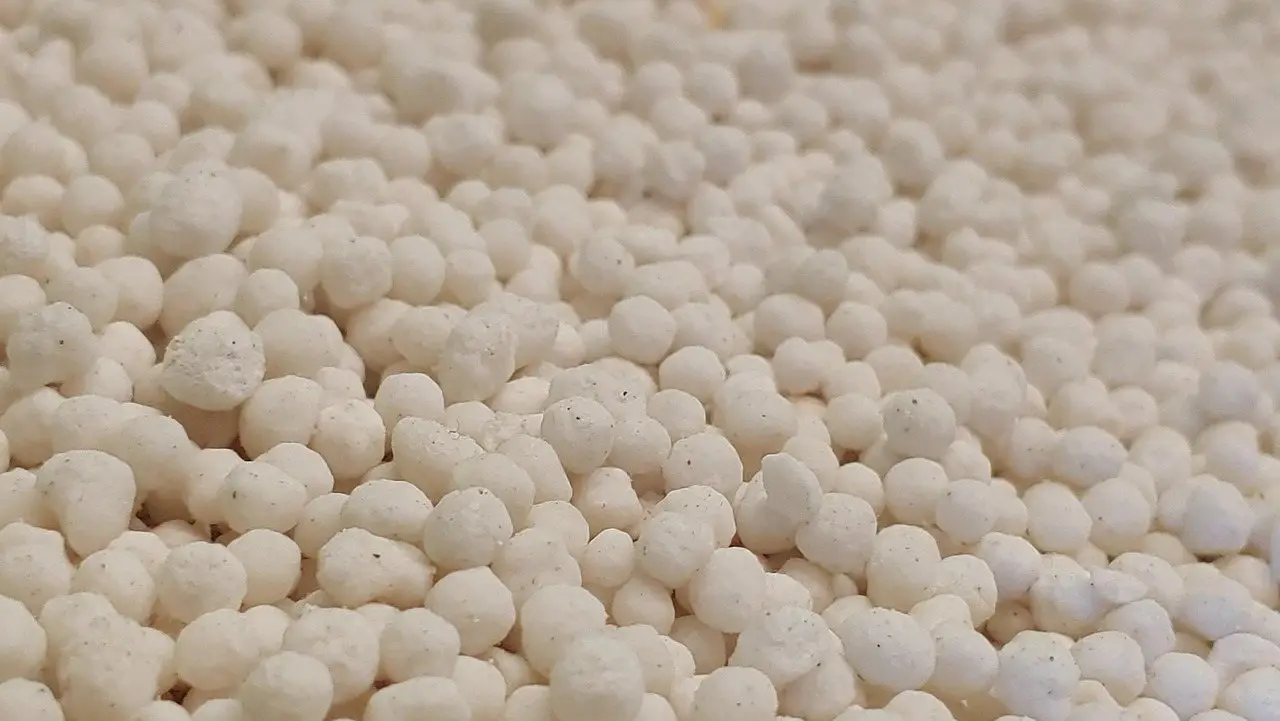
Plain granular fertilizer does not expire. What fails is either the bag’s condition or an additive mixed into it — and the distinction decides whether to keep it.
By product type
| product | shelf life | fails how |
|---|---|---|
| Plain granular (e.g. 20-0-10) | Indefinite | Clumps if damp |
| Slow-release coated granular | Indefinite | Coating can crack if crushed |
| Weed-and-feed | ~2–4 years | Herbicide weakens; fertilizer does not |
| Insecticide combination | ~2–4 years | Active ingredient degrades |
| Liquid concentrate | 1–3 years | Separation, sediment, freeze damage |
| Organic liquid (fish, seaweed) | ~1 year | Genuinely ferments and spoils |
| Compost and manure | Indefinite | Just keeps breaking down |
Old weed-and-feed is the worst case
Full nitrogen with weakened herbicide means you feed the weeds you failed to kill. If it is past date, use it as a plain feed somewhere with no weed problem and buy fresh for the weeds.
Storing it properly
- Seal the bag — roll and tape, or decant into a lidded tub
- Off the concrete floor. Slabs wick moisture upward into the bag
- Out of direct sun and away from heat
- Frost-free for anything liquid
- Away from ignition sources. High-nitrogen ammonium nitrate products are oxidisers
- Out of reach of children, pets and livestock
- Label anything decanted, with the N-P-K — unlabelled granules are indistinguishable
Reviving a clumped bag
- Tip it onto a tarp
- Break the lumps with a spade or by hand
- Sieve out anything that will not reduce to granule size
- Recalibrate the spreader — reconstituted material flows differently
- If it is a solid block, dig it into a bed rather than risk striping the lawn
When to actually bin it
- Liquid that froze and will not re-dissolve
- Organic liquid that smells wrong beyond its usual smell
- Weed-and-feed years past date, if weed control is the reason you are using it
- Anything unlabelled that you cannot identify — applying an unknown N-P-K is how lawns get burned
Dispose through a household hazardous waste route rather than down a drain.
Common questions
Does lawn fertilizer go bad?
How long does weed and feed last?
Can I use fertilizer that has gone hard in the bag?
Do liquid fertilizers expire?
How should fertilizer be stored?
Is it worth keeping a part bag over winter?
Backyard Weekly
Know what to plant, week by week
Join the weekly email for seasonal jobs, fixes for what is going wrong, and gear worth buying.
Not ready to subscribe? The planting calendar is free and needs no email.
By subscribing you agree to our privacy policy. Grow In Backyard will never sell your address.
Keep reading
Can You Over Fertilize Your Lawn? Yes, and It Shows Fast
Too much fertilizer burns roots, forces weak growth and pollutes runoff. The signs, how to rescue a lawn, and the rates that avoid it.
When to Feed a Lawn: The Calendar by Grass Type
Cool-season lawns want their main feed in early autumn, warm-season lawns in late spring. The windows, the rates and when not to feed at all.
What Happens if You Apply Fertilizer to Wet Grass? It Burns
Granules stick to wet blades instead of falling to the soil, and concentrated salt sitting on leaf tissue scorches it. Water it in or wait until dry.
How Long Does Granular Fertilizer Take to Dissolve?
Quick-release granules break down in two to five days with watering; coated slow-release prills feed for six weeks to nine months. Water is what starts both.