
Citronella Plant: What It Is, and Whether It Repels Anything
The plant sold as citronella is a scented geranium, not the grass the oil comes from. What each one is, how to grow it, and the honest mosquito answer.
 By

On this page
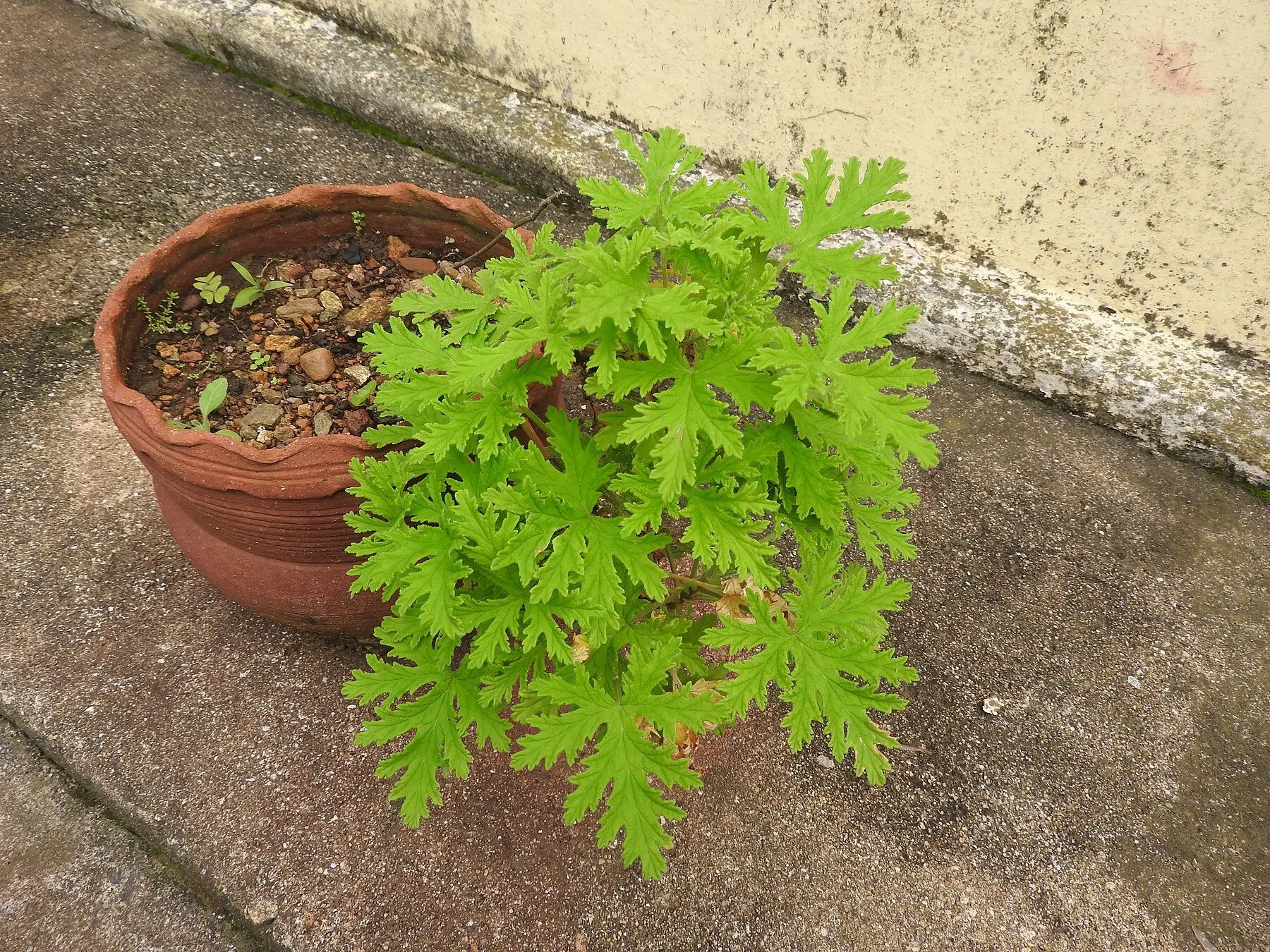
The plant sold as “citronella” is a scented geranium, the oil comes from a tropical grass, and the plant does not repel mosquitoes. All three facts are worth having before you buy one.
Three different plants, one name
| Plant | What it is | Hardy to | Source of the oil? |
|---|---|---|---|
| Citronella geranium (Pelargonium) | What shops sell. Lacy lemon-scented leaves, 2–3 ft | Zone 9 | No |
| Citronella grass (Cymbopogon nardus) | Clumping tropical grass, 5–6 ft | Zone 10 | Yes |
| Citronella horsebalm (Collinsonia canadensis) | North American woodland perennial | Zone 4 | No |
The geranium is sometimes labelled Pelargonium citrosum or “Citrosa”, and marketed as the mosquito plant. It is a pelargonium crossed for scent, and the name is a commercial one rather than a botanical claim.
The mosquito question, answered honestly
Growing the plant does not protect you. The aromatic compounds are held inside the leaf tissue and released when the leaf is crushed or damaged — an intact plant sitting in a pot puts almost nothing into the air, and certainly not at a concentration that affects a mosquito.
This has been tested. Studies of the citronella geranium have found no meaningful reduction in mosquito landings on people near the plants.
| Approach | Does it work? |
|---|---|
| Growing citronella plants | No measurable effect |
| Crushing leaves on skin | Brief, mild, unreliable |
| Citronella oil on skin | Yes, but short-lived — reapply often |
| DEET or picaridin | Yes, and for hours |
| Oil of lemon eucalyptus | Yes, comparable to low-concentration DEET |
| Removing standing water | The single most effective thing you can do |
| A fan on the patio | Surprisingly effective — mosquitoes fly poorly |
Standing water is the whole game
A mosquito needs about a week of standing water to go from egg to adult. That is a plant saucer, a blocked gutter, a bucket, a bird bath left unchanged, a fold in a tarpaulin, a child’s toy.
Tipping those out weekly does more than every repellent plant ever sold. It is also free.
None of this makes the plant not worth growing. It is a good-looking, tough, aromatic pelargonium that smells wonderful when you brush past it. Buy it for that.
Growing the geranium
It is a pelargonium, and the commonest way to kill one is kindness with the watering can.
| Sun | Full — 6+ hours |
| Soil | Gritty and free-draining. Add perlite or grit to standard compost |
| Water | Only when the top inch is dry. It rots before it wilts |
| Feed | Light, low-nitrogen, through summer only |
| Size | 2–3 ft, spreading |
| Hardiness | Zone 9. Frost kills it |
- Pinch the growing tips when young, or it goes leggy and sparse
- Deadhead the small mauve-pink flowers to keep it tidy; they are not the point of the plant
- Overwinter indoors — bright, cool, barely watered, and cut back hard in spring
- Cuttings root easily in late summer, which is the cheap way to keep it going year to year
Toxic to dogs and cats
Like other pelargoniums, the citronella geranium is on the ASPCA’s toxic list for dogs, cats and horses — vomiting, loss of appetite, skin irritation.
It is sold specifically for decks and patios, which is exactly where pets sit on summer evenings. Worth placing out of reach, or choosing something else if you have a chewer.
Growing citronella grass
If you want the actual plant the oil comes from:
- Full sun and heat; it is tropical and wants both
- Steady moisture — the opposite of the geranium
- Rich soil, and a generous feed through summer
- 5–6 ft tall in a good season, clumping
- Zone 10. Grown as an annual or a large container plant everywhere else, brought in before frost
It is closely related to lemongrass and looks much the same. Unlike the geranium, the leaves are genuinely the commercial source of citronella oil — though extracting anything useful at home is not realistic.
Common questions
What is the citronella plant?
Does the citronella plant actually repel mosquitoes?
How do you care for a citronella geranium?
Is citronella grass the same plant?
Is the citronella plant toxic to pets?
What actually works against mosquitoes in a garden?
Backyard Weekly
Know what to plant, week by week
Join the weekly email for seasonal jobs, fixes for what is going wrong, and gear worth buying.
Not ready to subscribe? The planting calendar is free and needs no email.
By subscribing you agree to our privacy policy. Grow In Backyard will never sell your address.
Keep reading
Plants That Repel Mosquitoes — 4 Fixes That Beat Them
Plants that repel mosquitoes barely work unless you crush the leaves. 4 measures compared, starting with standing water. See which suits your yard.
What Smells Do Mosquitoes Hate? What Works and What Does Not
Citronella, lavender and peppermint all repel mosquitoes in a lab. Almost none of it survives contact with a real backyard — here is what actually reduces bites.
Outdoor Plants in Pots: What Survives, and What Kills Them
A pot outdoors is a harsher place than the ground — hotter, drier, and colder in winter. How to pick plants and pots that cope, and get through the cold.
Do Magnolia Trees Lose Their Leaves? Some Do, Some Don't
Deciduous magnolias drop everything in autumn; evergreen ones shed year-round. How to tell which you have, and when leaf drop signals a problem.