
Outdoor Gardening Tool Storage That Keeps Tools Dry
Tools rust from condensation, not rain. Vertical hanging, a ventilated box and a gravel base do more than any lock or lid upgrade.
 By
On this page
Tools outdoors rust from condensation, not rain. That single fact decides every choice below: ventilate, raise, hang.
Storage options
| option | suits | cost | notes |
|---|---|---|---|
| Wall rack under an eave | Hand and long tools | Low | Best ventilation of all |
| Vented deck or storage box | Hand tools, gloves, twine | Low | Drill vents; raise it |
| Narrow vertical cabinet | Mixed, small footprint | Medium | A foot of depth goes a long way |
| Lean-to against a wall | Long tools, wheelbarrow | Medium | Roof plus open sides is ideal |
| Shed | Everything, plus mower | High | Needs a dry base and vents |
| Bin or barrel | Long tools | Very low | Drill drainage; store handle-down |
Making any enclosure work
- Vents high and low on opposite sides so air convects through
- Raised base — battens, pallet or a gravel pad
- Gravel underneath, not soil or grass
- Shade from afternoon sun
- Loose lid rather than a sealed one for tools
- Desiccant tub inside in humid climates
The cheapest effective rack
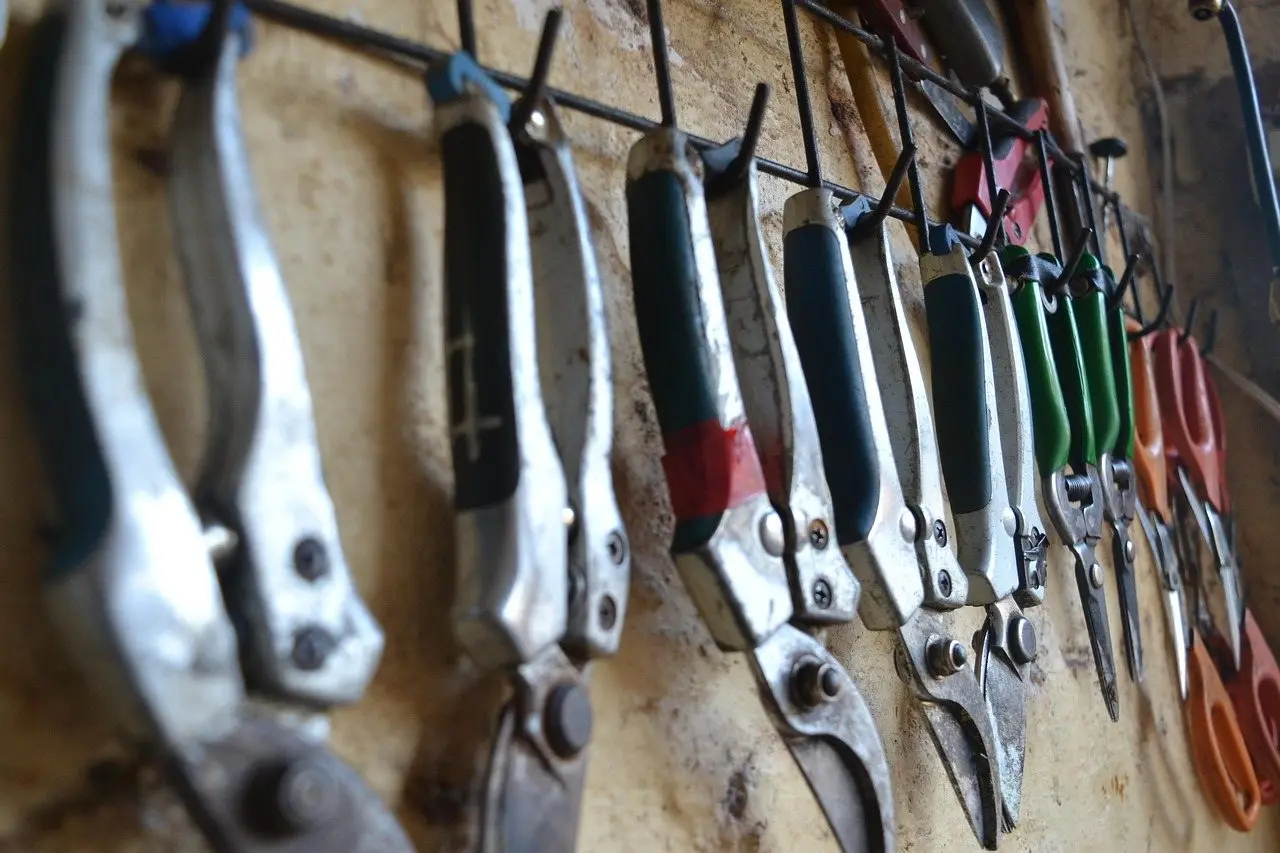
A length of 2x4 screwed horizontally to a fence or wall under an overhang, with large screw hooks every six inches. Long tools hang by the head, hand tools by the handle, nothing touches the ground, and air moves freely around all of it.
Organising it so it stays usable
- Hand tools in one place — a bucket caddy or a bag you carry out, so they come back
- Long tools by type, spades together, rakes together
- Sharp edges facing the wall
- Hoses on a reel, not coiled on the ground
- Chemicals and fuel in a separate, locked, ventilated place away from tools and out of reach
- Seed and twine in a sealed tub inside the box, away from mice
Before winter
| item | prep |
|---|---|
| Spades, forks, hoes | Clean, dry, sharpen, oil the metal |
| Secateurs and shears | Clean sap off, sharpen, oil the pivot |
| Wooden handles | Wipe with boiled linseed oil |
| Hoses | Drain completely, store indoors |
| Sprayers | Empty, rinse, drain, store open |
| Powered tools | Fuel stabiliser or empty tank, battery indoors |
Common questions
How do you store garden tools outside without them rusting?
What is the best way to store long-handled tools?
Do I need a shed, or will a storage box do?
How do I stop a storage box from sweating?
How should tools be prepared before storing for winter?
Should outdoor storage be locked?
Backyard Weekly
Know what to plant, week by week
Join the weekly email for seasonal jobs, fixes for what is going wrong, and gear worth buying.
Not ready to subscribe? The planting calendar is free and needs no email.
By subscribing you agree to our privacy policy. Grow In Backyard will never sell your address.
Keep reading
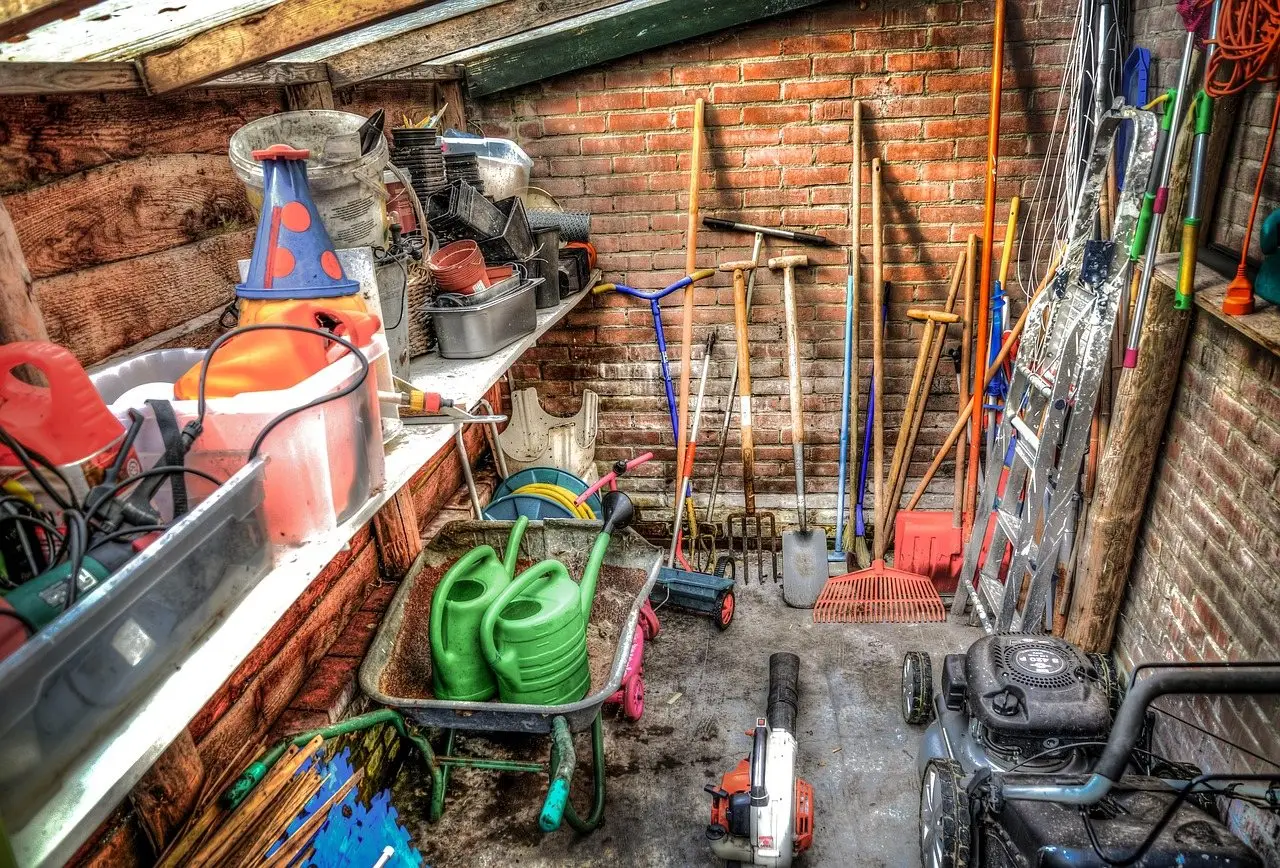
Wheelbarrow Storage: Hang It, Don't Leave It Flat
A wheelbarrow stored upright or hung on a wall takes a quarter of the space and stops the tray rusting and holding water. Three methods.
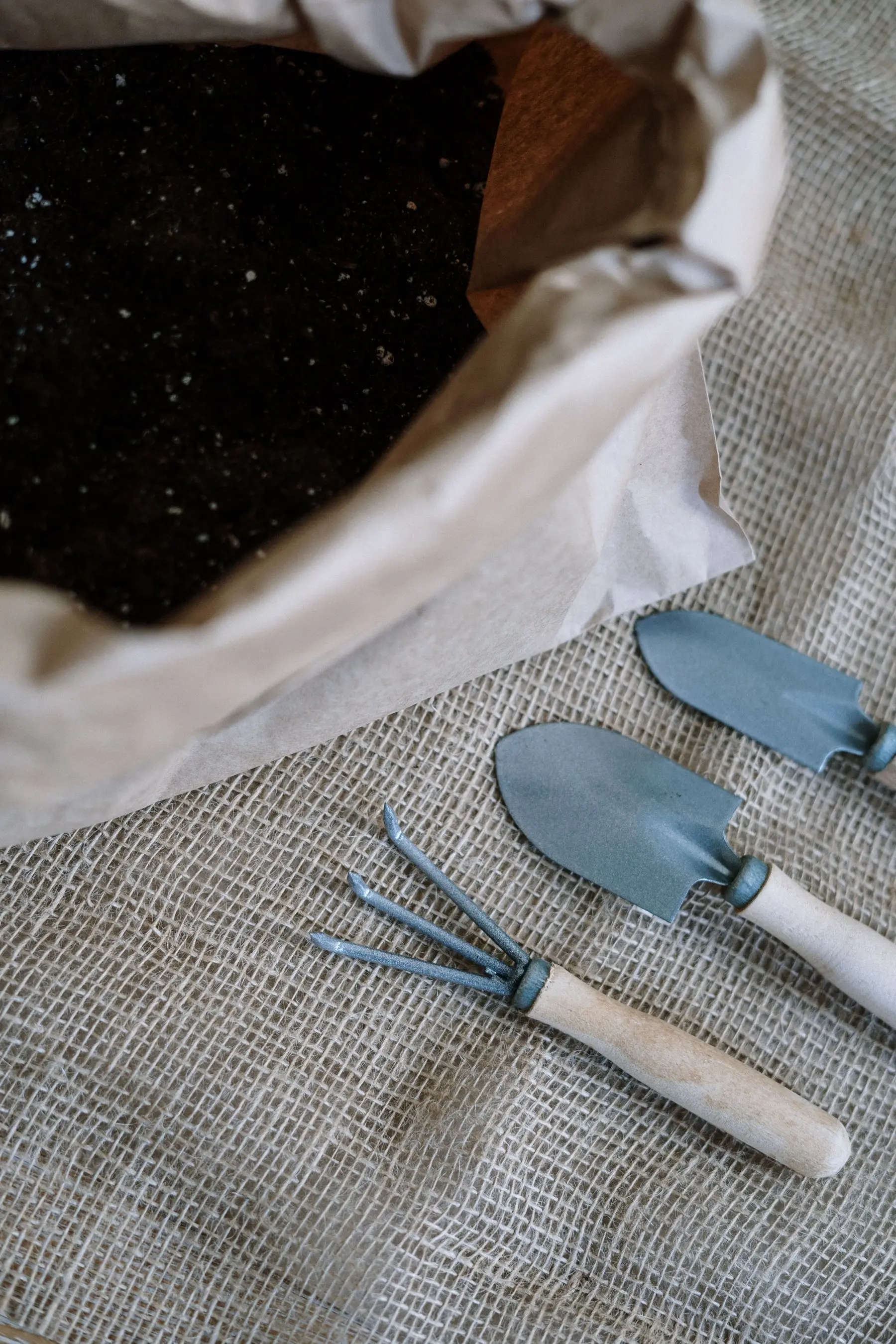
How to Clean Garden Tools — 4 Items, One Autumn Hour
How to clean garden tools at season's end: scrape, sharpen, then oil. 4 items cover the whole routine in about an hour. See what each one does.
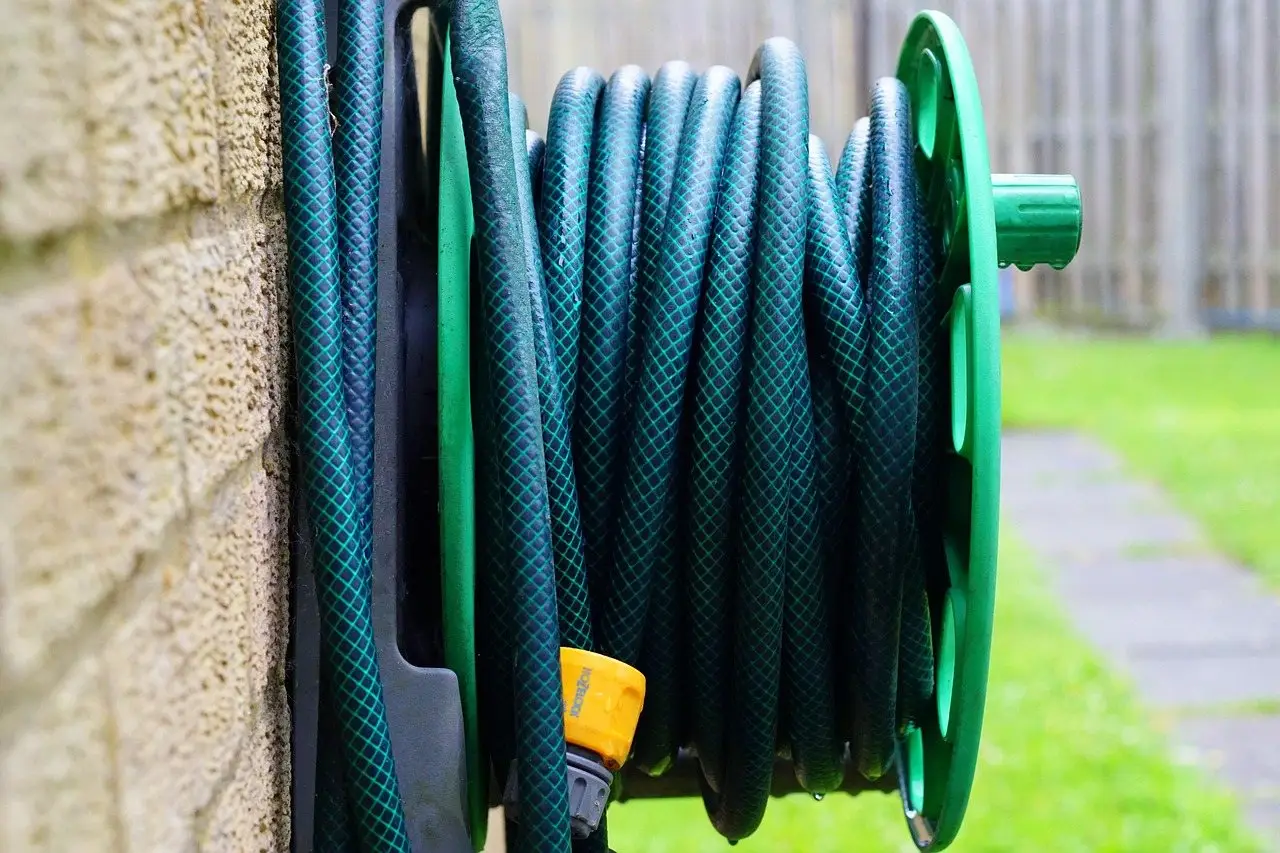
Best Wall Mounted Hose Reel: Fixings Matter More Than Brand
A loaded reel pulls with real force, and most failures are the wall fixing. Reel types compared, plus what to bolt into on brick, render and timber.
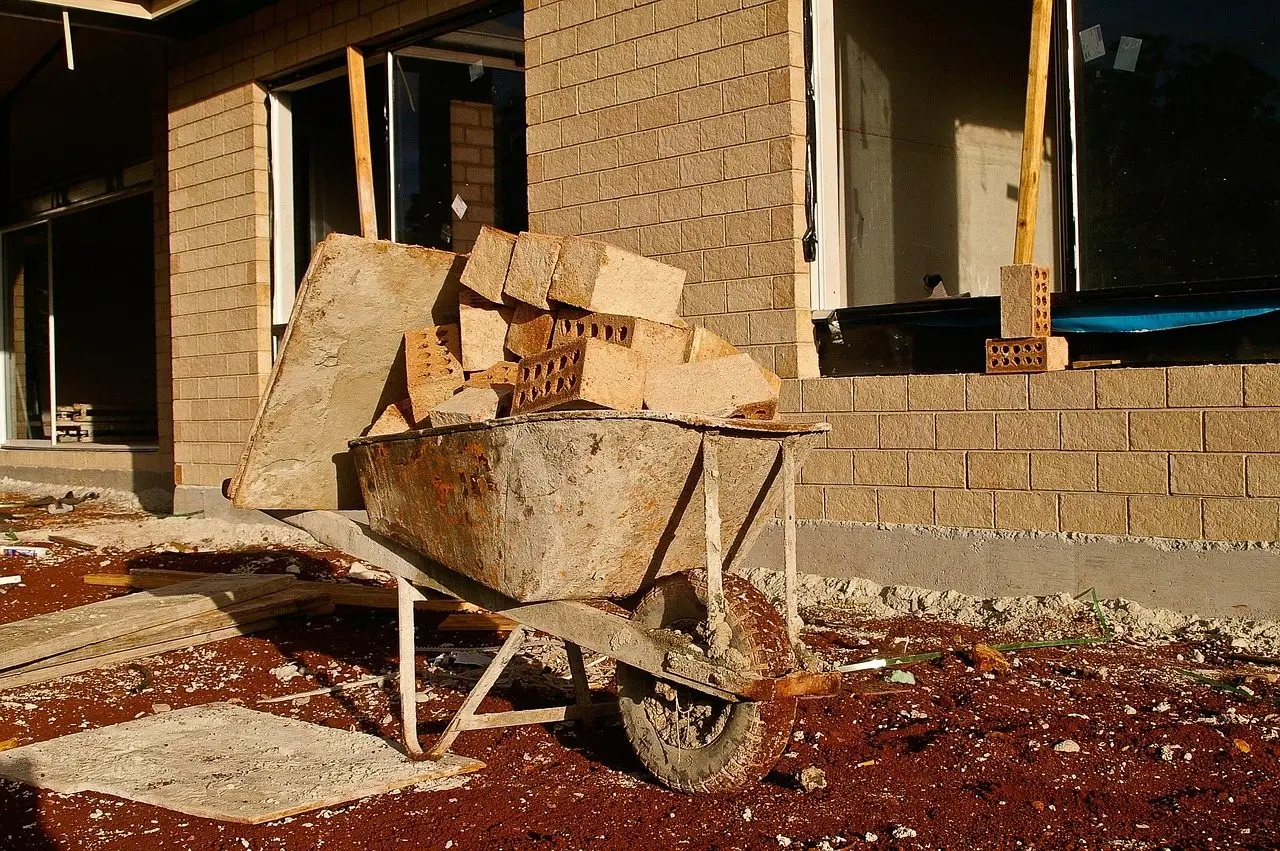
Wheelbarrow Size: Capacity, Load Limits and What Fits
Garden barrows hold 4 to 6 cubic feet, contractor models 6 to 10. What each capacity weighs loaded, and how many make a cubic yard.