
Best Irrigation System for a Vegetable Garden
Drip line on a timer beats everything else for vegetables. The four system types compared on cost, uniformity and how long each one lasts.
 By
We may earn a commission when you buy through links on this page, at no extra cost to you.
On this page
For vegetables, the right system is the one that delivers the same amount of water to the last plant as the first. That single criterion sorts the options below.
The four systems
| system | uniformity | cost | life | reconfigurable |
|---|---|---|---|---|
| Drip, pressure-compensating | Excellent | Medium | 5–10 yr | Yes |
| Drip tape | Good | Low | 1–3 yr | Partly |
| Soaker hose | Fair | Lowest | 2–5 yr | Yes |
| Micro-drip for pots | Excellent per pot | Medium | 3–5 yr | Yes |
The assembly at the tap
- Tap
- Backflow preventer — required by code on permanent connections in many places
- Battery timer
- Filter screen — ahead of the regulator, so sediment never reaches it
- Pressure regulator — 15–30 psi for drip, 10–25 for soaker
- Main line, then laterals into the beds
Mains pressure destroys drip components
Household supply at 40 to 60 psi blows emitters off the line and splits tubing designed for 15 to 30. The regulator is not optional and costs very little.
Setting the run time
| soil | session | frequency |
|---|---|---|
| Sandy | 20–40 min | 3× a week |
| Loam | 45–60 min | 2–3× a week |
| Clay | 60–120 min | 2× a week |
Then verify: dig down six inches with a trowel an hour after a run. Damp at root depth is the target. A wet surface over dry soil means the run is too short.
Winterising
- Bring the timer, filter and regulator indoors
- Open the end caps and drain the lines
- Lift or blow out the tubing in hard-freeze climates — water in an emitter splits it
- Flush at full flow in spring before reconnecting
- Replace the filter screen annually
How we picked
Four system types assessed on water uniformity along a run, cost for a typical two-bed garden, expected service life and how much fiddling each needs in a season · Picks last checked October 2026.
- Uniformity along the run
- Pressure-compensating emitters deliver the same flow at the far end as the near end. Everything else waters the first plants more than the last, which shows up as uneven crops by August.
- Clogging resistance
- Hard water and sediment block fine emitters. A filter at the tap and a flushable end cap matter more than the brand of tubing.
- Reconfigurability
- Vegetable beds change every year. A system you can move emitters around on is worth more than a fixed grid that suits one season's layout.
- Timer and backflow
- An unattended timer is what turns irrigation from a chore into a system, and a backflow preventer is required by many codes on any permanent hose connection.
Our picks
| # | Pick | Best for | Where to buy |
|---|---|---|---|
| 1 | Drip line with pressure-compensating emitters | Best overall | Check price for Drip line with pressure-compensating emitters → |
| 2 | Drip tape | Best for rows | Check price for Drip tape → |
| 3 | Soaker hose with regulator and timer | Best budget option | Check price for Soaker hose with regulator and timer → |
| 4 | Micro-drip kit for containers | Best for pots | Check price for Micro-drip kit for containers → |
Best overall
Drip line with pressure-compensating emitters
- Emitter spacing
- Typically 6–18 in
- Pressure
- 15–30 psi with regulator
- Life
- 5–10 years
What we liked
- Same flow at the end of the run as the start, which no soaker hose achieves
- Emitters can be moved or added as the bed layout changes each year
- Works on a slope, where soaker hose drains to the low end
Worth knowing
- More fittings to assemble than a soaker hose
- Needs a filter and regulator, which most kits include
Best for rows
Drip tape
- Emitter spacing
- 4–12 in, pre-punched
- Pressure
- 8–12 psi
- Life
- 1–3 seasons
What we liked
- Very cheap per foot, so whole rows can be covered
- Close emitter spacing suits carrots, salad, beans and other dense sowings
- Lies flat and is easy to roll up at the end of the season
Worth knowing
- Thin-walled and easily punctured by a hoe or a boot
- Replaced every few seasons rather than repaired
Best budget option
Soaker hose with regulator and timer
- Run length
- Keep under 50–100 ft
- Pressure
- 10–25 psi
- Life
- 2–5 seasons
What we liked
- Cheapest way to automate watering in short beds
- Nothing to assemble beyond a regulator, filter and timer
- Lays out and mulches over in minutes
Worth knowing
- Output drops noticeably along the run and on any slope
- Pores clog with scale and sediment after a few seasons
Best for pots
Micro-drip kit for containers
- Emitters
- Individually adjustable
- Tubing
- 1/4 in micro line off a 1/2 in main
- Pressure
- 15–25 psi
What we liked
- Each container gets a flow matched to its size, which nothing else does
- Easy to extend as the collection grows
- Keeps containers alive through a holiday, which is usually why people buy it
Worth knowing
- Many small parts and connections to leak
- Adjustable emitters drift and need checking through the season
Which should you buy?
| If you… | Buy | Because |
|---|---|---|
| Two or three raised beds | Drip line with pressure-compensating emitters, on a battery timer | Even delivery, easy to reconfigure each spring, and the whole kit costs less than one season of lost crops to uneven watering. |
| Cheapest workable option | Soaker hose with a pressure regulator and timer | Fine for beds under about ten feet with no slope; output is uneven along longer runs and the pores clog after a few seasons. |
| Rows of closely spaced crops | Drip tape | Pre-punched emitters at close spacing suit carrots, salad and beans in rows, and it costs very little per foot. |
| Containers and mixed pots | Micro-drip with individual adjustable emitters | Each pot gets its own flow, which is the only way to water containers of different sizes from one line. |
When not to buy at all
Skip an irrigation system entirely for a single small bed you walk past daily — a watering can plus two inches of mulch does the job. Systems earn their place at two beds or more, or wherever you go away in summer.
Common questions
What is the best irrigation system for a vegetable garden?
Drip irrigation or soaker hose?
How much water do vegetables need?
Do I need a pressure regulator?
Where should the timer and backflow preventer go?
How do I winterise a drip system?
Backyard Weekly
Know what to plant, week by week
Join the weekly email for seasonal jobs, fixes for what is going wrong, and gear worth buying.
Not ready to subscribe? The planting calendar is free and needs no email.
By subscribing you agree to our privacy policy. Grow In Backyard will never sell your address.
Keep reading
Soaker Hose in a Raised Bed: Layout, Pressure and Timing
Soaker hose suits raised beds if you keep runs under 100 feet, fit a pressure regulator and run it long and slow. Layout spacing by soil type.
Best Wall Mounted Hose Reel: Fixings Matter More Than Brand
A loaded reel pulls with real force, and most failures are the wall fixing. Reel types compared, plus what to bolt into on brick, render and timber.
How to Start a Vegetable Garden in Your Backyard
Pick the sunniest spot, start small, build soil, and grow six crops well. The first-season plan that avoids the usual expensive mistakes.
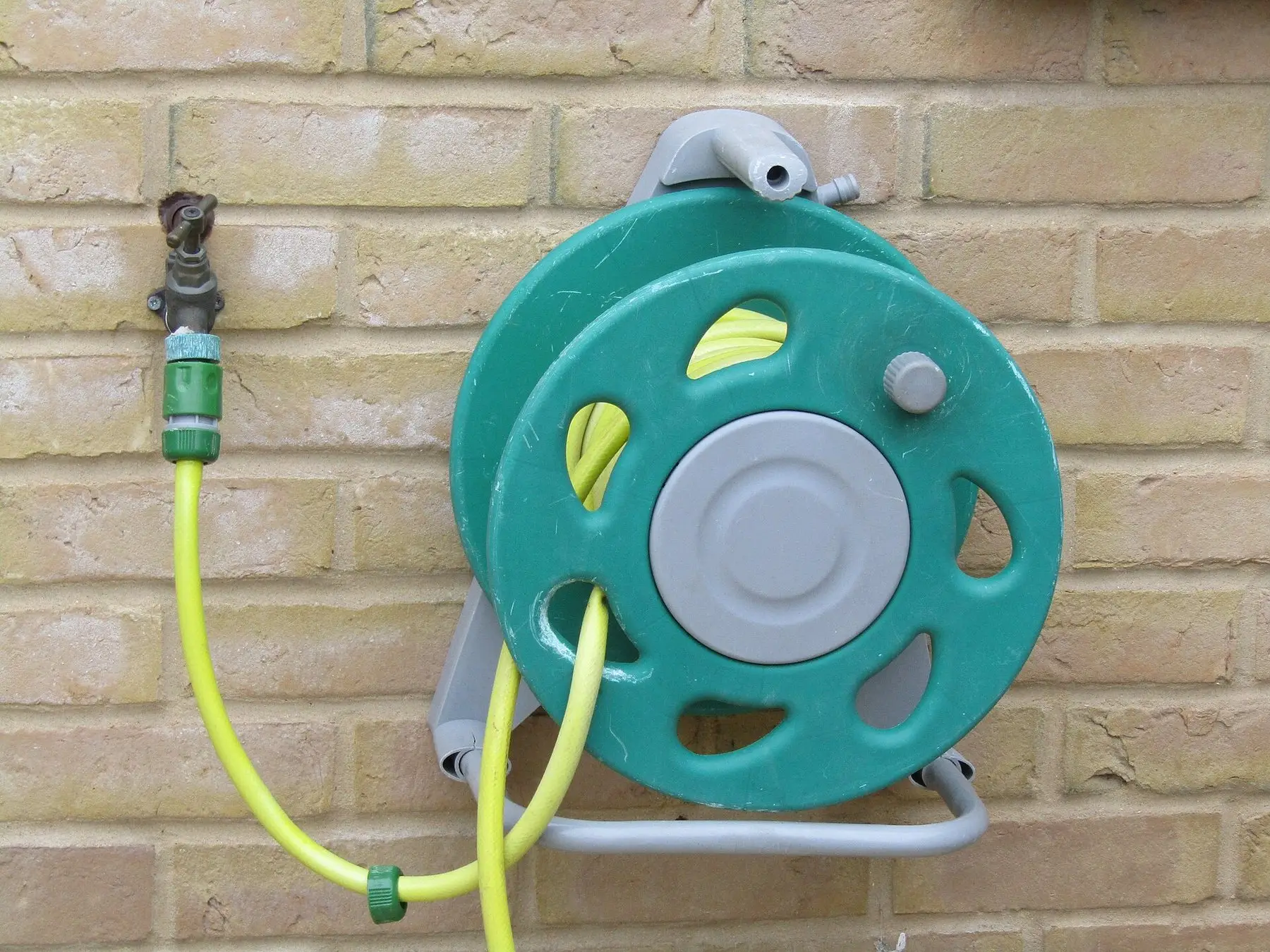
Garden Hose Reel — 4 Types and the Mount That Holds
A garden hose reel fails at the wall fixing, not the reel. 4 types compared on capacity, mounting and awkward gardens. See which suits your run.