
Best High Pressure Hose Nozzle: Metal Beats Plastic
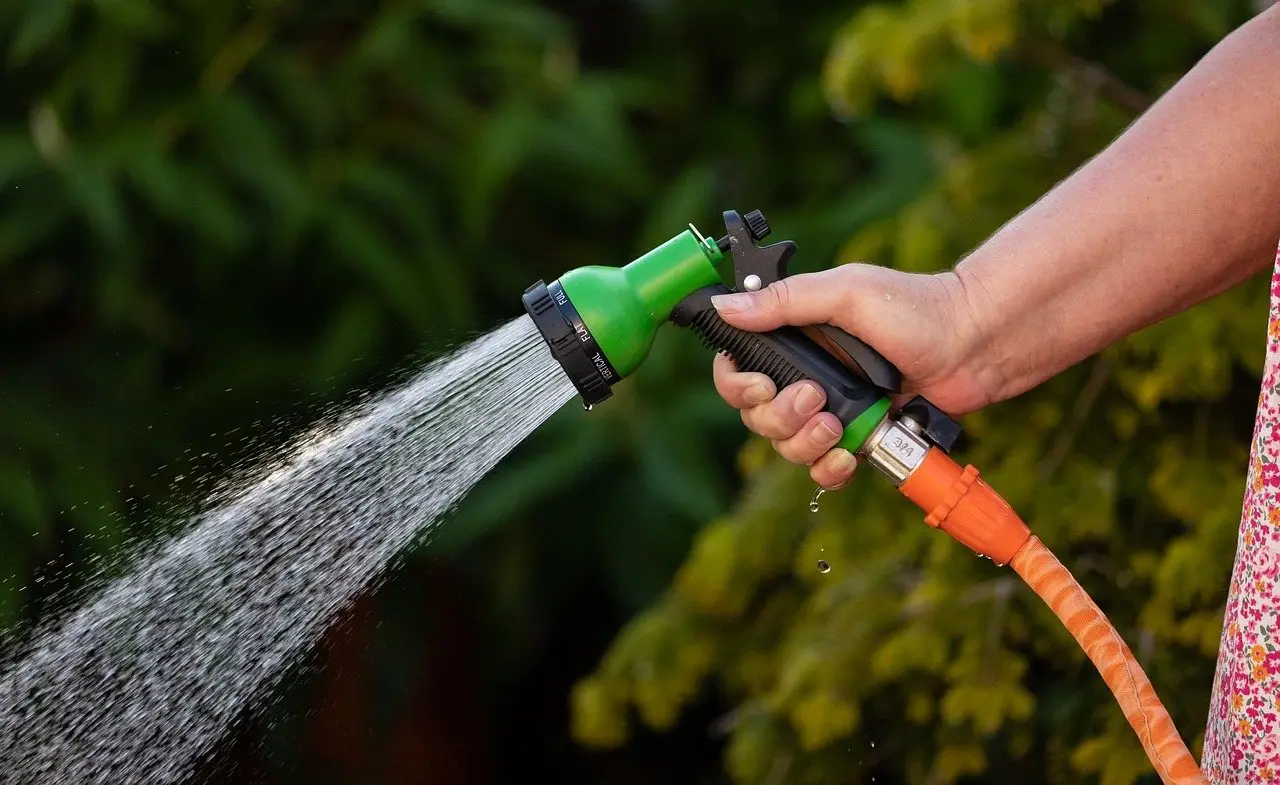
A nozzle cannot add pressure, only concentrate it. What to look for in a jet nozzle, the four types compared, and where a pressure washer is needed.
 By
We may earn a commission when you buy through links on this page, at no extra cost to you.
On this page
A nozzle cannot add pressure. It narrows the opening so the water leaves faster, which is why a cheap brass jet often outperforms an expensive multi-pattern head.
The four types
| type | jet strength | versatility | durability |
|---|---|---|---|
| Brass fireman-style | Strongest | Low | Highest |
| Metal multi-pattern | Good | Highest | Good |
| Brass adjustable twist | Strong | Moderate | High |
| Plastic multi-pattern | Fair | High | Low |
Check your supply before buying anything
Time how long a five-gallon bucket takes to fill at the tap:
| time | flow | verdict |
|---|---|---|
| Under 30 s | 10+ gpm | Excellent — any nozzle will perform |
| 30–60 s | 5–10 gpm | Normal domestic supply |
| 60–120 s | 2.5–5 gpm | Weak; a jet nozzle helps most |
| Over 2 min | Under 2.5 gpm | Supply problem — fix that, not the nozzle |
Match the pattern to the surface
A tight jet is right for mud on paving and soil off tools. On car paint it strips wax and drags grit; on render, mortar and timber it forces water into the material; on a planted bed it washes soil off roots. Maximum is not always correct.
Looking after one
- Replace the rubber washer at the first sign of a leak — pennies, in packs
- Never use thread tape on a garden hose thread; it seals on a washer, not a taper
- Drain and store indoors over winter in freezing climates
- Flush grit out by running the hose without the nozzle before fitting it
- An inline filter at the tap extends the life of any fine orifice on well water
How we picked
Four nozzle types judged on build material, orifice design, how they handle grit, and what pressure they can actually deliver from a domestic tap · Picks last checked October 2026.
- Body material
- Plastic nozzles crack at the thread and at the trigger pivot, usually within a season or two. Solid brass or zinc alloy is the single biggest predictor of how long one lasts.
- Orifice design
- A narrow fixed orifice gives the tightest jet and the highest exit velocity. Multi-pattern heads trade some of that for versatility and have more seals to fail.
- Seal and washer quality
- Almost every leaking nozzle is a perished O-ring, not a broken body. Replaceable washers mean a repairable nozzle.
- Grit tolerance
- Well water and old pipework carry sediment that scores a fine orifice. A slightly larger orifice or an inline filter outlasts the sharpest jet.
Our picks
| # | Pick | Best for | Where to buy |
|---|---|---|---|
| 1 | Solid brass fireman-style jet nozzle | Best overall | Check price for Solid brass fireman-style jet nozzle → |
| 2 | Metal-bodied multi-pattern nozzle | Best all-rounder | Check price for Metal-bodied multi-pattern nozzle → |
| 3 | Adjustable brass twist nozzle | Best simple nozzle | Check price for Adjustable brass twist nozzle → |
| 4 | Firehose-style nozzle with shut-off valve | Best for long hose runs | Check price for Firehose-style nozzle with shut-off valve → |
Best overall
Solid brass fireman-style jet nozzle
- Body
- Solid brass
- Action
- Twist from off to jet
- Moving parts
- One
What we liked
- Brass body survives being dropped and driven over, which is how most nozzles die
- A single twist collar means no trigger pivot and no spring to fail
- Tightest jet achievable from a domestic tap, with no pattern selector losing pressure
Worth knowing
- Heavy in the hand for long watering sessions
- No gentle pattern, so it is a cleaning tool rather than an all-rounder
Best all-rounder
Metal-bodied multi-pattern nozzle
- Body
- Zinc alloy or brass with rubber overmould
- Patterns
- Typically 7–10 including jet
- Trigger
- Squeeze with lock
What we liked
- Covers watering and cleaning from one fitting, which is what most people need
- Rubber overmould survives drops better than bare plastic
- Trigger lock saves your hand on long jobs
Worth knowing
- Jet is weaker than a dedicated one because the selector restricts flow
- More seals means more things that eventually leak
Best simple nozzle
Adjustable brass twist nozzle
- Body
- Brass
- Adjustment
- Twist from jet to cone
- Moving parts
- One
What we liked
- Infinitely variable from a tight jet to a wide cone with no selector to break
- Cheap enough to keep a spare, and repairable with a new washer
- Threads onto a hose or a watering wand equally
Worth knowing
- No trigger, so flow is controlled at the tap or by the twist
- Drips at the collar as the washer ages
Best for long hose runs
Firehose-style nozzle with shut-off valve
- Body
- Brass or heavy alloy
- Valve
- Integral quarter-turn
- Fitting
- Standard 3/4 in GHT
What we liked
- Shut off at the nozzle rather than walking back to the tap on a long run
- Heavy construction suits site and agricultural use
- Valve isolates the hose so couplings can be changed without draining
Worth knowing
- Bulky and heavy
- Overkill for a small garden
Which should you buy?
| If you… | Buy | Because |
|---|---|---|
| Blasting mud off paving and tools | Solid brass fireman-style jet nozzle | Simple twist action, one moving part, no trigger pivot to break, and the tightest jet available from a garden tap. |
| One nozzle for watering and cleaning | Metal-bodied multi-pattern with a jet setting | The jet setting handles most cleaning while shower and mist patterns suit plants. Accept a slightly weaker jet than a dedicated one. |
| Washing a car | Metal multi-pattern with a flat fan | A tight jet strips wax and drives grit into paint; a wide fan rinses without doing damage. |
| Removing algae, moss or old paint | A pressure washer, not a nozzle | A garden tap delivers roughly 40 to 60 psi. A pressure washer multiplies that thirty to fifty times — no nozzle closes that gap. |
When not to buy at all
If your mains pressure is already low — a nozzle on a weak supply produces a thin dribble whatever it costs. Check flow at the tap first by timing how long a 5-gallon bucket takes to fill.
Common questions
Can a nozzle actually increase water pressure?
What pressure does a garden hose actually deliver?
Are metal nozzles really better than plastic?
Why does my nozzle leak at the hose connection?
Does a tighter jet clean better?
Does nozzle choice save water?
Backyard Weekly
Know what to plant, week by week
Join the weekly email for seasonal jobs, fixes for what is going wrong, and gear worth buying.
Not ready to subscribe? The planting calendar is free and needs no email.
By subscribing you agree to our privacy policy. Grow In Backyard will never sell your address.
Keep reading
Best Wall Mounted Hose Reel: Fixings Matter More Than Brand
A loaded reel pulls with real force, and most failures are the wall fixing. Reel types compared, plus what to bolt into on brick, render and timber.
Soaker Hose in a Raised Bed: Layout, Pressure and Timing
Soaker hose suits raised beds if you keep runs under 100 feet, fit a pressure regulator and run it long and slow. Layout spacing by soil type.
Best Garden Hose — 4 Picks and the Spec That Decides
The best garden hose is decided by burst pressure and fittings. 4 picks compared on weight, kinking and repair. See which suits your tap.
Best Irrigation System for a Vegetable Garden
Drip line on a timer beats everything else for vegetables. The four system types compared on cost, uniformity and how long each one lasts.