
What Do Wild Ducks Eat in a Pond? Far More Than Plants
Pondweed and seeds, yes — but also snails, insect larvae, small fish and amphibian eggs. Dabblers and divers work different parts of the water.
 By
On this page
Far more than plants. Pondweed, duckweed and seeds, yes — but also snails, insect larvae, tadpoles, frog spawn, small fish and fish eggs. Ducks are omnivores, and the animal share matters most in spring when females are laying and ducklings growing.
The actual diet
| Plant | Animal |
|---|---|
| Pondweed, duckweed | Snails and freshwater shrimp |
| Algae | Insect larvae — including mosquito and midge |
| Seeds and grain | Worms |
| Marginal grasses and shoots | Tadpoles and frog spawn |
| Acorns and windfall fruit | Small fish and fish eggs |
Where each type feeds
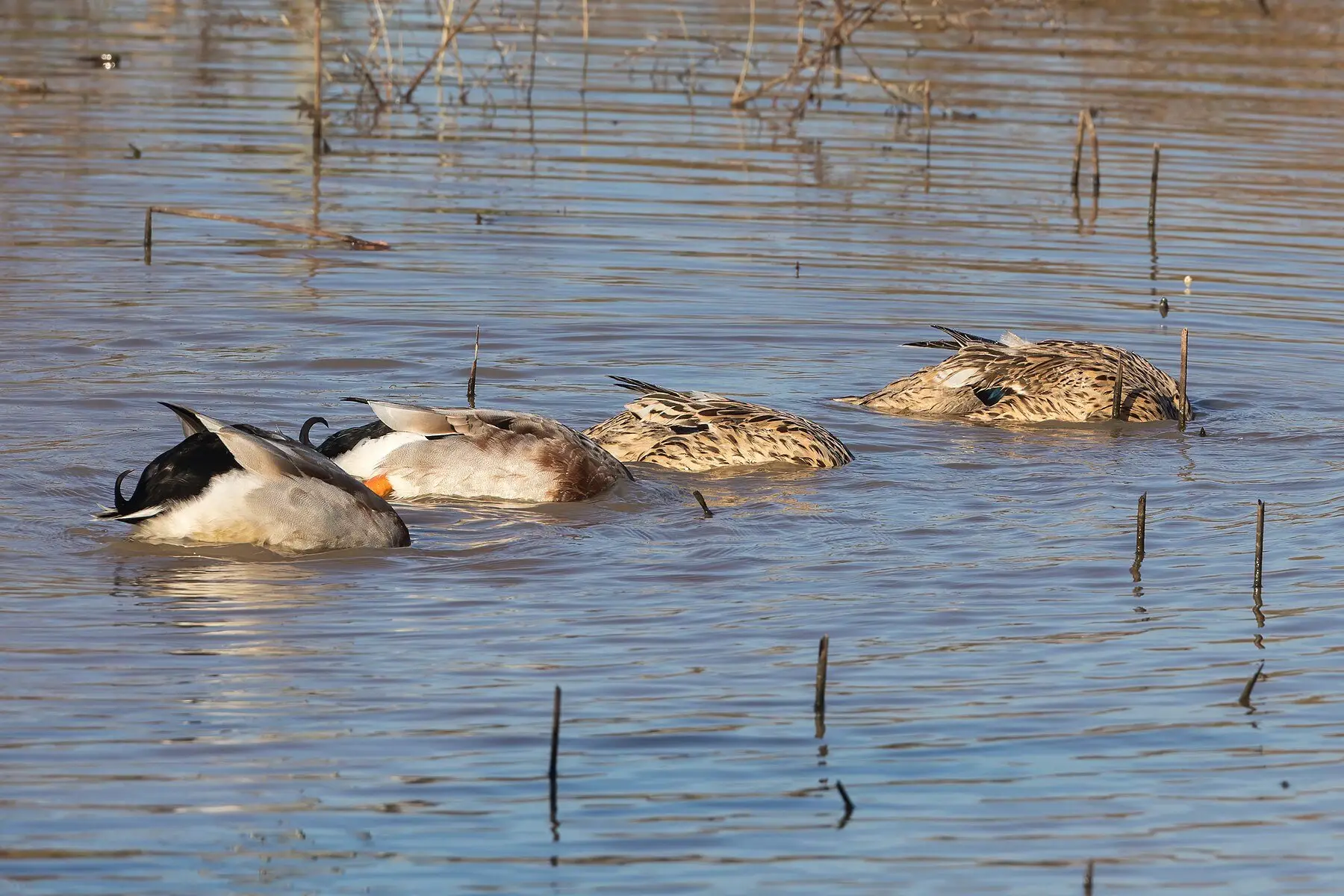
- Dabblers — mallard, teal, wigeon. Upend in the shallows, filter the top thirty centimetres, graze the margins. They want shallow water and gently sloping edges.
- Divers — tufted duck, pochard. Submerge fully and work the bottom, taking molluscs and larvae from deeper water.
A pond with both shallow margins and some depth supports both.
The mosquito benefit is real
Dabbling ducks filter the exact surface layer where mosquito larvae hang, and a few birds make a visible difference. Not a complete control — larvae also develop in containers and puddles away from the pond — but they handle the open water for free.
Bread
Angel wing is the reason this matters
Bread fills a duck without nourishing it, so birds eating a lot of it are malnourished while looking well fed. In growing ducklings, a high-carbohydrate low-protein diet is strongly associated with angel wing — a permanent deformity that leaves the bird unable to fly.
Uneaten bread also fouls the water, feeds algae and draws rats.
If you feed at all: oats, defrosted peas, sweetcorn, chopped lettuce, or proper waterfowl pellets. Scatter it so dominant birds cannot monopolise it, and never leave food floating to rot.
Most defensible in hard winter weather when natural food is scarce. Least defensible in spring, when ducklings need insect protein rather than grain.
What they do to a pond
A few visitors are fine. A resident group is harder on a pond than people expect:
- Uproot marginal and oxygenating plants while feeding
- Stir sediment, so the water stays turbid
- Droppings add a real nutrient load, which drives algal blooms
On a small wildlife pond that is enough to change the ecology. On a larger pond with established planting and good margins it matters much less.
Common questions
What do wild ducks eat in a pond?
What is the difference between dabbling and diving ducks?
Is bread bad for ducks?
Do ducks eat mosquito larvae?
Will ducks damage a garden pond?
Should I feed wild ducks at all?
Backyard Weekly
Know what to plant, week by week
Join the weekly email for seasonal jobs, fixes for what is going wrong, and gear worth buying.
Not ready to subscribe? The planting calendar is free and needs no email.
By subscribing you agree to our privacy policy. Grow In Backyard will never sell your address.
Keep reading
Do Ducks Eat Fish? What That Means for a Backyard Pond
Most backyard duck breeds will eat small fish, fry and eggs opportunistically. The bigger threat to your pond is not predation — it is what ducks do to the water.
What Vegetables Can Ducks Eat? The Safe List
Leafy greens, peas, squash and cucumber are all safe for ducks. Onion, avocado, raw dried beans and green potato are not. How much, and how to serve it.
Can Ducks Eat Corn? Yes, But Not as a Diet
Corn is safe and ducks love it, which is the problem. Why it should stay a treat, the winter exception, and what it displaces in a laying duck.
Why Do Ducks Like Water? Six Jobs It Does for Them
Water is not recreation for a duck. It waterproofs feathers, flushes eyes and nostrils, cools, feeds, and makes mating safe. What they actually need.