
Is Pond Water Good for Plants? Yes — With Two Exceptions
Pond water is a free, mild fertiliser and better than tap water for most plants. The two situations where it does harm, and how to use it properly.
 By
We may earn a commission when you buy through links on this page, at no extra cost to you.

On this page
Yes — and it is better than tap water for most plants. Pond water is a very dilute liquid fertiliser that happens to be free, sitting in your garden already.
There are exactly two situations where it does harm, and one narrower case worth knowing about.
Why it is good
| Pond water | Tap water | Rainwater | |
|---|---|---|---|
| Nitrogen, phosphorus, potassium | Yes, dilute | No | No |
| Trace minerals | Yes | Some | Minimal |
| Chlorine / chloramine | None | Yes | None |
| Beneficial microbes | Yes | No | Few |
| Temperature | Ambient — no root shock | Often cold | Ambient |
| Cost | Free | Metered | Free |
| Risk of pathogens | Some | None | Low |
The nutrients come from fish waste, decomposing leaves and the bacterial cycle that turns ammonia into nitrite and then nitrate. Nitrate is precisely what plant roots take up. It is a working nitrogen cycle with a garden attached to it.
The chlorine point is underrated. Municipal tap water is treated with chlorine or chloramine, which suppresses soil bacteria and the microbial life that makes nutrients available. Pond water has none.
The two real exceptions
Never use water from a pond with an algal bloom
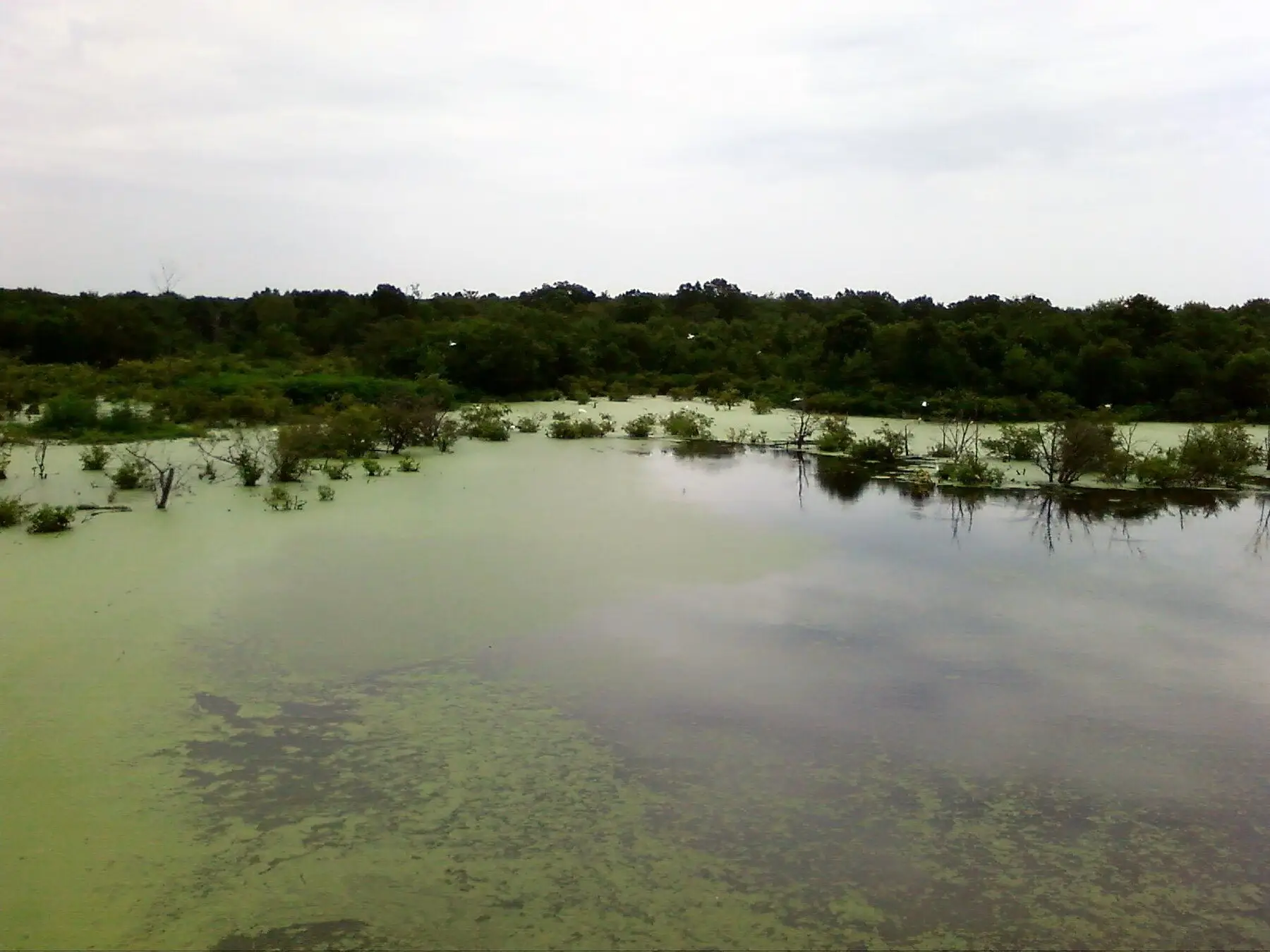
Blue-green algae — cyanobacteria — produce toxins that can persist in soil, and the water is hazardous to handle regardless of where it ends up. If the surface looks like spilled paint, a thick scum, floating mats or pea soup, use nothing from that pond, and keep pets away from it entirely.
Never use salty or chemically treated pond water
This rules out more ponds than people expect:
- Pond salt, commonly added to treat fish for parasites, and it does not evaporate away
- Algaecides, especially copper-based, which are toxic to plants at low concentrations
- Aquatic herbicides
- Fish medications
- Brackish or coastal ponds
- Ponds catching road or drive runoff where de-icing salt is used
Salt accumulates in soil with every watering and there is no easy way to remove it.
The narrower risk: water moulds
Untreated surface water can carry Phytophthora and Pythium — water moulds that cause root rot and damping off.
- Established outdoor beds: rarely a problem in practice
- Seedlings, cuttings and propagation: a genuine risk, and these are exactly the plants those pathogens kill
- Greenhouse use: the highest-risk case, because conditions favour the pathogen
So: pond water for the borders and the veg bed, mains or clean rainwater for the seed trays.
Using it well
- Water the soil, not the foliage, particularly on anything eaten raw.
- Strain it if it is full of debris — a piece of old net over the watering can saves blocked roses.
- Use it fresh. Stored pond water goes anaerobic and starts to smell.
- Take it from the deeper part rather than skimming surface scum.
- Do not drain the pond in one go during hot weather if it holds fish and wildlife — take a portion and let it refill.
- Empty the pool or tub water onto a bed if you keep ducks, rather than onto the lawn. It is strong stuff and it turns a daily chore into irrigation.
- Wash produce before eating, which you would anyway.
The sludge is the best part
The black layer on the pond bottom is decomposed organic matter — effectively a rich, wet compost, and considerably more nutrient-dense than the water above it.
- Dig it into beds in autumn, so it mellows over winter
- Or add it to the compost heap, where it supplies nitrogen and moisture to a dry carbon-heavy pile
- Let it drain first — it is heavy and unpleasant to move wet
- Keep it off seedlings while fresh; it is strong
- Skip it entirely if the pond has been chemically treated
Aquarium water counts too
Water changes from a freshwater tank are the same idea at a smaller scale — nitrogen, phosphorus, no chlorine — and they are genuinely good for houseplants and vegetables. The exceptions are a saltwater or brackish tank, and any tank recently treated with medication.
The principle, at scale
Growing plants in fish water is not a workaround. Aquaponics is an established commercial method built on exactly this: fish waste feeds plants, plants clean the water, and the loop closes.
A garden pond and a watering can is the same idea without the plumbing.
Our picks
| # | Pick | Best for | Where to buy |
|---|---|---|---|
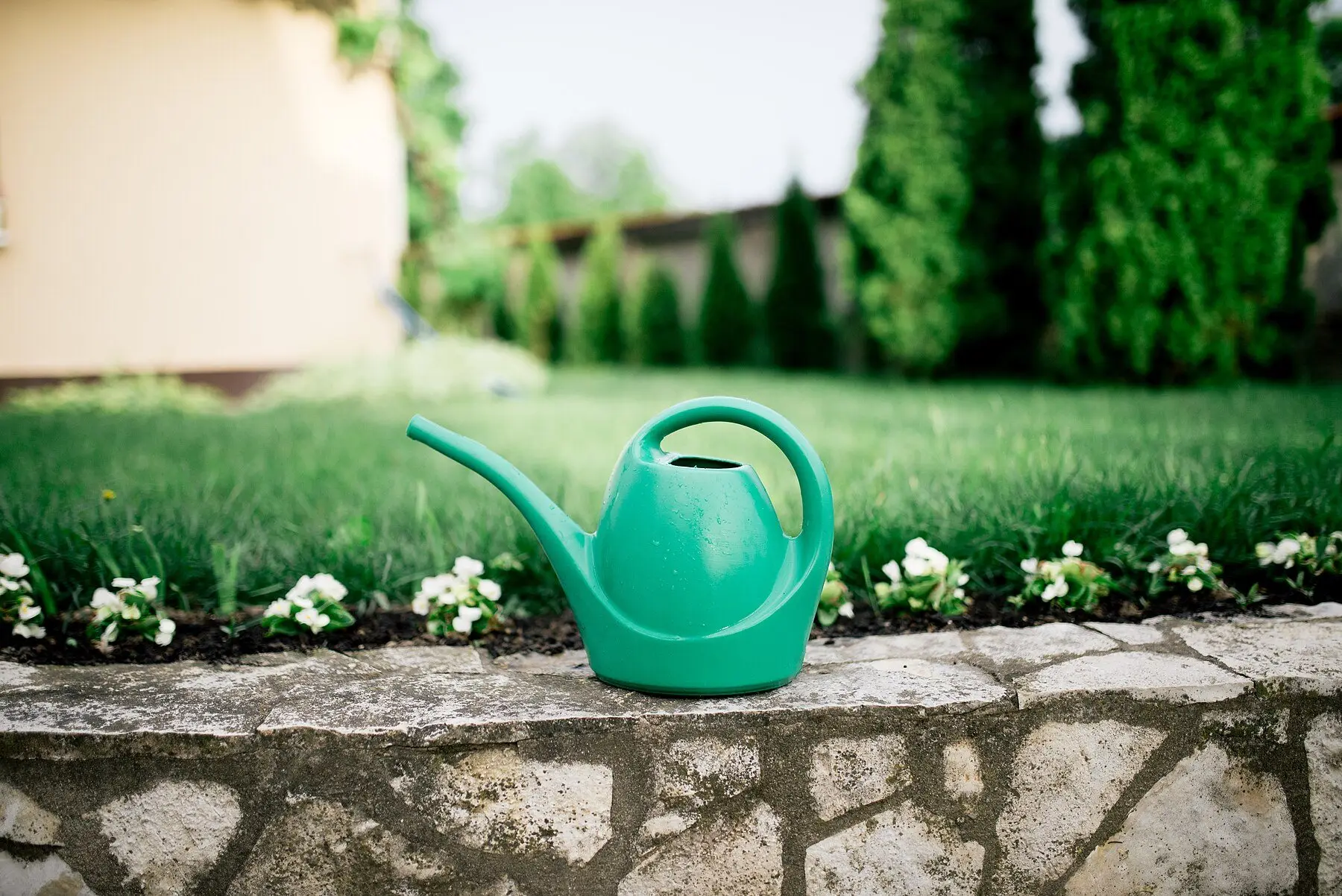
| 1 | Watering can with a coarse rose | For moving pond water to beds | Check price for Watering can with a coarse rose → |
| 2 | Siphon hose or transfer pump | For anything more than a few cans | Check price for Siphon hose or transfer pump → |
| 3 | Pond test strips | The one case where pond water is a bad idea | Check price for Pond test strips → |
For moving pond water to beds
Watering can with a coarse rose
Pond water is genuinely good fertiliser. The practical obstacle is moving it, and a fine rose clogs within one can.
- Why
- Fine roses clog on pond debris
What we liked
- Pond water carries nitrogen and beneficial microbes garden soil wants
- A coarse rose passes the algae and detritus that block a fine one
Worth knowing
- Heavy; a full 2-gallon can is around 17 lb
For anything more than a few cans
Siphon hose or transfer pump
The difference between using pond water occasionally and using it as the default is whether you have to carry it.
- Type
- Battery pump, or a simple siphon on a slope
What we liked
- Makes regular use practical rather than a chore
- A siphon needs no power where the beds sit below the pond
Worth knowing
- Pumps pick up debris; keep the inlet off the bottom
The one case where pond water is a bad idea
Pond test strips
Untreated pond water is fine on a vegetable bed. Water from a pond that has had algaecide or salt added is not, and the test is the only way to know.
- Check
- Salinity and pH
- Matters
- If anything has been added to the pond
What we liked
- Treated ponds — algaecide, salt, dyes — should not be used on edibles
- Strips cost very little and settle the question in a minute
Worth knowing
- Approximate; adequate for this purpose
Common questions
Is pond water good for plants?
Can I use pond water on vegetables?
When is pond water bad for plants?
Is pond sludge good for the garden?
Is fish tank water good for plants too?
Does pond water spread plant disease?
Backyard Weekly
Know what to plant, week by week
Join the weekly email for seasonal jobs, fixes for what is going wrong, and gear worth buying.
Not ready to subscribe? The planting calendar is free and needs no email.
By subscribing you agree to our privacy policy. Grow In Backyard will never sell your address.
Keep reading
What Eats Algae in a Pond? Fish, Snails and What Actually Works
Algae eaters help at the margins, but nutrients cause algae and only nutrient control fixes it. What each species really does, and the order to tackle it in.
How to Fill In a Pond (Legally, and Without Sinkage)
Rehome the fish, check whether you need a permit, remove the liner and muck, then backfill in compacted layers. Why a filled pond sinks for years if you rush it.

How Deep Should a Pond Be? Depths by Purpose and Climate
A wildlife pond wants shallow margins, koi want four feet, and freezing winters set the floor. The depths that matter, and the shelf plan that serves both.
Koi Pond Cover Ideas — 5 Builds, Netting to Frames
Koi pond cover ideas run from leaf netting to a framed predator guard. 5 builds compared on cost and looks. See which suits your pond.