
Do Bird Spikes Work for Squirrels? No — They Use Them
Spikes are spaced and sized for birds. Squirrels walk between them, climb over, and sometimes nest on them. What stops a squirrel instead.
 By
On this page
Bird spikes are engineered against a bird’s landing gear. A squirrel has hands, and it walks between them.
Why the geometry fails
| design assumption | true for a bird | true for a squirrel |
|---|---|---|
| Needs a flat place to land | yes | no — it climbs on |
| Cannot place feet between pins | yes | no |
| Will not grip a vertical surface | mostly | no |
| Deterred by an unstable perch | yes | no |
What does work
| measure | effect |
|---|---|
| Smooth baffle, 60 cm+, on pole or downpipe | good — no grip |
| Branches cut back ~2.5 m from the roof | good — removes the route |
| Capsaicin repellent, reapplied | moderate |
| Steel mesh over the actual entry gap | the permanent fix |
| Bird spikes | none |
| Ultrasonic, mothballs, predator urine | none |
Nothing within jumping distance
A squirrel clears about three metres horizontally and 1.2–1.5 m vertically from standing. A perfect baffle is useless if a fence, a bin or a branch sits inside that radius — the baffle is not what failed, the clearance was.
The question behind the question
A squirrel on a ledge matters because of where it goes next. If there is a gap at the soffit, fascia, gable vent or ridge, that is the thing to fix — galvanised steel mesh at 12 mm or finer, screwed behind the board. Expanding foam, plastic mesh and chicken wire are all chewed through, usually within days.
Watch at dawn before sealing anything
Tree squirrels are strictly diurnal. They leave shortly after first light, which is both when you can see the entry point and when the roof space is empty enough to fit a one-way exclusion door safely.
Common questions
Do bird spikes stop squirrels?
Will closer-spaced or taller spikes work?
What actually stops a squirrel climbing?
Does anything repel squirrels chemically?
Are spikes worth fitting at all?
What about the hole they are actually getting into?
Backyard Weekly
Know what to plant, week by week
Join the weekly email for seasonal jobs, fixes for what is going wrong, and gear worth buying.
Not ready to subscribe? The planting calendar is free and needs no email.
By subscribing you agree to our privacy policy. Grow In Backyard will never sell your address.
Keep reading
Can Squirrels Eat Through Walls? Through Most of Them
Timber, plasterboard, soffit, lead flashing and thin aluminium all give way. What actually stops them, and where they get in first.
Squirrel-Proof Bird Feeders — 5 Measures That Stop Them
Squirrel-proof bird feeders work on distance and mechanism, not claims. 5 measures compared on cost and success. See which suits your yard.
Non-Lethal Squirrel Deterrents: What Works and What Doesn't
Baffles and hardware cloth work. Ultrasonic devices, predator urine and most repellent sprays do not. Here is the evidence, sorted.
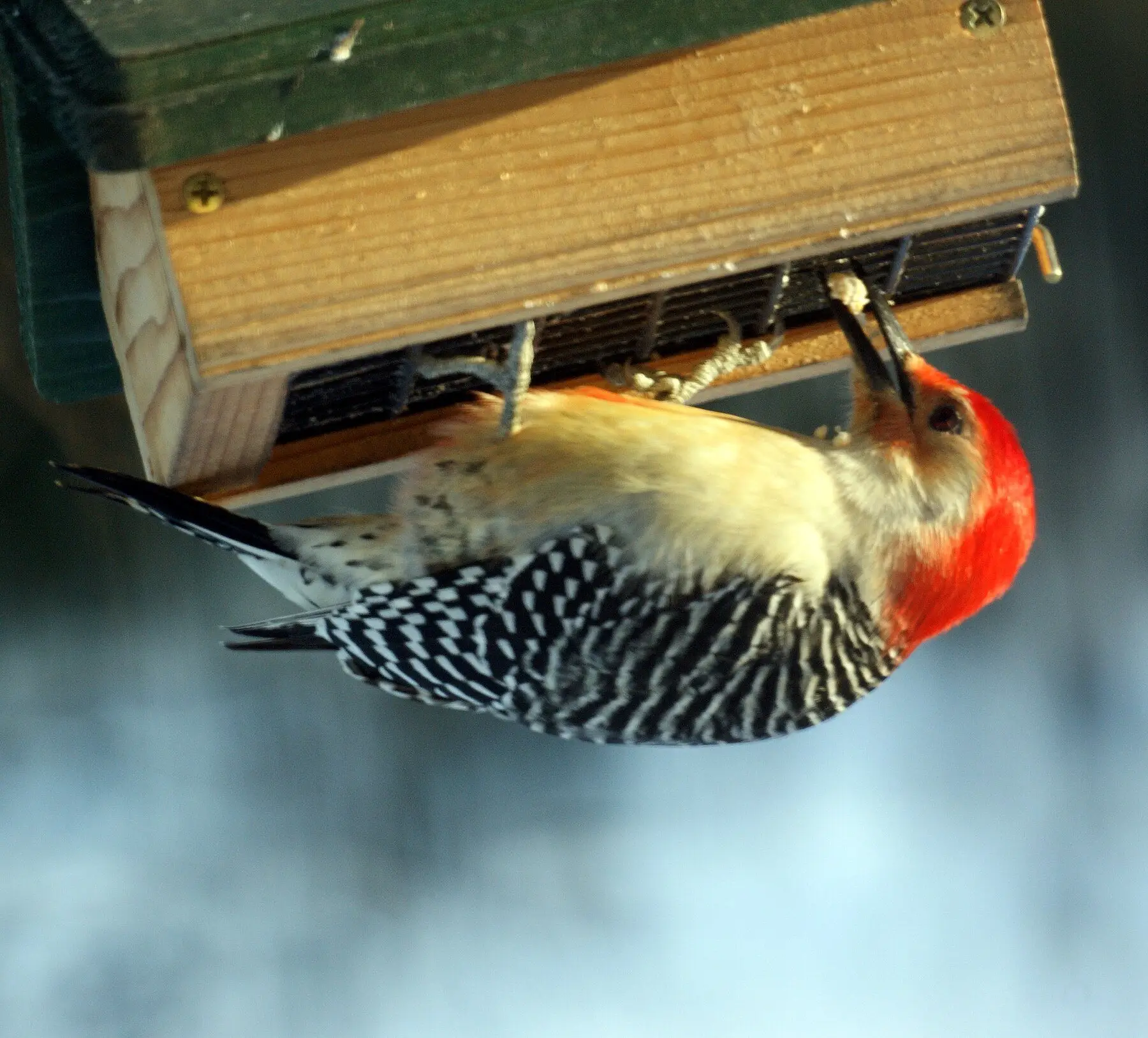
Do Birds Eat Meat? Which Ones, and What to Put Out
Far more garden birds eat meat than people assume — insects are meat. What raptors, corvids and even chickadees take, and what is safe to offer.