
Do Rabbits Damage Lawns? Less Than You'd Think
Rabbit grazing rarely harms an established lawn — it acts like close mowing. Digging, urine burn and warren entrances are the real damage.
 By
On this page
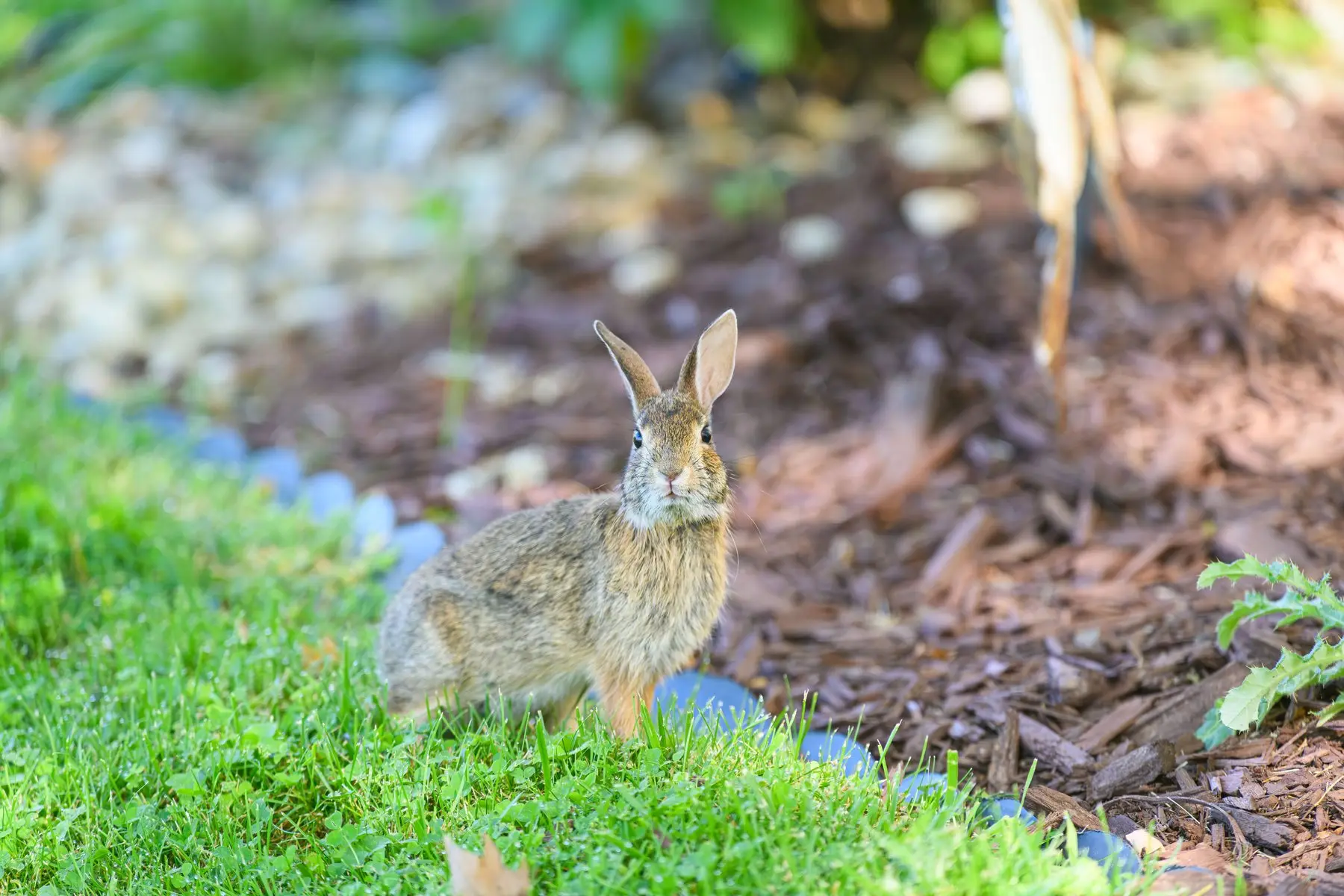
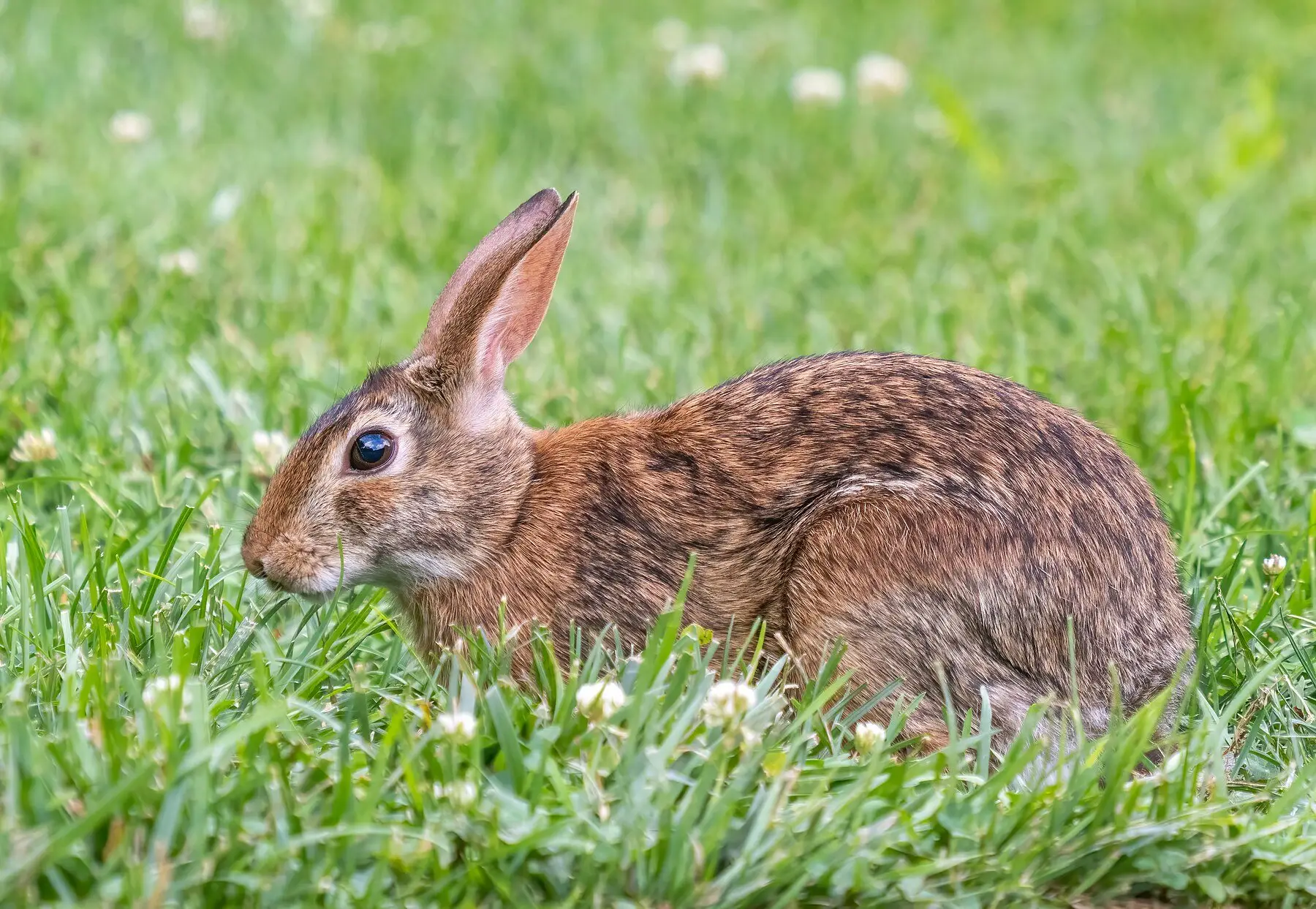
Grazing, almost never. A rabbit cropping grass short does roughly what a mower does, and the lawn recovers. The damage that matters is digging, urine burn and warren entrances — and, more seriously, what rabbits do to young trees rather than to grass.
What actually causes damage
| Severity | |
|---|---|
| Grazing an established lawn | Negligible — it recovers |
| Droppings | Mildly beneficial |
| Shallow scrapes | Nuisance, fills in |
| Urine burn | Dead patches, cosmetic |
| Concentrated grazing on a new lawn | Can stop it establishing |
| Warren under a structure | Real — undermines foundations and paving |
| Ring-barking young trees in winter | Kills the tree |
Telling scrapes from a warren
Two very different things get called “rabbit holes”:
- A scrape — small, conical, a few inches deep, made while foraging or scent-marking. Fills and recovers easily
- A warren entrance — four to six inches across, roughly oval, with a spoil heap of loose soil outside, and almost always under cover: a shed, deck, hedge or bramble
Scrapes are a nuisance. A warren is a project.
Urine burn
Same mechanism as dog urine — concentrated nitrogen and salts scorch the grass where they land.
- A dead patch, sometimes with a darker green ring around it where the dilution happens to fertilise instead
- Smaller and more scattered than dog patches, so less obvious
- Watering dilutes it if you catch it early
Droppings are fine
Rabbit droppings are a cold manure — unlike chicken manure they can be used fresh without burning plants, and on a lawn they break down fast and return nutrients.
The objections are aesthetic and hygienic, not agronomic: unpleasant where children play or people walk barefoot, and they can carry parasites. Mow or rake rather than letting them accumulate heavily.
Keeping them off
Fencing is the only thing that reliably works — and only if done properly
- Wire mesh one inch or smaller
- At least two feet high
- Bottom six inches buried, or bent outward in an L, to stop digging under
Miss that last part and the fence is decoration.
Alongside it, remove the cover: brush piles, long grass at bed edges, gaps under sheds and decks. Rabbits will not feed far from somewhere to bolt to, so taking away the bolt-hole moves the feeding.
When it is worth acting
Usually not, for a rabbit grazing and moving on. The cases that justify it:
- A warren under a structure
- Sustained grazing stopping a new lawn establishing
- Ring-barking of young trees and shrubs in winter — which kills them, and is a much bigger loss than any amount of chewed grass
Common questions
Do rabbits damage lawns?
What do rabbit holes in a lawn look like?
Does rabbit urine kill grass?
Are rabbit droppings bad for a lawn?
How do you keep rabbits off a lawn?
Is a rabbit on the lawn a problem worth acting on?
Backyard Weekly
Know what to plant, week by week
Join the weekly email for seasonal jobs, fixes for what is going wrong, and gear worth buying.
Not ready to subscribe? The planting calendar is free and needs no email.
By subscribing you agree to our privacy policy. Grow In Backyard will never sell your address.
Keep reading
Best Rabbit Bedding for Odor Control — 5 on Absorbency
The best rabbit bedding for odor control wins on absorbency alone. 5 materials compared, including the unsafe ones. See which suits your hutch.
How to Catch a Rabbit in Your Backyard, Safely
Catching a backyard rabbit depends on whether it is wild or an escaped pet. How to tell, the pen method that works, and why chasing one is the worst option.
Rabbits Under a Deck: Evicting Them Without Trapping a Litter
A rabbit under a deck usually means a nest. How to check before you block anything, the one-way door method, and the skirting that ends it for good.
How to Attract Rabbits to Your Yard (and Live With Them)
Rabbits want cover first, food second. Brush piles, native grasses and a quiet corner bring them in — and the same layout keeps them out of the vegetables.